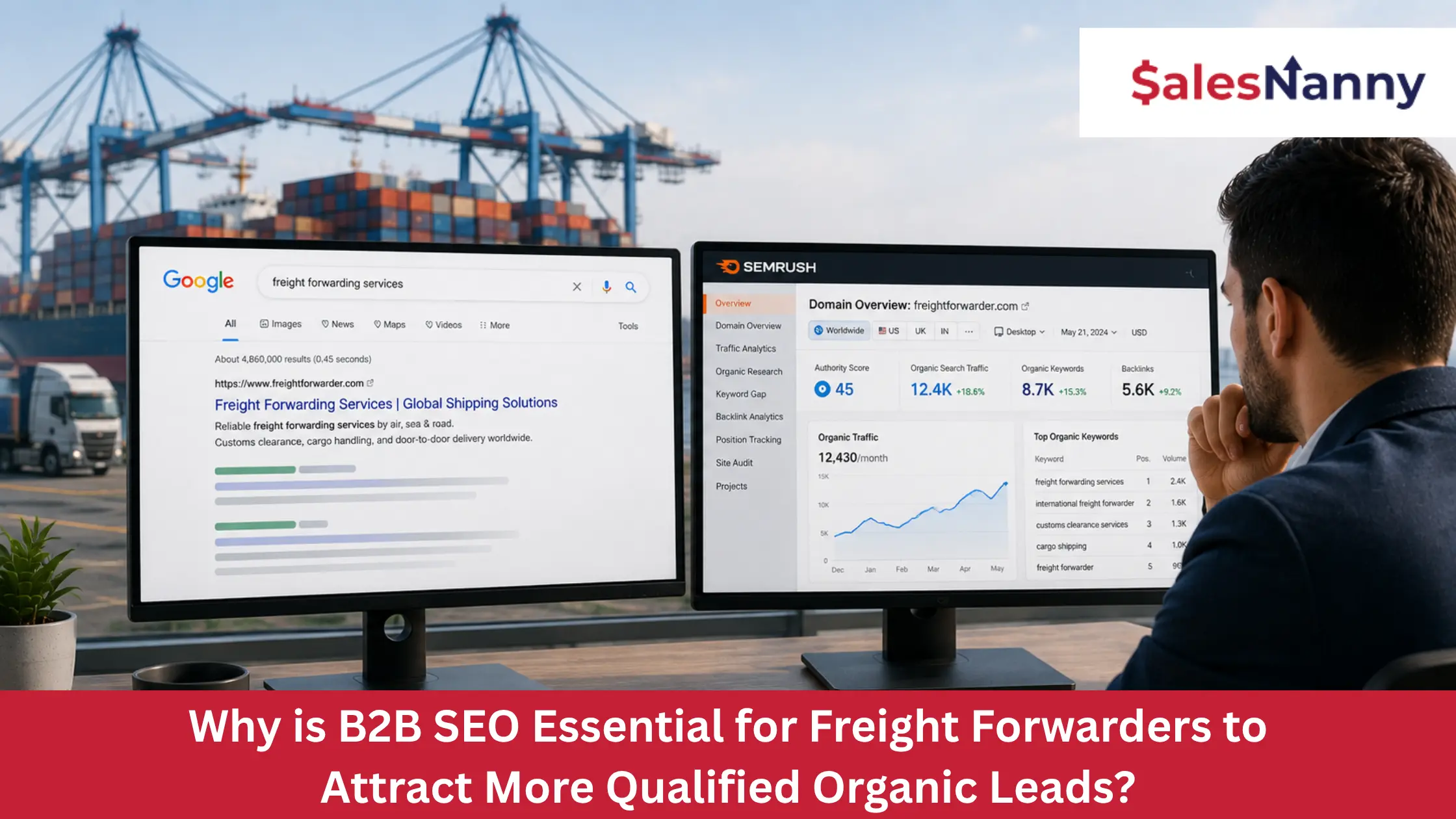
Qualified freight leads do not come from visibility alone. They come from appearing when the right buyer has a real shipping need.
A manufacturer searching for air freight, an importer looking for customs clearance, or an exporter comparing ocean freight providers is not browsing casually. Each search is connected to cargo, a route, a deadline, and a business decision.
B2B SEO helps your freight forwarding company appear for those specific searches and creates a clearer path from online research to qualified inquiry.
The Digital Shift in the Freight Forwarding Market
Freight buyers no longer wait for a sales representative to explain what a forwarder can offer.
Before contacting your team, they research whether you handle their cargo, support their route, understand their industry, and operate in the locations they need. They may compare several providers before requesting a quote.
Your website must now handle part of the early sales conversation. It should show what you move, where you move it, and why buyers can rely on your experience.
Why must Freight Forwarders Prioritize B2B SEO?
B2B SEO helps your company appear when buyers search for a specific freight service, route, cargo requirement, or location.
Its value goes beyond rankings. It helps your website explain your capabilities, answer buyer concerns, and build confidence before your sales team becomes involved.
Generate Cost-Effective Organic Visibility
Paid campaigns can create quick visibility, but that visibility usually ends when the advertising budget stops.
A well-built page about pharmaceutical air freight, customs brokerage, project cargo, or a priority trade lane can continue attracting relevant buyers over time.
This makes SEO part of a proactive digital marketing strategy that can support long-term freight inquiries without paying for every visit.
Build Authority and Buyer Trust
Freight buyers do not choose a provider because it ranks well. They need proof that the forwarder understands the shipment and can manage it responsibly.
Clear service pages, case studies, certifications, customer feedback, and industry-focused content help answer practical questions about cargo, routes, customs, documentation, and delivery requirements.
When buyers see that your experience matches their shipment, trust begins before the first sales call.
Capture High-Intent Freight Leads
The most valuable freight searches are often highly specific, such as:
- Air freight forwarder for pharmaceutical cargo
- Ocean freight services from China to the United States
- Customs clearance support for automotive imports
- Project cargo freight forwarding company
These searches may bring fewer visitors than broad keywords, but the buyers usually have a clearer commercial need.
Understand Freight Buyer Search Intent
Keyword research should begin with the buyer’s situation, not only search volume.
A buyer may first research customs documents, transit times, cargo restrictions, or shipping costs. Later, they may compare forwarders by route, experience, or service coverage. When ready to act, they may search for a provider or request a quote.
Your content should support each stage. Articles can answer early questions, trade-lane pages can support comparison, and detailed service pages can guide buyers toward an inquiry.
Target Relevant Freight Keywords
Broad terms such as “freight forwarding company” may create visibility, but they do not clearly show what the buyer needs.
A stronger keyword strategy should focus on:
- Air, ocean, road, and multimodal freight
- Origin and destination trade lanes
- Industries and cargo types
- Customs and compliance needs
- Cities, ports, airports, and service regions
These keywords help you market logistics services to the right buyers and attract inquiries that match your actual capabilities.
Optimize Freight Service Pages
Each major freight service should have its own page because buyers evaluate air freight, ocean freight, customs, warehousing, and project cargo differently.
Each page should explain:
- What cargo you handle
- Which routes and locations you support
- Which industries you serve
- Why buyers can rely on your team
- How they can request a quote
The goal is not to fill pages with keywords. It is to help buyers quickly decide whether your service matches their shipment.
Strengthen Technical SEO
Strong content can still underperform if your website is slow or difficult to use.
Your freight website should work well on mobile devices, load quickly, and make important service pages easy to find. Fix broken links, indexing problems, duplicate pages, and confusing navigation.
Clear URLs, internal links, and accurate sitemaps help both buyers and search engines move through your website.
Use Content to Demonstrate Freight Expertise
Freight content should answer real buyer questions.
Publish useful information about freight pricing, customs documents, transit-time planning, cargo restrictions, port delays, and trade-lane challenges.
Use practical explanations and shipment examples based on real freight experience. This helps buyers make better decisions and shows that your company understands the operational detail behind their cargo.
Build Local and Regional Visibility
Location matters in freight forwarding.
Buyers may search for a customs broker near a port, an air freight forwarder close to an airport, or a provider serving a particular industrial region.
Keep your Google Business Profile accurate and create location pages only for markets you genuinely serve. Explain nearby ports or airports, available services, and regional capabilities.
Turn Organic Traffic Into Freight Inquiries
SEO should not end when a buyer reaches your website.
Service pages need clear calls to action, simple quote forms, customer proof, and timely sales follow-up. Ask for useful shipment details such as origin, destination, cargo type, transport mode, and required date.
Track which pages, keywords, routes, and services generate qualified opportunities. The real measure of SEO is whether it creates relevant conversations and quote requests.
How does SalesNanny Help Freight Forwarders?
SalesNanny provides B2B SEO and digital marketing for logistics businesses that want to attract more relevant freight inquiries.
We study your services, trade lanes, target industries, cargo strengths, operating markets, and sales priorities. We then identify buyer-intent searches, improve service pages, fix technical issues, create freight-focused content, and track lead quality.
Our goal is not simply to improve rankings. We help your freight forwarding company appear for the right searches, communicate its value clearly, and turn organic visibility into qualified business opportunities.
Conclusion
B2B SEO helps your freight forwarding company appear when buyers are actively researching services, trade lanes, and cargo support. It also helps build trust before the first sales call and brings in more qualified organic leads.
The best results come from targeting the right keywords, creating clear freight service pages, publishing useful industry content, maintaining a technically sound website, and tracking which searches lead to real inquiries.
Book a free call with SalesNanny to build a B2B SEO strategy focused on your freight services, target buyers, and growth markets.