Over the years, we have seen logistics companies become much more serious about marketing.
Freight forwarders, 3PL providers, transport companies, customs brokers, and warehouse operators are no longer depending only on referrals, agent networks, trade shows, and long-standing relationships to win business.
Those channels still matter. But buyers now search your logistics company, compare services, review the industries you serve, and check whether your website shows that you understand their shipment.
That is where many capable providers lose attention. They may have strong operations, experienced staff, reliable carrier relationships, and the ability to handle difficult cargo. Yet none of that is communicated clearly online. In a competitive market, operational strength must be visible before the buyer reaches your sales team.
The Nature of Traditional Marketing in Logistics Companies
Traditional logistics marketing has always been relationship-driven. Companies have built business through trade shows, referrals, sales calls, industry magazines, networking associations, printed company profiles, and face-to-face meetings.
These methods work because logistics is not a low-risk purchase. A buyer may be trusting a provider with high-value machinery, temperature-sensitive products, regulated cargo, customs documentation, or a shipment tied to a production deadline. They need confidence that the provider understands the route, handling requirements, and consequences of getting it wrong.
The limitation is reached. Sales teams can only speak with so many prospects, trade shows happen a few times a year, and referrals are not predictable. Traditional marketing should remain, but digital channels can keep your company visible between personal interactions.
How Digital Marketing is Impacting the Logistics Industry?
Digital marketing helps logistics companies stay visible while buyers research options.
Consider a procurement manager looking for a freight forwarder on a new trade lane. The buyer may need regular LCL shipments, customs support, and clear milestone updates. Before speaking with sales, they will compare providers and check whether each one understands the route, volume, documentation, and service expectations.
If your website only says “global logistics solutions,” the buyer still does not know whether you can solve the problem.
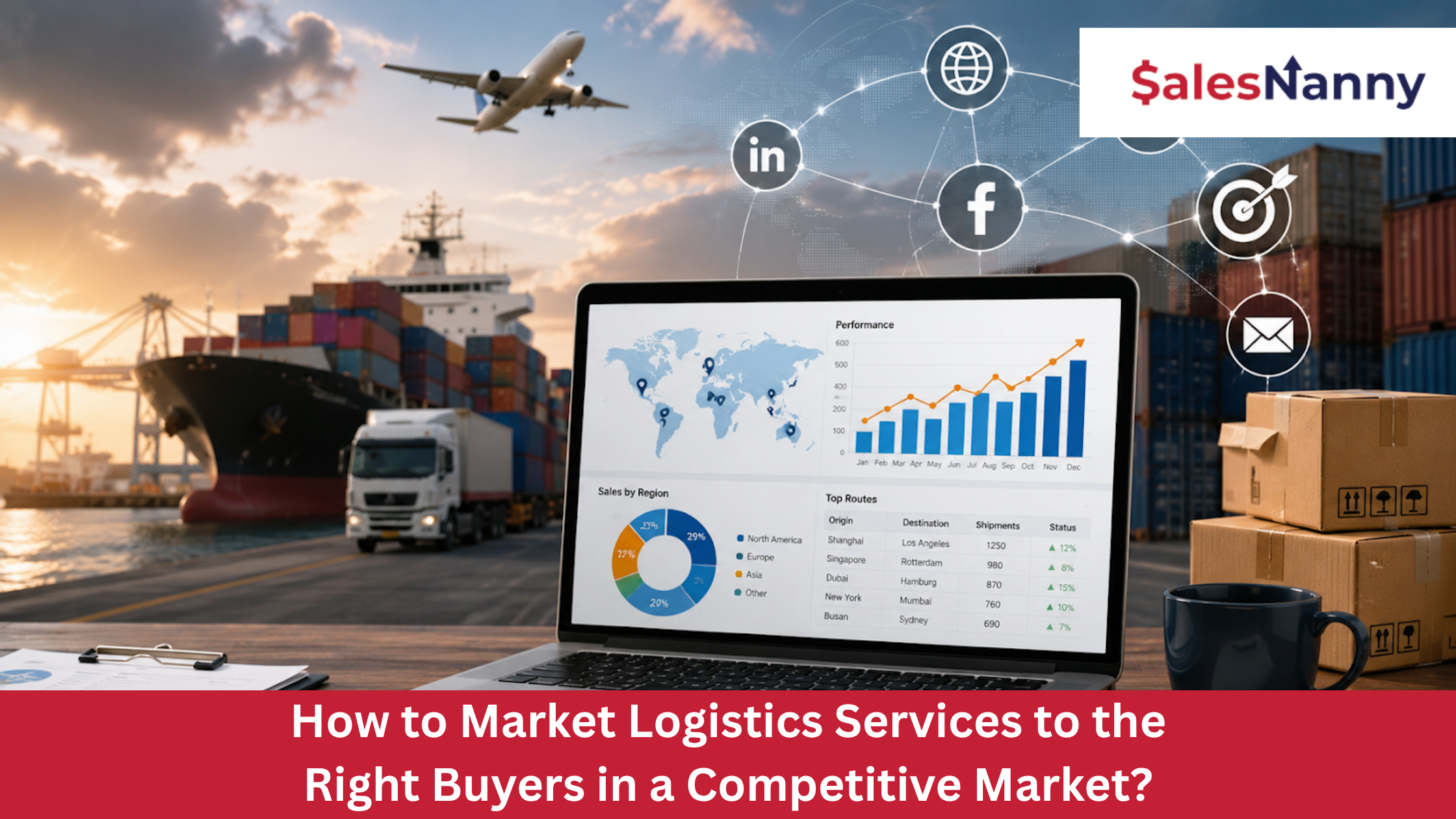
SEO can help your company appear for specific services, routes, locations, and cargo requirements. Content can explain how you manage operational issues. LinkedIn can demonstrate market knowledge, while paid campaigns can place the right service in front of active buyers.
The purpose is to make sales conversations stronger because buyers already understand where your company fits.
How can You Market Your Logistics Services Effectively?
Start by deciding which buyers your operation is best equipped to serve.
Look beyond broad categories such as “manufacturers” or “importers.” Define the industries, cargo types, trade lanes, locations, shipment volumes, compliance needs, and operational challenges that match your capabilities.
A food-grade warehouse should market differently from a provider focused on industrial equipment. A regional trucking company needs different messaging from a freight forwarder managing urgent air cargo. A customs broker supporting pharmaceutical imports must address compliance and documentation more clearly than a general cargo provider.
Your marketing should reflect the work you can perform consistently.
- Show experience with specific cargo and industries.
- Explain the routes and locations you serve well.
- Address delays, risks, and documentation issues.
- Use customer stories to prove capability.
- Make the next step clear.
Once your target buyer is defined, your channels become more precise.
What is the Best Way to Reach Logistics Buyers?
Email remains useful, but most logistics decision-makers receive too many generic messages. An email saying, “We offer competitive freight rates,” gives the buyer little reason to respond.
A stronger message connects to a real need, such as a new trade lane, rising shipment volume, customs delays, capacity pressure, poor visibility, or specialized handling.
Email works best when other channels help buyers recognize your company first.
1. LinkedIn
LinkedIn helps reach supply chain managers, procurement leaders, operations directors, and business owners. Share observations about routes, capacity, cargo handling, and industry risk.
2. Content Marketing
Content should answer questions buyers ask during real sales conversations. Explain how to prepare regulated cargo, reduce customs delays, choose the right warehouse setup, or manage peak-season capacity.
3. SEO
SEO for logistics helps buyers find your company when they search for a specific service, location, cargo type, industry, or trade lane.
4. Email Marketing
Use email to follow up, share case studies, and stay visible during long buying cycles. Each message should reflect the buyer’s business.
5. Website
Your logistics website should answer the buyer’s first questions. What cargo do you handle? Which routes do you cover? What volumes can you support? Which compliance requirements do you understand?
6. Paid Advertising
Google Ads can reach buyers searching for a service, while LinkedIn Ads can target decision-makers by industry, role, and location.
How can SalesNanny Help Logistics Companies?
SalesNanny understands that logistics marketing must begin with operations.
We first look at your services, target industries, cargo expertise, trade lanes, geographic coverage, shipment volumes, compliance requirements, and sales process. Then we build a connected strategy across SEO, content, website development, paid campaigns, branding, analytics, and sales support.
The objective is not simply to increase traffic or social engagement. It is to help the right buyers recognize your strengths and start relevant sales conversations.
Conclusion
“Logistics will always be about trust, performance, and relationships. What’s changed is how buyers determine which providers are worthy of conversation.
The best companies are not always those with the largest marketing budget. They articulate operational value well. They demonstrate what industries they know, what cargo they carry, what trade lanes they are familiar with, and how they solve real supply chain problems.
Targeted digital marketing for logistics converts operational capability into buyer confidence.
If your company is ready to reach more of the right decision-makers, schedule a free call with SalesNanny. We’ll help you identify where your marketing is losing attention and where a clearer strategy can lead to better business opportunities.