For fifteen years, our freight forwarding business grew through referrals. A manufacturer recommended us to his supplier, a customs broker introduced us to a new importer, and our freight network kept bringing new customers.
But then referrals started slowing down, even though our operations were running smoothly, our rates were competitive, and our customers were satisfied.
The real problem? Importers, exporters, and manufacturers were searching for freight partners on Google and finding our competitors instead of us.
That raised one important question: How can we make sure potential customers find our business before choosing a competitor?
In this blog, we’ll explore 10 practical digital marketing strategies to help logistics businesses reach new customers, generate qualified enquiries, and win more business beyond referrals.
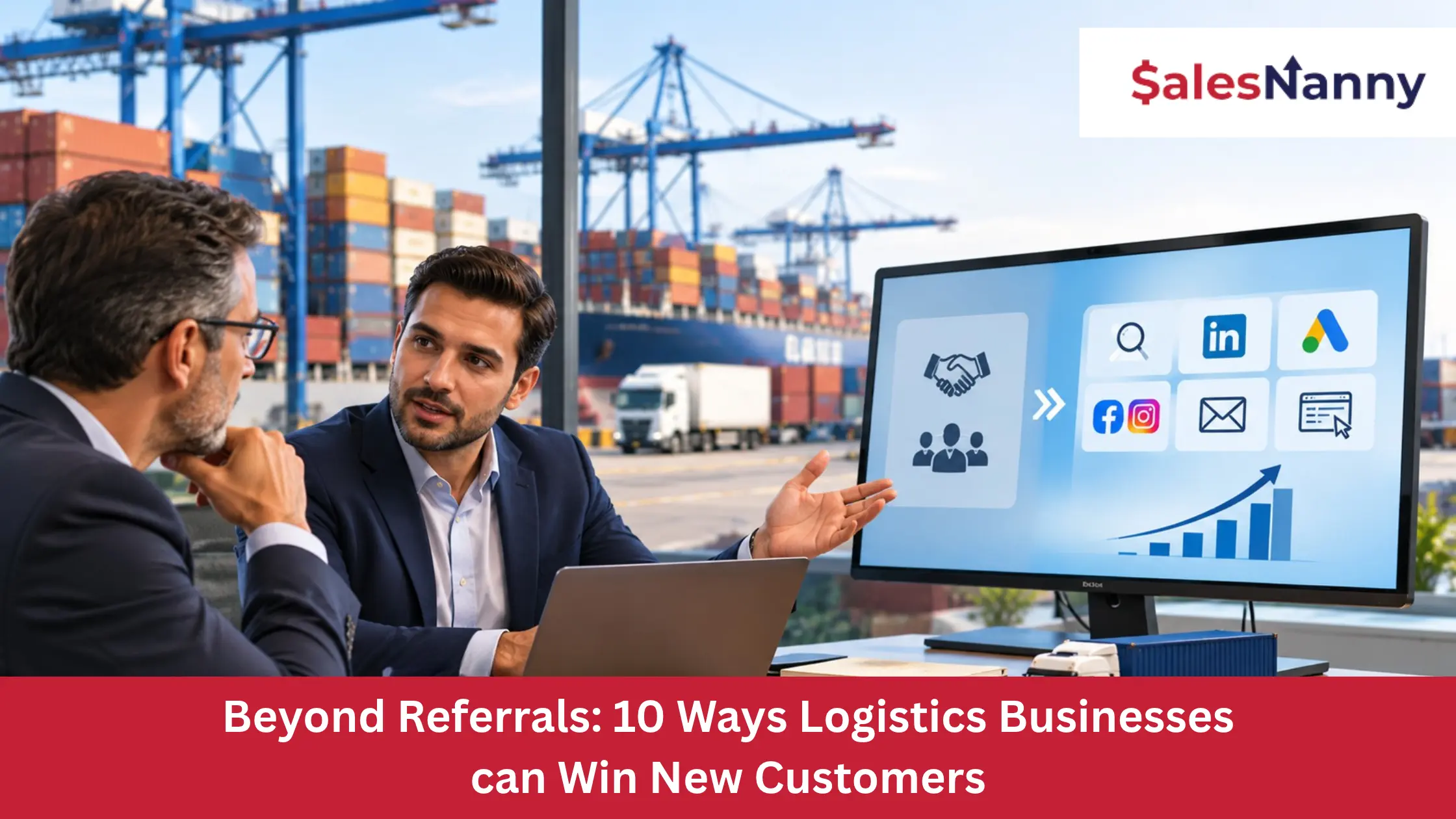
10 Ways Logistics Businesses can Win New Customers Beyond Referrals
1. Turn Your Freight Expertise Into a Visible Online Strength
Most freight forwarders could spend hours talking about their strengths, from the trade lanes they handle best to the cargo types their teams know inside out.
But that experience means little to new buyers if it is known only to your operations team and existing customers.
If you handle breakbulk cargo from Mundra, temperature-controlled pharmaceutical shipments on the Chennai–Frankfurt lane, or bonded warehousing for electronics, explain those capabilities clearly online.
Your LinkedIn company page, service descriptions, and About Us page are often the first places a procurement head or logistics manager checks before requesting a quote.
The expertise you have spent years building should be visible to the shippers who need it.
2. Get Found When Importers and Exporters Search on Google
When a garment exporter in Tirupur searches for “FCL freight forwarder from Chennai to Hamburg,” or a chemical manufacturer searches for “DG freight forwarder India to Middle East,” your business has an opportunity to reach that buyer.
But if your website does not appear in relevant search results, the enquiry may go to a competitor.
SEO, or search engine optimization, helps improve your visibility when potential customers search for your services, trade lanes, cargo types, and locations.
A strong SEO and organic marketing strategy should attract more than website visitors. It should bring enquiries from importers, exporters, and manufacturers whose shipment requirements match your capabilities.
That is how organic traffic can become a source of new freight business.
3. Build a Website That Logistics Buyers Can Easily Understand
Here is a simple test I tried on our own website after we started losing tenders we did not even know about.
Could a potential customer quickly find out whether we handled 40-foot reefer containers, which trade lanes we served, and how to request a quote?
Our website did not answer those questions clearly.
A logistics website needs dedicated service pages explaining your cargo capabilities, operating locations, industries served, relevant experience, and applicable certifications.
Your RFQ form should also collect the shipment details your sales team needs.
A buyer should not have to call your office just to understand your services. If the information is difficult to find, they may simply visit another forwarder’s website.
4. Answer the Questions Your Potential Customers are Already Asking
Before requesting a quote, logistics buyers often search online to understand their shipping requirements.
An importer may search for “LCL vs. FCL shipping for small volumes,” while a pharmaceutical manufacturer may research temperature-controlled air freight requirements for Europe.
These searches are opportunities to reach buyers before they contact a freight provider.
Content marketing through blogs, service guides, and trade-lane FAQs helps you answer those questions and demonstrate your experience.
For example, a guide explaining customs documentation for perishable air cargo exports can attract businesses facing that exact requirement.
Useful content introduces your expertise early and gives potential customers a reason to consider your company.
5. Use LinkedIn to Reach Decision-Makers Who Move Cargo?
A logistics manager at a consumer goods company may not be searching for a new forwarder today, but they may still be active on LinkedIn.
The same applies to supply chain heads, procurement managers, and import/export decision-makers.
Instead of sharing only container photos or general company updates, post information that matters to their operations.
For example, explain how Colombo port congestion affects India–East Africa shipments or discuss changes in AMS filing requirements for U.S.-bound cargo.
Social media marketing helps your logistics business stay visible to potential customers.
When those decision-makers need a new provider, your company may already be familiar to them.
6. Use Paid Ads to Reach Shippers Searching Right Now
SEO builds visibility over time, while Google Ads can help your business reach active buyers sooner.
For example, a heavy transport company in Maharashtra could advertise for “heavy equipment transport Mumbai to Pune” and reach businesses searching for that service.
Once approved and active, the campaign may start appearing in relevant searches. The quality of enquiries depends on targeting, competition, and the landing page.
If someone searches for oversized cargo transport, your ad should lead to a page explaining your equipment, route capabilities, permits, and experience.
Paid advertising works best when the search, advertisement, service page, and quotation form match the buyer’s requirements.
7. Build a Brand that Procurement Teams can Remember
Imagine four freight forwarders submitting competitive rates for the same FCL shipment.
If every company claims to be a reliable logistics partner, what makes yours different?
Branding helps communicate your strengths, whether they involve dangerous goods handling, bonded warehousing, customs clearance, or specialized trade-lane services.
Those strengths should appear consistently across your website, LinkedIn page, company profile, and sales presentations.
End-to-end branding helps buyers recognize your business and understand what you do best.
When procurement teams compare providers, give them something specific to remember about your company beyond its rates.
8. Use Professional Designs to Support Your Sales Team
Your sales team may attend logistics events, send company profiles, or present services to manufacturers reviewing their freight contracts.
The way you present that information matters.
A clear capability brochure can show your fleet, warehouse capacity, service coverage, certifications, and transport experience in a format buyers can easily understand.
The same applies to trade show graphics, sales presentations, and social media creatives.
Professional design services help communicate your operational strengths clearly and support your sales conversations.
Good design helps potential customers understand what your logistics business can deliver.
9. Identify High-Value Shippers and Reach them Directly
Your ideal customer may already be shipping regularly with another freight forwarder.
But contract renewals, new trade lanes, or service problems can create opportunities to introduce your business.
Identify manufacturers, importers, and exporters whose cargo requirements match your capabilities. Then connect with their logistics managers, procurement teams, and supply chain decision-makers.
For example, a forwarder specializing in automotive parts exports to Europe can reach relevant manufacturers before their next tender.
Inside sales and structured outreach help build these relationships through LinkedIn, email, and direct conversations.
Focus on the customer’s actual freight requirements rather than sending generic sales messages.
10. Convert More Freight Enquiries Into Booked Business
Ten relevant enquiries that your team follows up properly can bring more business than fifty leads sitting unanswered in an inbox.
When a shipper submits an RFQ, they may have contacted several forwarders. Your response time, quotation quality, and follow-up can influence their decision.
Collect the shipment information needed to prepare an accurate quote, including cargo type, packaging, weight, dimensions, origin, destination, and expected shipping frequency.
Use a CRM or structured process to assign enquiries, track quotations, and follow up with potential customers.
Digital marketing brings enquiries to your business. Your sales process determines how many turn into actual bookings.
How can SalesNanny Help Your Logistics Business Win More Customers?
You have already built the operational experience. Your team knows how to handle freight, manage documentation, coordinate shipments, and meet customer requirements.
What SalesNanny brings is the digital marketing support needed to make that experience visible to potential customers who have not worked with you yet.
With 10+ years of logistics marketing experience, 80+ accounts managed, and 100K+ inbound leads generated, SalesNanny works specifically with freight forwarders, 3PLs, NVOCCs, customs brokers, transport companies, and warehousing providers.
Our services include SEO and organic marketing, paid advertising, website development, branding, content marketing, social media, and inside sales. These services can work together under one marketing plan instead of operating as separate activities.
For logistics business owners looking for the best digital marketing agency that understands freight, industry knowledge makes a difference.
You should not have to spend months explaining what an MBL is, why container dwell charges matter, or how bonded warehouse releases work. SalesNanny’s logistics experience helps us understand your services and communicate them more accurately to the customers you want to reach.
Conclusion
Referrals have helped many freight forwarding and logistics businesses grow, and they will always remain valuable.
But if your sales pipeline depends entirely on recommendations from existing customers, your opportunities are limited to the people those customers know.
Importers, exporters, manufacturers, and retailers are already searching online for logistics providers. Whether they find your business depends on how clearly your website presents your services, how visible you are in search results, and how well your marketing and sales teams handle new enquiries.
You do not need to start every marketing activity at once. Begin with the service you want to grow, identify the type of buyer you want to reach, and choose the channels most likely to bring relevant enquiries.
If your logistics business is ready to move beyond referrals and build a more consistent sales pipeline, book a free consultation with SalesNanny to discuss your customer acquisition goals.