A freight forwarder’s inbox can look busy and still produce very little.
Some RFQs are one-off shipments. Some are rate checks that never turn into bookings. Others may be for trade lanes, cargo types, or services your business is not trying to grow.
Meanwhile, a manufacturer moving 40 containers every month may already be talking to another forwarder and may never submit a form on your website.
That is the gap account-based marketing is designed to address.
Instead of waiting for the right shipper to find you, ABM helps you identify the companies you want to win, understand their freight requirements, reach the people involved in the decision, and keep your business visible until the right opportunity appears.
In this blog, we will look at what account-based marketing means, why it suits logistics sales, and how you can use it to pursue higher-value accounts.
What is Account-Based Marketing?
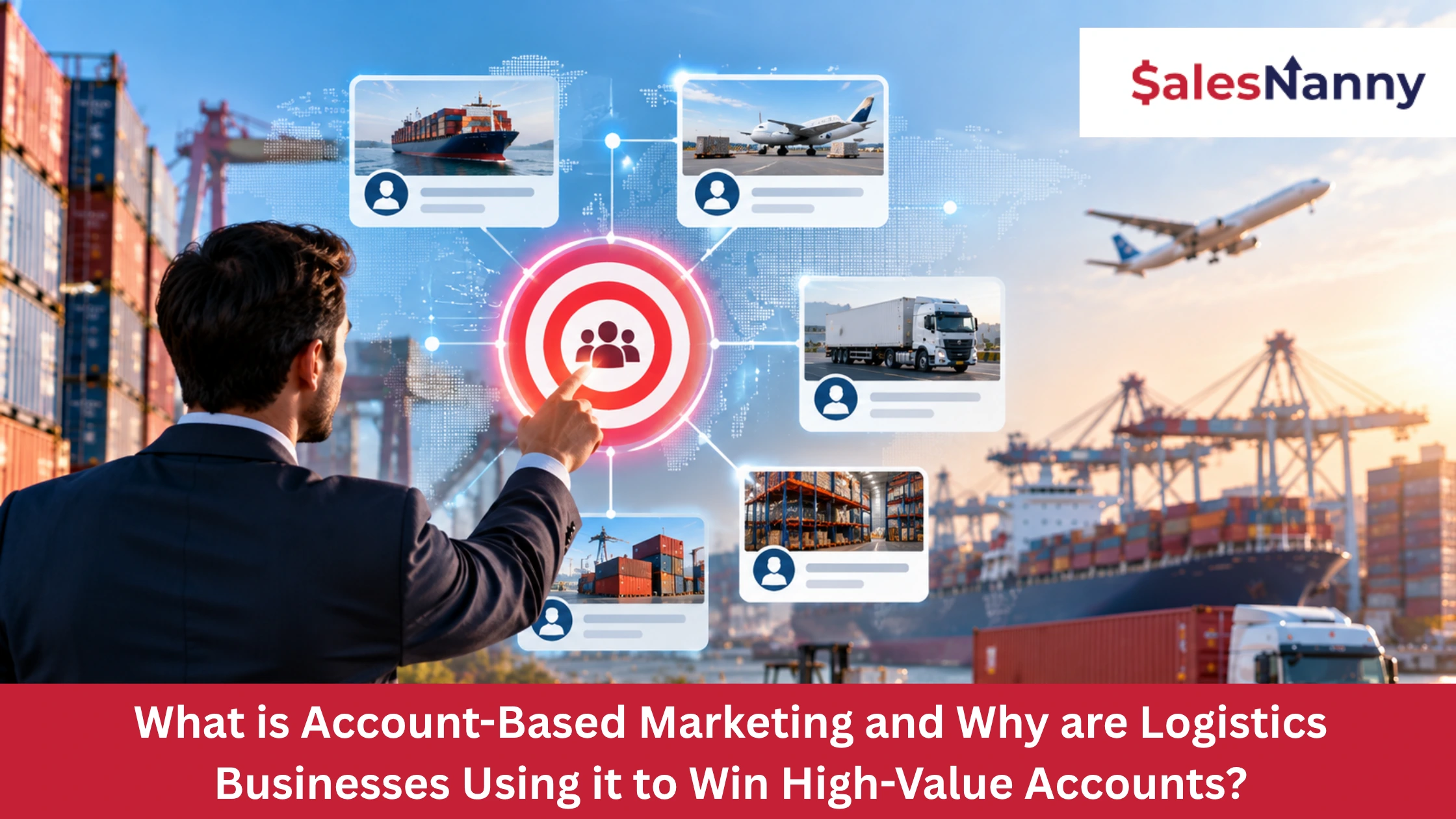
Account-based marketing, or ABM, is a B2B strategy where sales and marketing focus on a selected group of companies instead of trying to reach a broad audience.
Traditional sales lead generation usually starts by attracting many prospects and qualifying them later.
ABM reverses that process.
You first decide which companies you want as customers. Then you build your content, advertising, outreach, and sales follow-up around those accounts.
For example, suppose your freight forwarding business is strong in temperature-controlled air freight from the U.S. to Western Europe.
Instead of advertising “international freight forwarding” to every shipper, you could identify pharmaceutical companies regularly moving cargo on those routes. Your marketing can then focus on the issues those buyers actually care about, such as GDP compliance, temperature excursions, transit reliability, and shipment visibility.
The audience becomes smaller, but the opportunity becomes more relevant.
Why are Logistics Businesses Moving Toward ABM?
1. More RFQs do Not Always Mean Better Business
Getting 50 RFQs looks positive until your sales team starts reviewing them.
Some may be outside your service coverage. Others may be price-shopping. A few may be one-time shipments with little long-term value.
Your team still has to price, respond, follow up, and manage every inquiry.
ABM shifts attention from generating as many leads as possible to pursuing accounts that match the type of business you actually want.
2. High-Value Shippers may not be Actively Looking for You
Large shippers often already have logistics providers.
They may only review alternatives when a tender opens, shipment volumes change, a provider misses service levels, or a new trade lane is added.
If your business becomes visible only after that buyer starts requesting quotes, you may already be late.
ABM helps you stay in front of important accounts before the buying window opens.
3. Logistics Businesses Usually Know What a Good Customer Looks Like
Your sales team probably already knows which accounts are attractive.
You may prefer particular trade lanes, shipment volumes, cargo types, industries, or service requirements.
For example, a freight forwarder strong in U.S. Asia ocean freight does not need every company importing goods. It needs shippers with regular volume on the lanes it handles well.
ABM uses that knowledge before marketing starts instead of sorting through poor-fit leads afterward.
4. Logistics Decisions Involve More than One Person
Winning a large logistics account rarely depends on one contact.
A logistics manager may care about reliability. Procurement may focus on rates and contract terms. Operations may want faster communication when shipments go wrong. Finance may look closely at invoicing and accessorial charges.
Account-based marketing allows you to communicate with the wider buying group instead of relying on one generic sales message.
How can You Build an ABM Strategy for Your Logistics Business?
Step 1: Start With the Accounts You Actually Want
Look at your strongest existing customers first.
What do they ship? Which trade lanes do they use? What services do they buy? How often do they ship? Why are they profitable for your business?
Use those patterns to identify similar companies.
You might prioritize accounts based on:
- Regular freight volume
- Relevant trade lanes
- Cargo type
- Industry
- Geography
- Warehousing or customs requirements
- Long-term contract potential
The aim is not to build a database of thousands of companies. Start with a focused list your sales team can realistically pursue.
Step 2: Identify the People Behind the Account
Once you choose a target company, find the people involved in its logistics decisions.
That may include logistics managers, supply chain leaders, procurement teams, import/export managers, operations heads, and compliance teams.
Do not send all of them the same message.
A procurement manager may respond to cost and contract information, while an operations manager may be more interested in transit performance, exception handling, and communication.
Step 3: Create Content that Proves You Understand their Freight
A generic company brochure will rarely convince a high-value shipper to change providers.
Give the buyer information that relates directly to the freight they manage.
That could include:
- A case study covering a similar cargo type or trade lane
- Route and transit-time information
- Customs and compliance guidance
- Examples of how you manage delays or exceptions
- Industry-specific service pages
- Customer success stories
Your content should help the prospect answer one question: “Does this company understand the kind of freight we move?”
Step 4: Stay Visible Across the Buying Journey
One LinkedIn message is unlikely to win a major logistics account.
A prospect may first see one of your posts, later find a service page through search, receive a useful email from your team, and finally agree to a meeting several weeks later.
LinkedIn, email, paid ads, search content, and direct outreach can all support ABM.
A strong SEO and organic marketing strategy can also help target accounts find your company while researching specific services, trade lanes, or logistics problems.
The channel may change, but the account and message should stay consistent.
Step 5: Follow Up When the Account Shows Interest
Not every target account is ready to speak with sales today.
One company may visit a case study several times. Another may engage with LinkedIn content and later view a service page.
These signals can help your team decide where to focus follow-up.
This is also where inside sales support can help qualify interest and make sure promising accounts do not disappear between marketing engagement and a sales conversation.
How should Logistics Businesses Measure ABM Success?
ABM is not mainly about getting more website traffic.
Measure whether the accounts you deliberately targeted are moving closer to doing business with you.
Useful indicators include:
- Target accounts engaging with your content
- Decision-makers reached
- Meetings booked
- Tender or bid invitations
- Qualified RFQs
- Proposals submitted
- Trial shipments
- Accounts won
- Revenue or shipment volume from won accounts
A campaign that attracts fewer visitors but creates three serious conversations with high-value shippers may be more useful than one that brings thousands of unrelated visits.
When does ABM Make Sense for a Logistics Business?
ABM works best when you already know the type of customer you want to win and one account can create meaningful recurring revenue.
It can be especially useful when your sales cycle is long, several people influence the buying decision, and your current lead generation brings activity but not enough strategic opportunities.
If most of your business comes from small, one-off shipments across a very broad customer base, a wider lead-generation approach may still make more sense.
How can SalesNanny Support ABM for Logistics Businesses?
SalesNanny has 10+ years of logistics marketing experience, has supported 80+ accounts, and has helped generate 100K+ inbound leads.
We work with freight forwarders, 3PLs, transport companies, and other logistics businesses, so we understand what makes an account worth pursuing.
For businesses looking for the best digital marketing agency for logistics and supply chain, SalesNanny brings SEO, paid ads, LinkedIn outreach, content, and lead generation together around the accounts you want to win.
We help your sales team spend more time on qualified shippers with real freight requirements and stronger potential for long-term business.
Conclusion
Your logistics business may not need hundreds of additional leads.
You may need a smaller number of shippers that fit your trade lanes, capabilities, shipment volumes, and growth plans.
Account-based marketing gives sales and marketing a more focused way to identify those companies, reach the people involved in the decision, and stay relevant until the right opportunity appears.
Looking to reach more high-value logistics accounts?
Book a Free Consultation with SalesNanny to discuss your account-based marketing and lead-generation goals.