An RFQ may be the first time your pricing team sees an opportunity, but the shipper may have been evaluating your company for days.
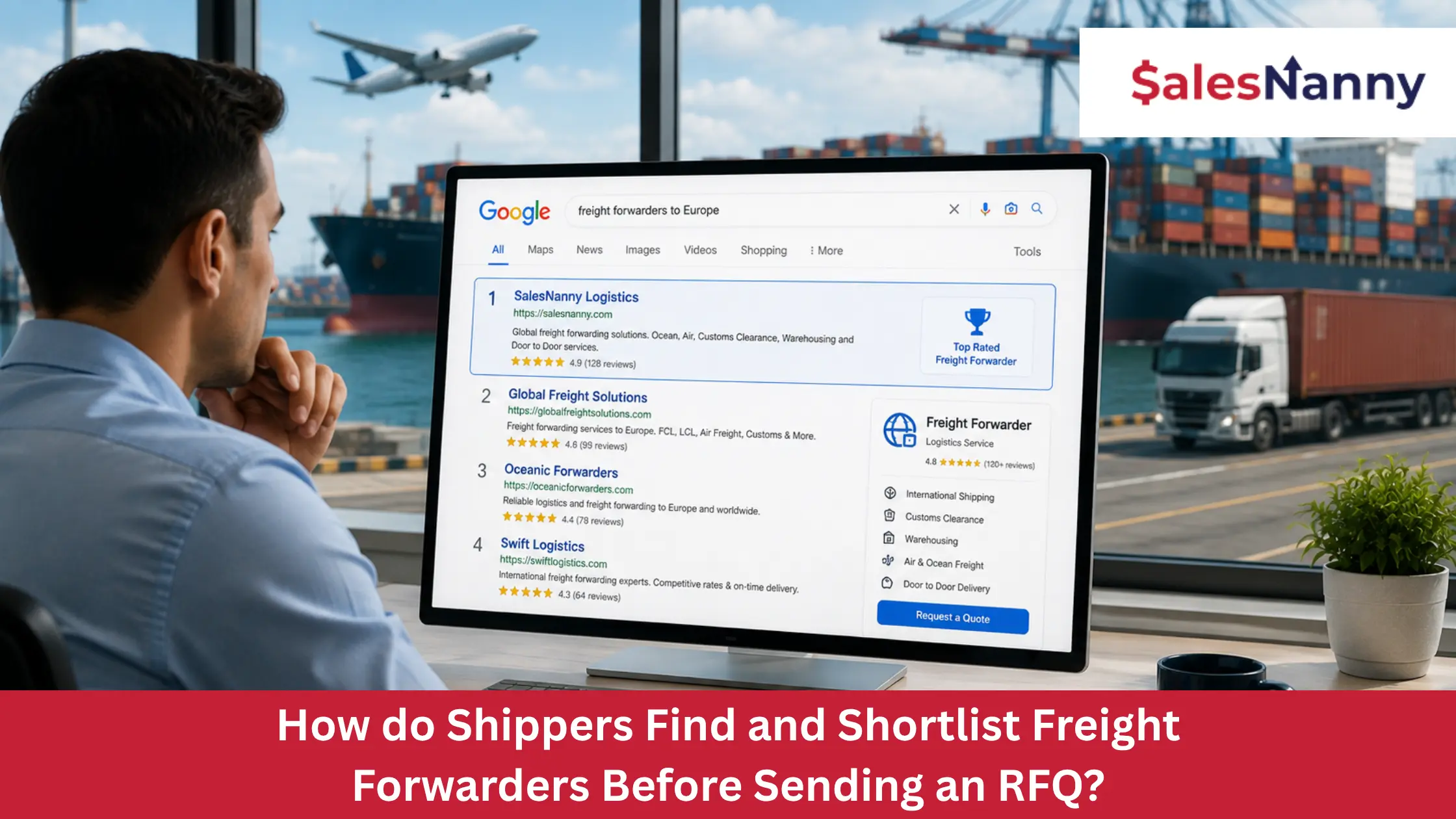
Before requesting rates, buyers often search for freight forwarders, check trade lanes, review cargo experience, compare services, and decide which companies look capable of handling their shipments.
That means a freight forwarder can lose an opportunity before the sales team even knows the shipper is looking.
Understanding this pre-RFQ journey helps you become easier to find, evaluate, and trust before the shortlist is closed.
Where do Shippers Look for a New Freight Forwarder?
The search usually begins when something changes.
A shipper may add a new supplier, enter a new market, increase shipment volume, open a new trade lane, or experience poor service from an existing forwarder.
They may find potential providers through search engines, freight directories, logistics networks, LinkedIn, trade events, overseas partners, or business referrals.
The search can also be very specific. An importer may look for an FCL forwarder from China, customs clearance for machinery, or a provider experienced with temperature-controlled cargo.
Being discovered only puts your company on the first list. What the buyer finds next decides whether you stay there.
What do Shippers Check First?
Once buyers find your company, they want to know whether your services match their shipment.
They may check your freight modes, trade lanes, service locations, cargo experience, industries served, customs support, and delivery capabilities.
A manufacturer moving regular FCL imports from Asia should quickly understand whether your team can handle that business.
Generic claims such as “global logistics solutions” do not give the buyer enough information.
Clear service and trade-lane information can also help improve freight forwarding sales because buyers enter the first conversation already knowing where your company fits.
How do Shippers Check Route, Cargo, and Risk Fit?
After the basic service check, buyers look more closely at the shipment itself.
A pharmaceutical importer may need temperature control and strict documentation. A machinery exporter may need flat racks, permits, special loading, or inland transport. A regular FCL shipper may care about sailing frequency, carrier options, and destination support.
The buyer is asking:
Has this forwarder handled freight like ours on routes like ours?
They may also review customs knowledge, dangerous goods capability, insurance, certifications, permits, and security procedures.
These checks become more important for regulated, hazardous, high-value, oversized, pharmaceutical, or time-sensitive cargo.
If this information is difficult to find or verify, a shipper may remove the forwarder before pricing is even discussed.
How do Shippers Evaluate Communication and Shipment Visibility?
Shippers want to know how clearly they will be kept informed once the cargo is moving.
They may look for shipment tracking, milestone updates, document access, exception alerts, customer portals, and API or EDI options. These tools help, but they are only part of the experience.
Before sending an RFQ, a buyer may also ask about transit time, carrier options, customs requirements, cargo restrictions, or available capacity. The speed and quality of that response give them an early idea of how your team may communicate during the shipment.
Clear updates and useful answers build confidence. Poor communication can quickly push a forwarder off the shortlist.
What Proof do Shippers Look for Before Shortlisting a Forwarder?
Shippers look for evidence that your team has handled similar freight, routes, and service requirements before.
Case studies, customer references, reviews, certifications, trade-lane experience, and examples of similar cargo movements can all help build confidence.
The most useful proof is specific to the buyer’s shipment. A project cargo shipper wants to see relevant project experience. A pharmaceutical company may look for controlled-handling capability. An importer moving regular China–US containers wants confidence that your team understands that lane.
Useful freight content can also support this by showing how your team approaches real shipment questions and operational challenges, not just listing the services you offer.
What can Remove a Freight Forwarder From the Shortlist?
Price is not the only reason a forwarder gets removed from consideration.
A shipper may move on because trade-lane coverage is unclear, service pages are too broad, cargo experience is hard to verify, compliance details are missing, or the response takes too long. Even a complicated inquiry process can make the buyer choose another provider.
Your operations team may be fully capable of handling the shipment, but the buyer can only judge what they can find and confirm.
That is where a strong B2B SEO strategy can support the shortlist process. It should help the right service, trade lane, and cargo pages appear when buyers are researching, while giving them enough information to decide whether your company fits the shipment.
How do Shippers Compare Freight Forwarders on the Final Shortlist?
Once the shortlist is down to a few forwarders, buyers compare the details that can directly affect the shipment.
They may review carrier options, available capacity, transit times, customs support, tracking, communication, surcharges, payment terms, claims handling, and service conditions.
Price still matters, but experienced shippers also look at the total risk and cost of the move. A lower rate can quickly lose its value if poor planning leads to missed cut-offs, demurrage, storage, customs delays, or weak communication.
At this stage, the decision is about which forwarder offers the best overall fit for the shipment, not simply the lowest quote.
How does the Shortlist Become an RFQ List?
Shippers usually send the RFQ only to forwarders they already believe can handle the shipment.
Before that, the procurement or logistics team may check route coverage, cargo experience, service capability, capacity, customs support, and overall reliability.
The final list is then invited to compete on rates, routing, transit time, free time, surcharges, capacity, and other commercial terms.
So the RFQ is often not the beginning of the buying process. It is the result of an earlier review.
If five forwarders receive the RFQ, the shipper may have researched several more before choosing those five.
That is why getting found, understood, and trusted before the RFQ stage matters.
How can Freight Forwarders Get Considered Before the RFQ Stage?
Freight forwarders need to show their strengths before the buyer starts asking for rates.
If you want more ocean freight on a priority trade lane, stronger customs accounts, regular air freight, or customers from a specific industry, your online presence should make those capabilities clear.
Your website, service pages, trade-lane content, case studies, LinkedIn activity, and search visibility should help shippers quickly understand where your company fits.
A focused digital marketing strategy can bring these touchpoints together so the right buyers find your business earlier and see a clear reason to consider it.
The aim is not to be visible everywhere. It is to be visible where the freight opportunities you want are already being researched.
Turn More Shipper Searches Into RFQ Opportunities
Getting found is only useful if the right shipper sees enough reason to keep your company on the shortlist.
SalesNanny helps freight forwarders close that gap between being discovered and being considered. We shape your market position around the trade lanes, cargo strengths, and customer segments that matter most to your business.
The result is a clearer reason for the right buyers to choose your company for the next conversation and a better chance of reaching the RFQ stage before competitors take that place.
Conclusion
Shippers may research several freight forwarders before inviting only a few to quote.
Your company needs to be easy to find, easy to understand, and able to show that it can handle the buyer’s route, cargo, and service requirements.
A good RFQ response can help win the shipment. But first, your freight business needs to earn its place on the RFQ list.
Ready to get your freight business onto more shipper shortlists before the RFQ is sent?
Contact us to build a logistics-focused digital marketing strategy around the trade lanes, services, and freight opportunities you want to grow.