Search is changing fast in 2026. Ranking on Google is still important, but it is no longer the only way people discover information or businesses online.
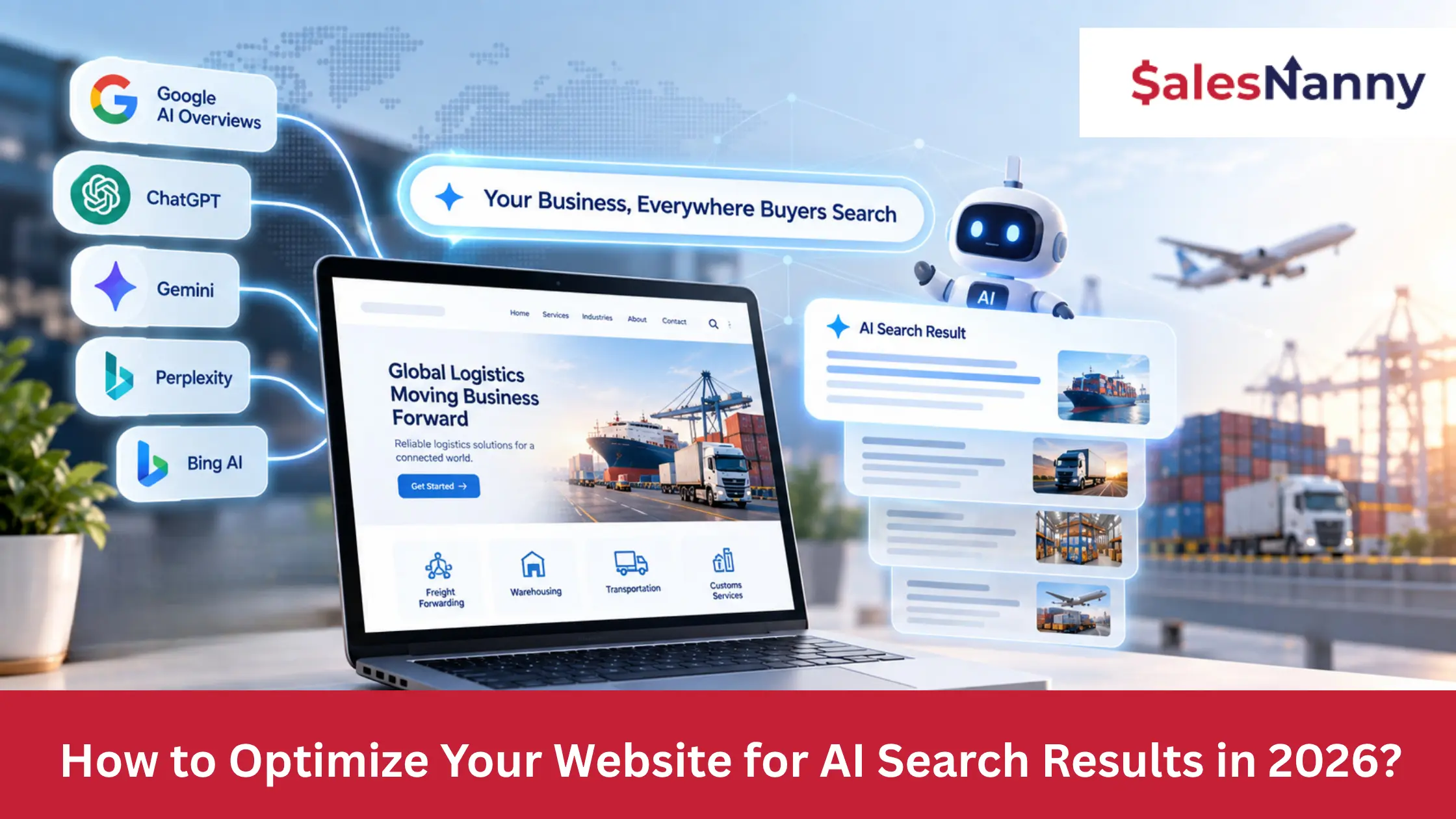
Today, users can ask a question on Google AI Overviews, AI Mode, ChatGPT, Gemini, or Perplexity and get an answer without opening several websites. That creates a new challenge for businesses: what if your website ranks well, but your content is not being picked up in AI search results?
This is where AI search optimization becomes important. It helps make your website easier for search engines and AI platforms to find, understand, and use when answering relevant questions.
In this guide, you will learn how to optimize your website for AI search results in 2026 while still building on the SEO practices that already matter.
What is AI Search Optimization?
AI search optimization, also called AI SEO, is the process of improving your website and content so they are easier to find across both Google search and AI-powered search platforms.
The main goal is simple: when someone searches for a topic related to your business, your content should be easy for search engines and AI tools to understand and use in their answers.
You may also see terms like Answer Engine Optimization (AEO) and Generative Engine Optimization (GEO). These terms have slightly different meanings, but they all focus on helping content appear more clearly in today’s changing search experience.
For Google, AI search does not require a completely different SEO strategy. The basics still matter. Your pages should be easy to crawl and index, your content should answer real questions, your website should be easy to use, and related pages should be connected with clear internal links.
In simple terms, AI search optimization builds on traditional SEO. It helps your content stay visible as people move from standard search results to AI-generated answers.
How is AI Search Different From Traditional Google Search?
Traditional search usually shows a list of pages that users can open and compare.
AI-powered search can give a direct answer by combining information from different sources. Users can also ask follow-up questions without starting a new search.
| Traditional Search | AI-Powered Search |
| Uses keywords and search phrases | Supports longer, conversational questions |
| Shows links and search results | Gives direct answers, summaries, and source links |
| Users often open several pages | Users may get an answer before clicking |
| Follow-up usually needs a new search | Follow-up questions can continue in the same conversation |
| Measured mainly by rankings, clicks, and traffic | Can also include mentions, citations, and AI referral traffic |
Google’s AI search features can also explore related subtopics before creating an answer.
So, instead of focusing on one keyword, businesses should create content that answers the main topic clearly and also covers related questions naturally.
Why does AI Search Visibility Matter for Businesses in 2026?
AI search visibility matters in 2026 because buyers are increasingly getting direct answers from platforms like ChatGPT, Gemini, and Google’s AI-powered search instead of always clicking through a list of traditional search results.
A buyer may ask an AI tool to explain a problem, compare solutions, or suggest what to look for before choosing a provider. This means your brand can become part of the research process even before someone visits your website.
For businesses, the goal is not only to drive more clicks. It is also to make your content clear, useful, and trustworthy enough to be discovered and considered across AI-powered search experiences.
However, optimization does not guarantee that an AI platform will mention or cite your website. The focus should be on building strong visibility through useful content, clear expertise, and reliable information.
How do AI Search Engines Find and Choose Content?
AI search platforms do not all work in exactly the same way. But in general, they look for content that is easy to access, relevant to the question, clear to understand, and supported by trustworthy information.
Crawling and Indexing
For Google, your page first needs to be crawlable and indexed. If search engines cannot access the page, it is less likely to appear in AI-powered search features.
Relevance to the User’s Question
The content should closely match what the user is asking. It should answer the main question and also cover useful related points.
Clear and Easy-to-Understand Answers
AI systems work better with content that explains things clearly. Direct answers, simple language, useful examples, and well-organized sections can make your content easier to understand.
Authority and Supporting Evidence
Content becomes stronger when it is backed by real experience, reliable sources, useful data, and accurate information. This also helps build trust.
Brand and Entity Signals
Clear business information can also matter. Your company name, services, About page, author details, and consistent brand information help search systems understand who you are and what your business is known for.
Overall, strong AI search visibility starts with the same basics that good SEO has always needed: accessible pages, useful content, clear expertise, and trustworthy information.
10 Practical Ways to Improve Your Website’s Visibility in AI Search
1. Make Sure Search Engines and AI Systems Can Access Your Website
Before your content can appear in search, it needs to be accessible.
Check whether important pages can be crawled, indexed, and reached through internal links. Review your robots.txt, canonical tags, broken pages, redirects, and other site errors that could stop search engines from reaching the right URL.
The goal is simple: important content should be easy to find, and search engines should clearly understand which version of a page should be indexed.
2. Answer Search Questions Clearly and Early
When someone asks a question, do not hide the answer halfway down the page.
Use the question as a heading when it fits, give a clear answer in the first few sentences, and then explain it with useful detail or examples.
This makes the page easier to scan and helps readers quickly understand whether the content answers what they came to find.
3. Build Content Around Search Intent, Not Just Keywords
A strong page should cover more than one exact keyword.
Start with the main query, then think about the questions a user may ask next. This can include related questions, comparisons, alternatives, and decision-stage searches.
Google’s AI search features can explore several related subtopics through query fan-out, so covering the topic naturally is more useful than repeating the same keyword throughout the page.
4. Structure Content So it is Easy to Understand and Extract
Good structure helps people understand a page without working too hard.
Use clear H2 and H3 headings, short paragraphs, lists, tables, definitions, and concise answers where they make the information easier to follow.
The purpose is not to format content only for AI. It is to make important information easy to find and understand.
5. Add Original Experience, Expertise, and Evidence
Generic advice is easy to find. Original experience gives readers a reason to trust your page.
Add first-hand observations, real business examples, client scenarios, screenshots, tested processes, expert input, or reliable statistics when they support the topic.
Where you use external data, name the source clearly. Where you have direct experience, explain what was learned instead of repeating common information.
6. Strengthen Your Brand’s Authority Beyond Your Website
Search visibility is not built only on your own pages.
Relevant backlinks, digital PR, expert contributions, industry publications, and credible third-party mentions can help strengthen your brand’s online presence.
Keep your business information consistent across trusted platforms as well. Genuine mentions from relevant sources can add more value than artificial links or references.
7. Use Structured Data Where It Adds Context
Structured data helps search engines understand what a page represents.
Use a schema that matches the actual content, such as Article, Organization, Service, or Product.
Schema can add useful context, but it does not guarantee that a page will appear or be cited in an AI-generated answer.
8. Keep Important Content Accurate and Up to Date
Outdated information can reduce the value of an otherwise strong page.
Review older content and replace outdated statistics, screenshots, examples, product details, or service information. Refresh high-performing pages when the topic changes or when new information can improve the page.
When you update a page, make the content genuinely better instead of only changing the date.
9. Build Strong Internal Links Around Important Topics
Internal links can turn separate pages into a useful content journey.
For example:
AI Search article → SEO or Organic Marketing page → related SEO guides → relevant service page
This gives readers a logical next step and helps search engines understand how your pages are connected.
Keep internal links natural and relevant instead of adding them everywhere.
10. Make Your Business and Expertise Easy to Verify
A strong article should make it easy for readers to see who is behind the information.
Keep your About page, author details, company information, contact details, case studies, testimonials, and relevant credentials easy to find and consistent.
This gives visitors more confidence in the expertise behind the content and helps them decide whether they can trust your business.
How can You Measure AI Search Visibility?
AI search performance cannot be judged by rankings alone.
Google Search Console now has a Generative AI performance report that shows impressions from features such as AI Overviews and AI Mode. This can help you understand which pages are gaining visibility in Google’s AI search experiences.
You can also use Google Analytics to check referral traffic from AI platforms when that data is available, then look at what those visitors do after reaching your website.
The most useful signals to watch are:
- AI search impressions
- Brand mentions and citations
- Referral traffic from AI platforms
- Engagement after the visit
- Leads or conversions influenced by that traffic
Getting visibility is only one part of the journey. Once people reach your website, improving website conversions can help turn that traffic into enquiries and real business opportunities.
The goal is to understand not only whether people can find your business, but also whether that visibility is helping them take the next step.
What AI Search Optimization Mistakes should You Avoid?
One mistake is chasing AI visibility without a clear business goal. A brand mention may look positive, but it has little value if it does not help the right audience discover or understand your business.
Another mistake is treating one AI response like a fixed search ranking. AI-generated answers can change depending on the question, platform, context, and even the way a prompt is written.
Businesses should also avoid changing a proven SEO strategy just to follow every new AI trend. AI search should strengthen your overall search strategy, not distract from what is already working.
AI Search Optimization Checklist for 2026
Before considering a page ready for AI search, ask:
- Is it clear what the page is about?
- Does it properly answer the user’s main need?
- Can important claims be supported?
- Is the information still current?
- Can users easily understand who is behind the content?
- Is there a useful next step after they find the page?
- Can you track whether the visibility leads to real engagement or business results?
A website does not become AI-ready through one change. The real goal is to make your content easy to discover, useful when found, and valuable enough to move the user forward.
Prepare Your Website for Search Beyond the Traditional SERP
Preparing your website for search beyond traditional blue links means thinking about how your brand can appear across AI answers, rich results, and platforms like ChatGPT, Gemini, and Perplexity.
People may now discover a business before they even visit its website. That makes it important to look beyond rankings and understand how your brand appears across different search experiences.
Working with the Best Digital Marketing Agency can also help businesses build a stronger search presence by connecting SEO, content, brand visibility, and user experience around one clear strategy.
Conclusion
Search is no longer limited to a list of blue links. AI-powered search is changing where people look for information, how they compare options, and which businesses they notice first.
For businesses, this means SEO strategies should also evolve with the way search is changing. The focus should be on staying visible across different search experiences and making it easy for potential customers to find useful information about your business.
A well-planned approach to SEO, content, and AI search visibility can help your business stay competitive as search continues to change.
Want to strengthen your business visibility across traditional and AI-powered search? Book a free consultation with SalesNanny.