The logistics industry has become more competitive than ever. Every day, businesses search for reliable transportation partners, warehousing providers, freight companies, and supply chain experts to support their operations. Yet many logistics companies still depend heavily on referrals, trade events, and outbound sales to generate new business. While these methods can deliver results, they often create inconsistent growth and make it difficult to predict where the next opportunity will come from. Meanwhile, potential customers are actively researching logistics providers online, comparing capabilities, reading reviews, and evaluating which company they can trust.
If your business is not visible during that process, valuable opportunities may be going directly to your competitors. This is why a well-planned digital marketing strategy for logistics companies is no longer optional. It has become a critical part of building trust, increasing visibility, and creating long-term business growth. Companies that combine operational excellence with strategic marketing position themselves to attract more qualified inquiries and strengthen their competitive advantage.
Importance of Digital Marketing Strategy for Logistics Companies
The way customers choose logistics partners has changed significantly over the past decade.
Decision-makers no longer rely solely on recommendations or sales conversations. Before contacting a provider, they often research online, review company websites, compare services, and look for proof of expertise. This means your digital presence plays a major role in whether a prospect chooses to contact your company or move on to a competitor.
A strong digital marketing strategy helps logistics companies build credibility, showcase expertise, strengthen customer trust, and remain visible when prospects are actively searching for solutions. More importantly, it creates a sustainable system for attracting opportunities rather than relying entirely on unpredictable referral networks. This is why digital marketing for logistics companies has become an essential part of long-term business growth.
Steps to Build an Impactful Digital Marketing Strategy
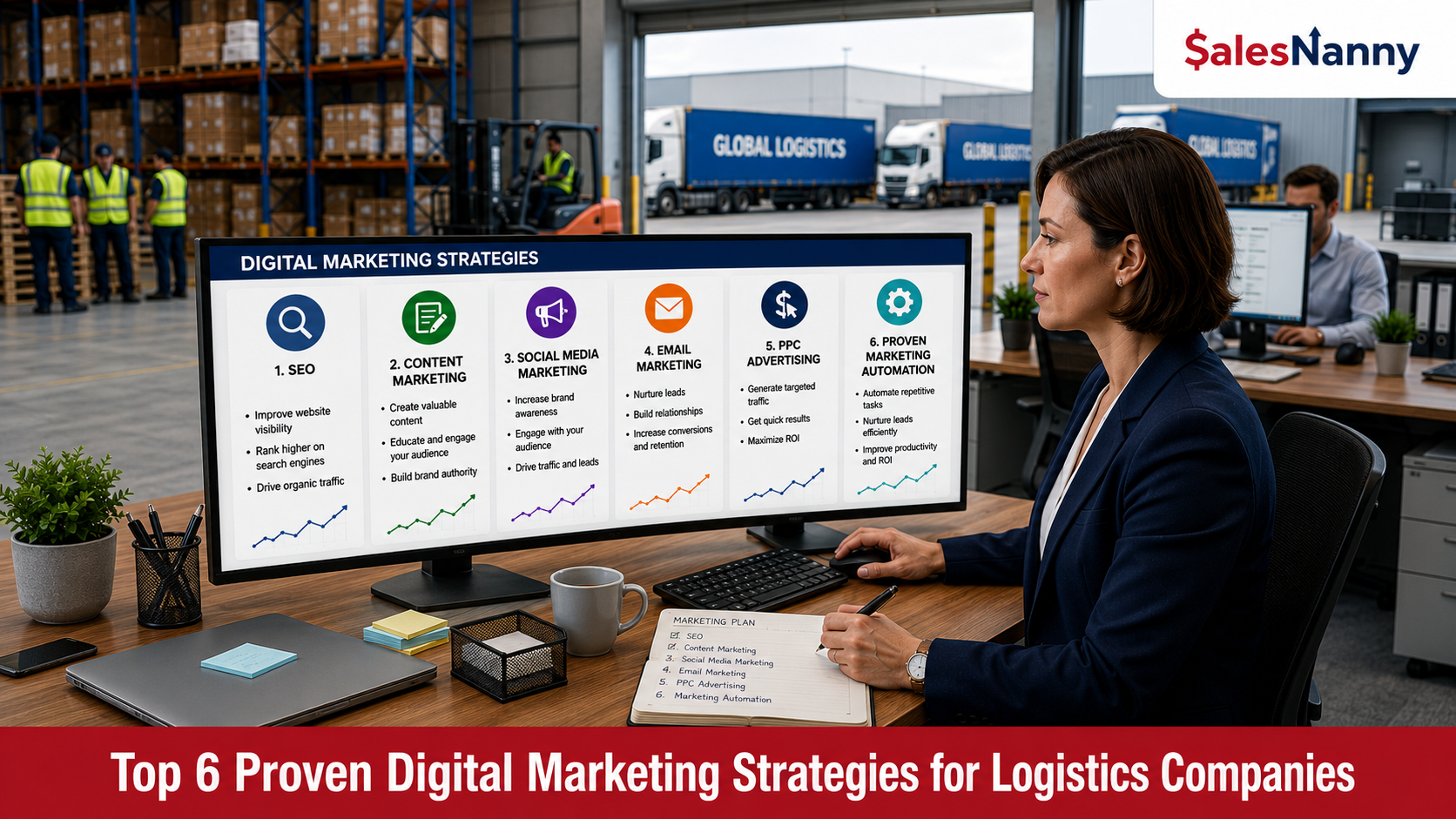
Building a successful marketing strategy is not about being present on every platform or following every marketing trend. It starts with creating a strong business foundation, understanding what makes your company different, and consistently communicating that value to your target audience. The most successful logistics companies focus on a few proven principles that strengthen both their reputation and their visibility in the marketplace.
1. Quality First: You Have to be the Best to be at the Top
The foundation of every successful marketing strategy is exceptional service.
Many logistics companies invest heavily in marketing while overlooking the customer experience. The reality is that marketing can attract attention, but it cannot compensate for operational shortcomings. In a highly competitive industry where customers have numerous alternatives, service quality directly influences reputation, retention, and referrals.
Whether it’s on-time delivery, responsive communication, shipment visibility, or operational efficiency, customers expect consistency. Companies that consistently exceed expectations create loyal customers who become advocates for the business.
Before investing in advanced marketing initiatives, logistics companies should evaluate their service standards and customer experience. Businesses that deliver outstanding service create a strong foundation that makes every marketing effort more effective. When customers trust your company, marketing becomes easier because your reputation supports your message.
2. Reviews and Referrals are Critical: Create a Review-Gathering Process
Trust plays a major role in logistics purchasing decisions.
Prospective customers want reassurance that a provider can deliver on its promises. One of the most effective ways to establish that trust is through customer reviews, testimonials, and referrals.
The challenge is that many companies wait for reviews to happen naturally. Even satisfied customers rarely leave reviews unless they are asked.
Creating a structured review-gathering process helps generate valuable social proof. Follow up with satisfied clients, request testimonials, and encourage feedback after successful projects. Showcase positive reviews on your website and marketing materials.
Every review acts as a trust signal that helps future prospects feel more confident about contacting your business. Over time, a consistent review strategy can become one of the strongest drivers of credibility and lead generation.
3. Find Your Marketing Niche and Go All In
One of the biggest mistakes logistics companies make is trying to market themselves to everyone.
A broad message often fails to resonate with any specific audience. Companies that specialize in solving particular challenges are usually more memorable and easier for prospects to understand.
Identify the industries, services, or customer segments where your company delivers exceptional value. This may include eCommerce fulfillment, cold chain logistics, freight forwarding, manufacturing logistics, last-mile delivery, or warehousing solutions.
When your marketing focuses on a specific niche, your messaging becomes more relevant and persuasive. Prospects quickly recognize that your company understands their challenges and has experience solving them.
Specialization not only improves marketing effectiveness but also helps position your company as an authority within a specific market segment.
4. Build Relationships with Key Industry Players
Despite the growth of digital marketing, logistics remains a relationship-driven industry.
Strategic partnerships, industry associations, suppliers, technology providers, and professional networks continue to influence business growth.
Building strong relationships expands your reach beyond traditional marketing channels. These connections create referral opportunities, strengthen credibility, and increase visibility within the industry.
Actively participate in industry events, contribute valuable insights, engage with professional communities, and collaborate with complementary businesses whenever possible.
Companies that combine strong digital visibility with meaningful industry relationships often develop a broader and more sustainable pipeline of opportunities.
5. Invest in Your Business and Marketing During Challenging Times
When market conditions become uncertain, many businesses reduce their marketing investments.
While this approach may seem logical in the short term, it often creates long-term challenges. Reduced visibility makes it harder to maintain awareness, generate opportunities, and strengthen market positioning.
Companies that continue investing in marketing during difficult periods often gain a competitive advantage because competitors become less visible.
Consistent marketing keeps your business in front of potential customers and strengthens brand recognition over time. When market conditions improve, companies that maintained their visibility are often in a stronger position to capture new opportunities.
Marketing should be viewed as a long-term investment that supports sustainable growth rather than a short-term expense that can be switched on and off.
6. Build a Strong Online Presence that Supports Trust
A professional online presence reinforces every other marketing effort.
Today, potential customers often evaluate multiple logistics providers before making contact. Your website, customer testimonials, service pages, industry content, and company information help shape that first impression.
A strong online presence should clearly communicate who you help, what services you provide, and why customers choose your company.
Regularly sharing industry insights, showcasing customer success stories, and maintaining an informative website demonstrate expertise and build confidence among potential buyers.
The goal is not simply to attract website visitors. The goal is to create trust before a conversation ever begins. Companies that successfully achieve this often see higher-quality inquiries and stronger conversion rates.
Why Choose the SalesNanny?
We understand that logistics marketing requires a different approach than traditional consumer marketing.
Your buyers are supply chain managers, operations leaders, procurement teams, and business decision-makers who prioritize reliability, expertise, and trust. Our team helps logistics companies create marketing strategies that strengthen credibility, improve visibility, and generate qualified business opportunities.
From content creation and SEO to lead generation, digital marketing funnel development, and website optimization, we focus on strategies designed specifically for logistics and supply chain businesses. Rather than chasing vanity metrics, we help companies build a sustainable marketing foundation that supports long-term growth and meaningful business results.
Conclusion
A successful digital marketing strategy for logistics companies is not built on shortcuts or quick wins. It is built on exceptional service, customer trust, niche positioning, industry relationships, consistent investment, and a strong online presence. As buyer behavior continues to evolve, logistics companies that combine operational excellence with strategic marketing will be better positioned to attract qualified prospects and create sustainable growth. By focusing on these six proven strategies, businesses can strengthen their reputation, increase visibility, and build a predictable path toward long-term success. If you’re ready to take the next step, schedule a free call to discuss your business goals and growth opportunities.