Getting traffic is not the problem for many businesses. The real challenge is turning the right searches into actual leads and sales.
Yes, Google Ads can put your business in front of people who are already looking for what you offer, but simply running ads does not guarantee results.
The right keywords, targeting, ad message, landing page, and tracking all play a role in how well a campaign performs.
In this blog, we will look at what Google Ads is, how it works, and how businesses can use it to generate more qualified leads and sales.
What is Google Ads and How does it Work?
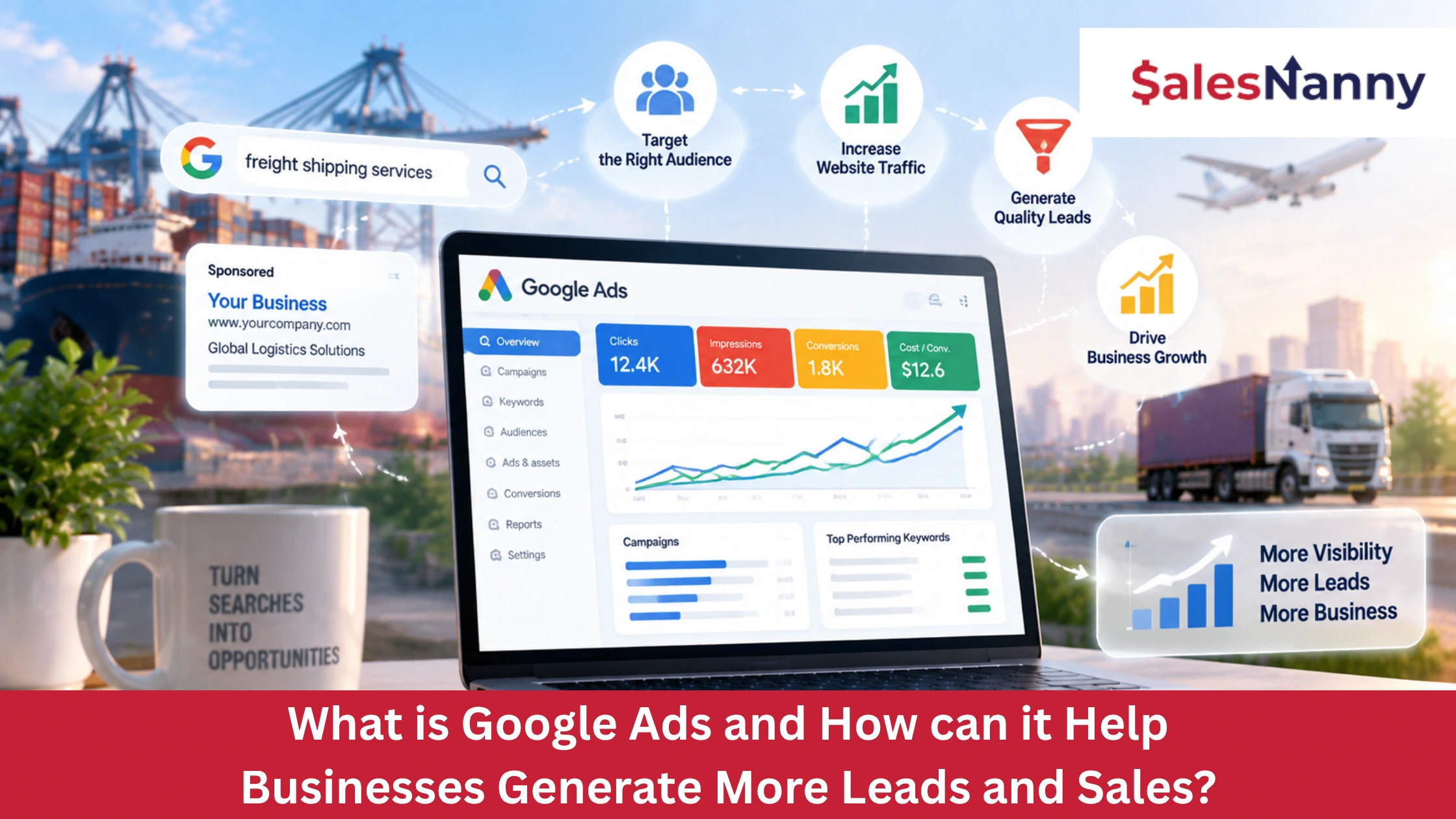
Google Ads is Google’s advertising platform for promoting products and services across Search, YouTube, websites, apps, and other Google channels.
For example, imagine someone searches:
“accounting software for small businesses”
Businesses targeting that search may appear in the sponsored results. If the user clicks an ad, they are taken to a page related to what they searched for.
Google then uses an auction to decide which eligible ads appear and where. The decision considers factors such as the bid, ad quality, landing-page experience, competition, search context, and expected impact of ad assets. This means the advertiser with the highest budget does not automatically get the top position.
Why is Google Ads Important for Businesses Looking for Faster Growth?
Google Ads can help businesses reach potential customers at the moment they are actively searching, comparing options, or looking for a solution.
Reach People With Clear Intent
A person searching “commercial cleaning company near me” already has a specific need.
Search Ads can place your business in front of that person while they are looking for a provider, making the traffic more relevant than a broad awareness campaign.
Get Visibility Faster
SEO can build strong long-term visibility, but rankings usually take time.
Google Ads gives businesses another way to appear for relevant searches while their organic presence is still developing.
Target the Right Market
Campaigns can be set around factors such as keywords, locations, audiences, devices, and goals.
This helps businesses avoid showing ads too broadly and gives them more control over who they are trying to reach.
Connect Ads with Real Results
Conversion tracking can show whether people purchased, submitted an inquiry, called the business, signed up, or completed another useful action.
This helps businesses understand which campaigns are creating value rather than looking only at clicks.
What Types of Google Ads can Businesses Use?
Different Google Ads campaign types serve different goals. Some are better for capturing existing demand, while others are useful for awareness, e-commerce, or reaching audiences across multiple channels.
Search Ads
Search campaigns show text ads around Google search results.
They work well when people are already searching for the product or service you offer, making them useful for lead generation and sales.
Display Ads
Display campaigns use visual ads across websites and apps.
They can help businesses build awareness or reconnect with people who have already visited the website or shown interest.
Shopping Ads
Shopping campaigns are designed for products and can display information such as product images, prices, and store details.
They are mainly suited to e-commerce businesses.
Video Ads
Video campaigns allow businesses to reach audiences on YouTube and other supported placements.
They can be useful for product demonstrations, service explanations, brand awareness, and reaching people earlier in the buying journey.
Performance Max
Performance Max is a goal-based campaign type that can run across Google’s inventory, including Search, YouTube, Display, Discover, Gmail, and Maps.
It is designed around goals such as leads and sales rather than focusing on one advertising channel.
How does a Google Ads Campaign Turn Searches Into Leads and Sales?
A Google Ads campaign turns interest into an opportunity when the search, ad, landing page, and next step all match.
Search intent → Relevant ad → Relevant landing page → Clear action → Conversion
For example, someone searching “warehouse management software demo” is clearly looking for a specific solution.
If the ad sends that person to a general homepage, they may leave and continue searching elsewhere.
A better landing page would explain the software, show relevant benefits and proof, answer key questions, and provide a clear way to request a demo.
The easier that journey feels, the better the chance of turning a search into a real business conversation.
What Factors Affect Google Ads Campaign Performance?
Google Ads performance depends on how well several parts of the campaign work together. A weak point in one area can affect the result of the whole campaign.
Keywords and Search Intent
Keywords decide which searches your business wants to compete for, so choosing the wrong ones can quickly waste budget.
For example, a company selling paid accounting software may not want to spend heavily on people searching for “free accounting templates.”
The keyword may look relevant at first, but the search intent is completely different.
That is why keyword selection should focus on what the person is actually looking for, not just search volume.
Ad Relevance
The ad should clearly connect with the search that triggered it.
If someone searches for a specific service but sees a broad company message, they may ignore the ad.
Using language that reflects the user’s need makes the ad easier to understand and more relevant.
Bidding and Budget
Bids and budget affect how your campaign can compete, but simply bidding more is not the answer.
Google also considers the quality and relevance of the ad and landing page when deciding whether an ad can appear and where it may be placed.
Landing-Page Experience
Getting the right click is only half the job.
If the landing page loads slowly, gives unclear information, or does not match what the ad promised, the visitor may leave.
A strong website development approach should keep the message consistent from the ad to the page and make the next step easy to find.
Conversion Tracking
Without proper tracking, you may know which ads received clicks but not which ones produced actual business results.
Tracking enquiries, purchases, calls, demo requests, or other important actions helps show where the budget is working.
Google’s Quality Score can also help identify issues with expected CTR, ad relevance, and landing-page experience. However, Google states that the 1–10 Quality Score itself is a diagnostic tool and is not directly used in the auction.
How can Businesses Generate Better-Quality Leads From Google Ads?
Better lead quality starts with reaching people whose search shows a real need for what you sell.
Use keywords with clear commercial intent and regularly review the search terms that are triggering your ads. Irrelevant searches can be excluded using negative keywords.
The ad and landing page should also set the right expectation. Be clear about the service, offer, location, pricing approach, or type of customer you serve where relevant.
Most importantly, do not judge a campaign only by the number of forms submitted.
If one campaign produces 30 enquiries but only two are useful to sales, while another produces 15 enquiries and eight become genuine opportunities, the second campaign is delivering better value.
How can You Reduce Wasted Spend and Improve Google Ads ROI?
Reducing wasted spend means putting more of your budget toward activity that supports a real business goal.
Review search terms, remove irrelevant queries, and compare which campaigns are producing valuable actions instead of focusing only on clicks.
The landing page should also be reviewed. Even a strong ad can lose potential customers if the page is slow, confusing, or unrelated to the message they clicked.
A focused paid ads marketing strategy should connect targeting, messaging, landing pages, and tracking rather than treating each one separately.
What Google Ads Metrics Should Businesses Track?
Businesses should track metrics that show both advertising performance and business value.
Click-through rate (CTR) shows how often people click after seeing the ad.
Cost per click (CPC) shows what you are paying for those visits.
Conversion rate shows how often users complete the intended action, while cost per lead or acquisition helps show what each result costs.
If revenue or conversion values are available, return on ad spend (ROAS) can show how much value is being generated compared with advertising spend.
For lead-generation campaigns, also look at lead quality. A low CPL is not a good result if most enquiries never become genuine sales opportunities.
What Common Google Ads Mistakes can Reduce Results?
Google Ads campaigns can struggle when the setup does not match the actual business goal.
Common mistakes include choosing keywords without understanding intent, sending every ad to the homepage, using the same message for different audiences, and judging success mainly by clicks or low CPC.
Another mistake is making changes too quickly without enough data or leaving a campaign untouched even when results clearly need attention.
Campaign decisions should be based on what is helping the business generate useful leads, sales, or other meaningful outcomes.
When should a Business Work With a Google Ads Partner?
Managing Google Ads becomes difficult when your team has to handle keyword research, campaign setup, tracking, landing pages, budgets, and lead quality alongside other marketing work.
That is usually when outside support can help.
If you are comparing the best digital marketing agency options for paid advertising, look for a team that understands your business goals and can explain how campaign activity connects with leads and sales, not just clicks and impressions.
Conclusion
Google Ads can help your business reach people at the right moment, but good results depend on what happens before and after the click.
The real goal is not simply to get more traffic. It is to turn relevant searches into real business opportunities.
Want to see how Google Ads could work better for your business?
Book a Free Consultation with SalesNanny.