Your business may have a good website, strong services, and an active sales team. But if qualified inquiries are not coming in consistently, growth can quickly slow down.
SEO can build valuable long-term visibility, but competitive keywords often take time to rank. Meanwhile, sales targets continue, pipelines need new opportunities, and relying only on referrals or organic traffic may not be enough.
That is where paid ads can help.
Paid advertising allows businesses to reach people who are already searching for a solution, match a specific customer profile, or have shown interest in a relevant service.
But getting clicks is not the goal. The real challenge is turning paid traffic into qualified leads through the right targeting, message, landing page, and follow-up process.
In this blog, we will look at how businesses can use paid ads to generate qualified leads faster, choose the right platforms, and avoid wasting budget on traffic that does not turn into real sales opportunities.
How does Paid Advertising Support Business Growth and Lead Generation?
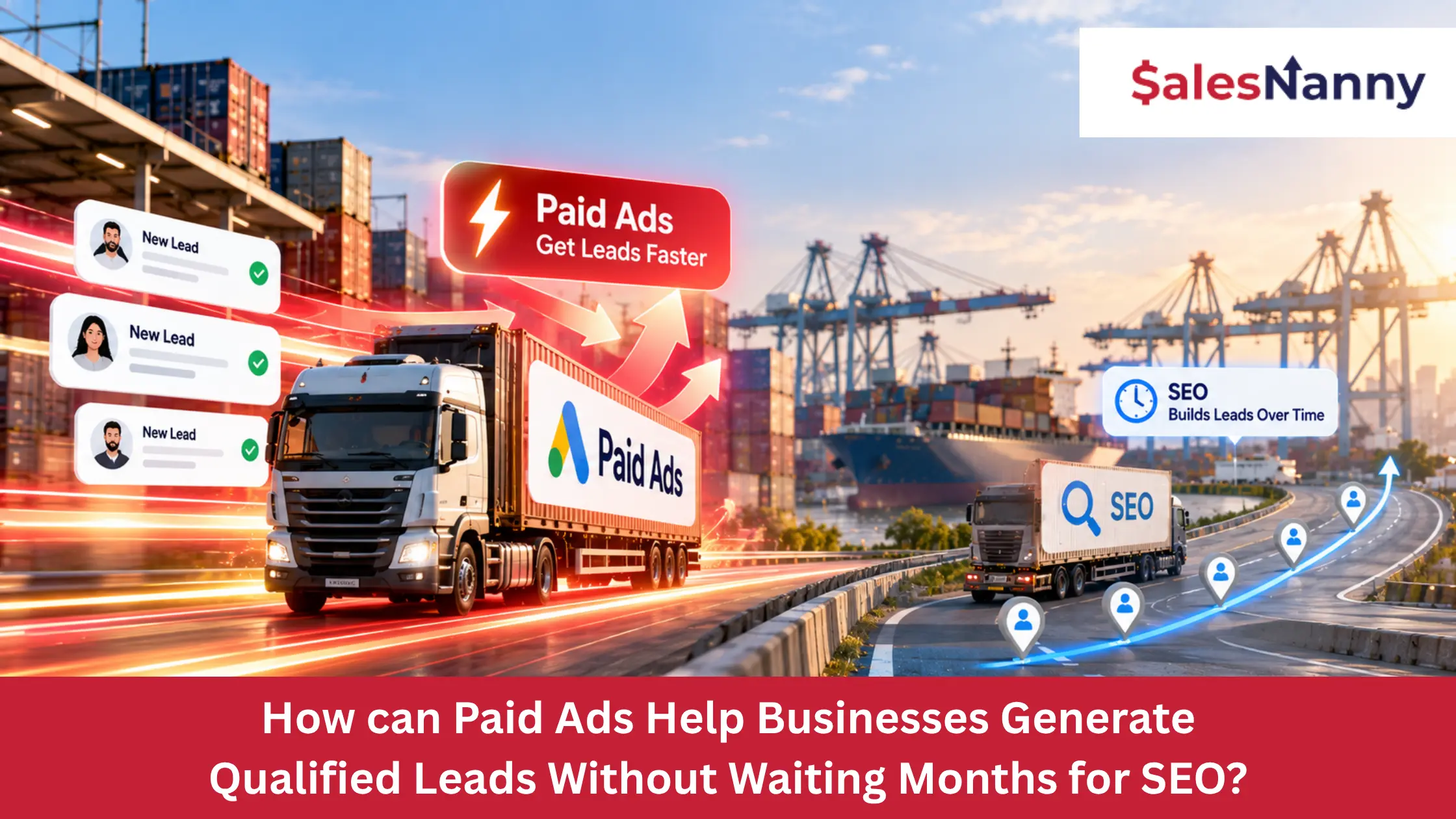
Paid advertising helps businesses reach potential customers faster at the exact moment they are searching for a solution.
Imagine a customer needs a freight partner for an urgent shipment. They go to Google, search for a provider, compare a few options, and contact the company that looks most relevant and trustworthy.
If your business does not appear at that moment, you may lose the opportunity before the customer even knows you exist.
SEO can help your business earn that visibility over time, but it may take months to build strong rankings. Paid advertising works differently. A well-targeted campaign can place your business in front of people who are already searching for a service, comparing providers, or ready to take action.
Why do Most Businesses Struggle to Generate Consistent Leads?
Most businesses want more sales, but many start marketing without a clear lead-generation goal or proper strategy.
They may build a website, run ads, post on social media, or depend on the sales team, but these activities are not connected. Without knowing who to target, which channel to use, and what should happen after a lead comes in, results become inconsistent.
Common reasons include:
- No clear lead-generation goal
- No proper marketing strategy
- Targeting the wrong audience
- Using the wrong channel for the expected result
- Weak landing pages or website messaging
- Poor follow-up after an inquiry
- No connection between marketing and sales
A good website or a strong sales team alone will not guarantee leads. If the right customers cannot find your business or do not get a clear reason to contact you, competitors with a better strategy may reach them first.
Consistent lead generation starts with a clear goal, the right marketing channel, and a proper follow-up process.
How can Businesses Use Paid Ads to Generate Leads Consistently?
Paid ads can generate leads by putting your business in front of potential customers at different stages of their buying journey. The key is using each platform for the job it does best.
Google Ads for High-Intent Searches
Google Ads can place your business near the top of search results when someone is actively looking for a service.
For example, a shipper searching for a freight forwarder, road transport provider, or warehousing partner can see your ad, visit the relevant page, and submit an inquiry.
Different Google campaign types can also be used based on whether the goal is search demand, wider reach, or remarketing.
LinkedIn Ads for B2B Prospects
LinkedIn Ads help businesses reach specific decision-makers rather than waiting for them to search.
A logistics company can target supply chain managers, procurement heads, operations leaders, or business owners based on role, industry, company size, and location.
Meta Ads for Lead Capture
Meta Ads can support service promotion, wider audience reach, and lead-form campaigns, especially when businesses want to build awareness in a specific market.
Retargeting Ads for Interested Visitors
Retargeting helps reconnect with people who have already visited your website or interacted with a campaign but have not yet made an inquiry.
Using these platforms for different purposes can help businesses create a more steady flow of relevant sales opportunities.
Which Paid Advertising Platform Is Right for Your Business?
The right paid advertising platform depends on how your customers search and how your business sells.
If buyers are already searching for your service, Google Ads may be the stronger choice. If you need to reach specific B2B decision-makers, LinkedIn may be more suitable. Meta can support wider reach and lead capture, while retargeting helps bring back people who have already shown interest.
For example, a freight forwarder targeting urgent shipment enquiries may focus more on Google Search, while a logistics technology company targeting supply chain heads may get more value from LinkedIn.
The goal is not to choose the cheapest platform. It is to choose the platform that gives you the best chance of reaching people who are likely to become customers.
What Paid Advertising Strategies can Help Generate Better Leads?
Once the right platform is selected, the focus should shift from getting more clicks to attracting better-fit prospects.
Target Real Buying Intent
Choose keywords and audiences that show a clear need for your service. For a logistics business, searches related to freight rates, transport services, warehousing, or specific trade lanes may carry stronger intent than broad industry terms.
Keep the Ad and Landing Page Connected
The message in the ad should continue on the landing page. If someone clicks an ad for warehousing services, they should land on a page focused on that exact requirement.
A strong paid advertising strategy connects targeting, messaging, landing pages, and the conversion goal.
Make the Next Step Easy
The visitor should immediately know whether to request a quote, book a meeting, submit a requirement, or contact the sales team.
Measure Lead Quality, Not Just Lead Volume
Clicks and form submissions show activity, but the real value is in qualified opportunities.
Track which campaigns generate relevant enquiries, how many leads move into the sales pipeline, and which audiences create the strongest business opportunities.
Use Sales Feedback to Improve Campaigns
Marketing data shows where the lead came from. Sales feedback shows whether the lead was worth pursuing.
Using both helps businesses improve targeting, reduce wasted spend, and put more budget behind campaigns that generate better opportunities.
What Paid Ads Mistakes Can Waste Your Marketing Budget?
Paid ads usually waste budget when the campaign is launched without enough control over targeting, messaging, and follow-up.
Common mistakes include:
- Targeting keywords that are too broad
- Reaching audiences that are not a good fit
- Forgetting to add negative keywords
- Using generic ad copy for every customer type
- Sending all traffic to the homepage
- Using landing pages that do not match the ad
- Asking for too much information in the form
- Tracking clicks instead of qualified leads
- Changing campaigns too quickly before enough data is collected
- Following up too slowly after an inquiry
For example, if a freight company runs an ad for urgent road transport but sends visitors to a general logistics homepage, the customer may leave without finding the exact service they searched for.
If clicks are coming in but enquiries are still low, improving conversion rate optimization can help identify issues in the landing page, CTA, form, and overall conversion path.
The goal is not to spend more on ads. It is to reduce wasted clicks and make it easier for the right prospect to become a lead.
Looking to Generate Consistent Leads for Your Business With Paid Advertising?
Paid advertising can help your business reach potential customers faster, especially when they are already searching for a service or showing clear buying intent.
But consistent leads do not come from running ads alone. The right audience, clear messaging, a relevant landing page, proper tracking, and quick follow-up all need to work together.
When these elements are aligned, paid campaigns can create a more steady flow of qualified inquiries and give your sales team more opportunities to convert.
Why Choose SalesNanny for Paid Advertising and Lead Generation?
SalesNanny specializes in digital marketing for logistics and supply chain businesses, with experience supporting freight forwarders, 3PLs, transport companies, warehousing providers, and other logistics brands.
With 10+ years of industry and marketing experience, 80+ accounts managed, and 100K+ inbound leads generated, we understand that a successful paid campaign is not just about clicks. It needs to bring the right enquiries to the sales team.
For businesses looking for the best digital marketing agency for logistics and supply chain, SalesNanny connects audience targeting, paid ads, landing pages, conversion tracking, and lead quality into one clear lead-generation process.
Our focus is simple: help logistics businesses turn paid visibility into relevant enquiries and stronger sales opportunities.
Conclusion
Paid advertising can help businesses reach high-intent prospects faster, but better results come from reaching the right audience with the right message and giving them a clear path to take action.
The right platform, targeting, landing page, tracking, and follow-up can turn paid campaigns into a more consistent source of qualified leads instead of just another marketing expense.
Need more qualified leads for your logistics or supply chain business?
Book a Free Consultation with SalesNanny to discuss your paid advertising and lead-generation goals.