A business can publish blogs every month and still struggle to get meaningful traffic, rankings, or leads.
The problem is often not how much content is being published. It is whether that content is based on what potential customers are actually searching for and whether each page has a clear role in bringing them closer to the business.
Without that direction, companies can end up targeting unrelated keywords, creating similar articles, or attracting visitors who are unlikely to become customers.
This is where an SEO content strategy helps.
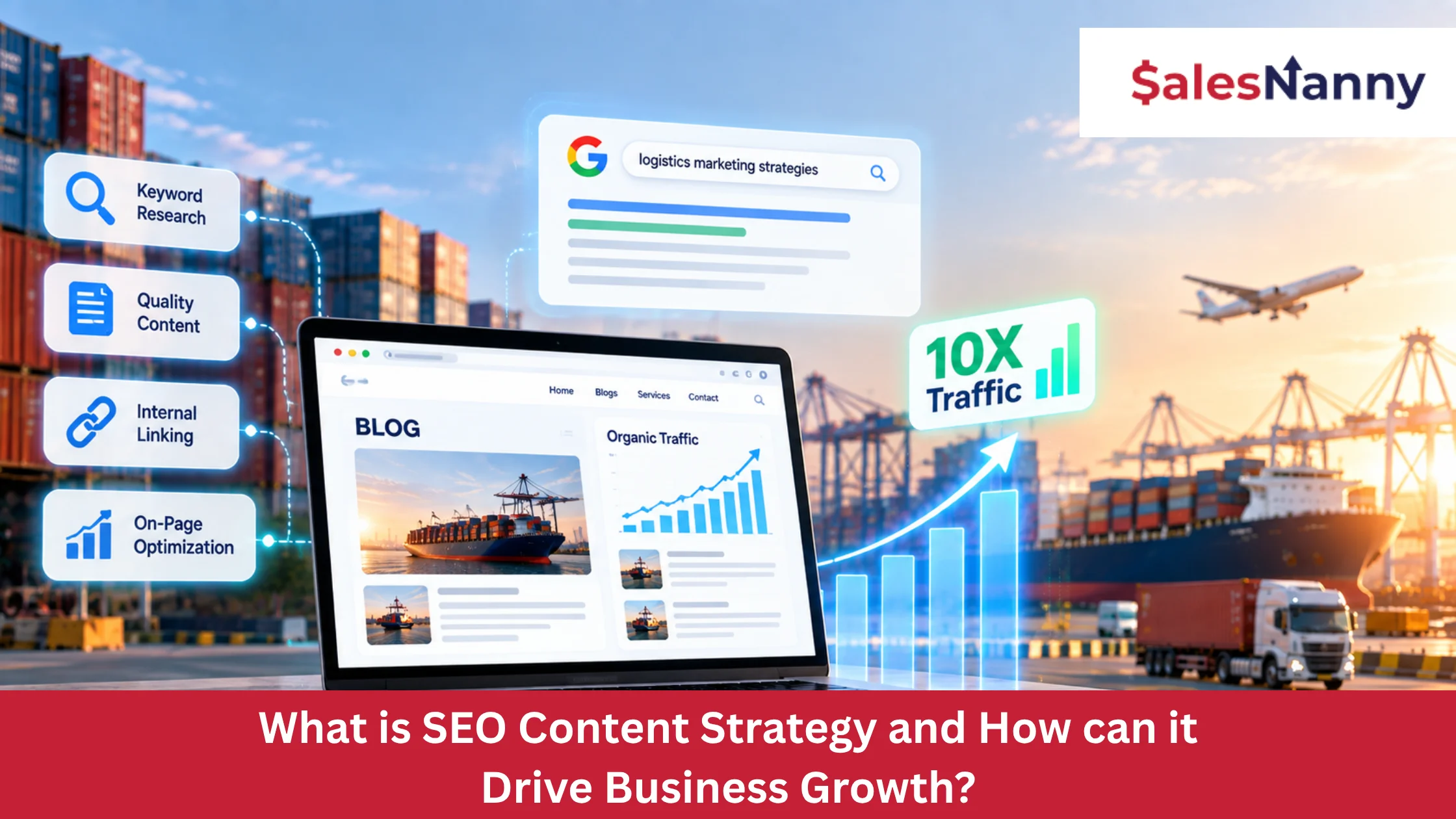
An effective SEO content strategy connects audience needs, keyword research, search intent, content planning, and business goals so every page has a clear purpose.
What is SEO Content Strategy?
An SEO content strategy is a structured approach to deciding what content to create, which searches to target, and how individual pages should work together to improve organic visibility.
Unlike general content marketing, an SEO content marketing strategy focuses closely on search behavior. It looks at what people search for, why they search for it, and what information they need at different stages of the buying journey.
For example, a business should not choose a blog topic only because it sounds relevant. Before creating it, the team should understand:
- Who is searching for the topic
- What problem they are trying to solve
- Which keyword best represents that need
- What type of page already ranks for the search
- What action the visitor should take next
This gives content a clear role instead of treating every blog as a separate publishing task.
What are the Benefits of an SEO Content Strategy?
A well-planned SEO content strategy helps businesses turn content into a long-term source of visibility and qualified traffic.
Better Organic Search Visibility
Search engines need enough context to understand what a website covers.
Publishing useful content around connected topics can create stronger topical coverage and give the website more opportunities to appear for relevant searches.
Rather than targeting one keyword with one page, businesses can build a connected library around the questions their audience regularly asks.
More Qualified Website Traffic
High traffic numbers do not always mean strong business results.
A focused content marketing strategy for SEO targets searches connected to real customer problems, needs, and buying intent.
Someone actively researching a solution is generally more valuable than someone arriving through an unrelated high-volume keyword.
The objective is not simply more sessions. It is attracting visitors who have a genuine reason to explore what the business offers.
Stronger Customer Journey
SEO content can support customers before they are ready to speak with sales.
An educational article may answer an early question. A comparison article can help someone evaluate options. A case study can build confidence, while a service page can explain how the business solves the problem.
When these pages are connected naturally, content can guide visitors from research to consideration and eventually toward an inquiry.
Long-Term Organic Growth
Useful content can continue attracting search traffic long after publication.
Pages can also gain more value over time when they are refreshed, internally linked, and supported by related content.
This makes SEO content different from short-term campaigns that stop producing visibility once the campaign ends.
What should an Effective SEO Content Strategy Include?
A strong strategy combines search data with an understanding of the customer.
Audience and Search Intent Research
Start by understanding what customers need before choosing keywords.
Two people may search around the same topic but expect very different answers.
For example, someone searching “what is CRM software” is learning about the category. Someone searching “CRM software pricing” is much closer to evaluating a solution.
Matching content to search intent helps businesses create the right answer for the right stage.
Keyword Research and Topic Planning
Keyword research shows how customers describe their needs in search.
A good keyword plan should consider:
- Primary keywords
- Secondary keywords
- Long-tail searches
- Search volume
- Keyword difficulty
- Search intent
- Competitor content gaps
A strong keyword does not need to have the highest volume. A smaller keyword with clear commercial relevance may deliver more business value.
Topic Clusters and Internal Linking
Publishing unrelated blogs can leave the website with a large content library but little structure.
Topic clusters solve this by connecting related articles around a broader subject.
For example:
SEO Content Strategy
→ Keyword Research
→ Search Intent
→ On-Page SEO
→ Internal Linking
→ Content Audit
Natural internal links then help users move between these resources while giving search engines a clearer understanding of how the topics relate.
Businesses building a wider organic growth plan can also connect content with a structured SEO and organic marketing strategy.
On-Page SEO
Useful content still needs a strong on-page foundation.
Each page should have:
- A clear search-focused title
- Logical heading structure
- Natural keyword usage
- A useful meta description
- Relevant internal links
- Descriptive image alt text
- Easy-to-read formatting
The goal is to make the page understandable for both the reader and search engines without making the writing feel optimized only for algorithms.
What Happens When Businesses Publish Content Without an SEO Strategy?
Creating content without a clear SEO plan can lead to several avoidable problems.
Businesses may:
- Target keywords with little relevance to their customers
- Create multiple pages competing for the same query
- Publish articles that receive impressions but few clicks
- Attract traffic that never reaches service pages
- Leave valuable content isolated without internal links
- Continue creating new pages while older opportunities are ignored
This is why publishing frequency alone is not a reliable measure of progress.
A smaller, connected content library built around real customer searches can often be more useful than hundreds of unrelated articles.
When does an SEO Content Strategy Make Sense for a Business?
An SEO content strategy becomes especially important when a business is investing consistently in content but cannot clearly connect that work with organic growth.
Common signs include:
You are Publishing, but Rankings are Not Improving
This may indicate poor keyword selection, weak search intent alignment, or a lack of topical depth.
Organic Traffic is Growing, but Leads are Not
The website may be attracting informational visitors without connecting them to commercially relevant content.
A strong B2B SEO strategy should connect search visibility with the questions potential customers ask throughout their decision-making journey.
Different Blogs are Competing With Each Other
A keyword map and content audit can help clarify which page should target each search and reduce unnecessary overlap.
Existing Content is Losing Performance
Older pages may need refreshed information, improved search intent alignment, stronger internal links, or updated examples rather than being replaced with another article.
How can Businesses Build an SEO Content Strategy?
The process should begin with a business objective rather than a list of keywords.
First, define what SEO needs to support. That may be qualified traffic, lead generation, service visibility, or growth in a specific market.
Then:
- Audit existing website content.
- Research customer searches and competitors.
- Group keywords by topic and search intent.
- Map keywords to specific pages.
- Identify content gaps across the buyer journey.
- Create clear SEO content briefs.
- Publish and internally connect related pages.
- Review performance and update content regularly.
An SEO content strategy should keep evolving as customer searches, competition, and business priorities change.
How should Businesses Measure SEO Content Strategy Performance?
Rankings are useful, but they are only one part of the picture.
Businesses should monitor:
- Organic traffic
- Search impressions and clicks
- Keyword positions
- Click-through rates
- Engagement
- Visits to important service pages
- Conversions
- Qualified leads
A page attracting 500 relevant visitors and generating inquiries may be more valuable than another receiving 5,000 visits with no commercial action.
If visitors are reaching your content but not moving forward, improving conversion rate optimization can help make the journey from information to inquiry clearer.
The real measure of SEO content success is not traffic alone. It is whether the right audience is finding the business and moving closer to a meaningful action.
How Is AI Changing SEO Content Strategy?
AI can make research, content planning, drafting, and optimization faster, but businesses still need a clear strategy behind the process.
AI can help identify topic gaps, organize research, develop outlines, refresh older content, and repurpose useful information.
However, publishing more AI-generated pages is not the same as building SEO authority.
Businesses still need:
- Clear search intent
- Accurate information
- Original experience
- Human review
- Useful examples
- Logical internal linking
- A clear purpose for each page
The better approach is to use AI to support the SEO content workflow while keeping customer needs and business knowledge at the center.
Why Choose SalesNanny for SEO and Content Marketing?
A strong SEO content strategy should connect search demand with real business opportunities, not just produce more blogs.
At SalesNanny, we look beyond keyword lists and publishing calendars. We connect search intent, keyword opportunities, topic clusters, existing content performance, internal linking, and service-page pathways so every piece of content has a clear role in the customer journey.
For businesses comparing the best digital marketing agency for SEO and content marketing, the difference often comes down to strategy. We focus on questions such as:
- Which searches are most relevant to your business?
- Which existing pages can be improved before creating new ones?
- Where are competitors gaining visibility that you are missing?
- How should informational content connect with service and conversion pages?
- Which content is bringing relevant traffic and which is creating real business value?
This approach helps turn SEO content from a regular publishing activity into a more connected organic growth system focused on visibility, qualified traffic, and stronger business opportunities.
Conclusion
SEO content works best when every page has a reason to exist.
Instead of publishing based on assumptions, businesses need to understand what their audience searches for, match content with the right intent, connect related pages, and measure what happens after visitors arrive.
A structured SEO content strategy can help turn scattered content into a connected organic growth channel that attracts more relevant visitors and supports long-term business goals.
Ready to build an SEO content strategy around the searches that matter to your customers?
Book a Free Consultation with SalesNanny and discuss how SEO and content marketing can support your business growth.