Your freight forwarding company may handle hundreds of shipments every month. But what if your next big customer doesn’t know your business exists?
Think about it. Your team manages shipments, handles customs clearance, and keeps customers happy. Yet when it’s time to win new business, you’re still relying on referrals and the same industry contacts.
Meanwhile, an importer looking for a reliable freight forwarder is comparing companies on Google, checking their services, and sending RFQs. Your business might be the perfect fit, but if you’re not visible online, that opportunity could go to a competitor.
That’s a challenge many logistics businesses face. Strong operations help you retain existing customers, but they don’t automatically attract new ones.
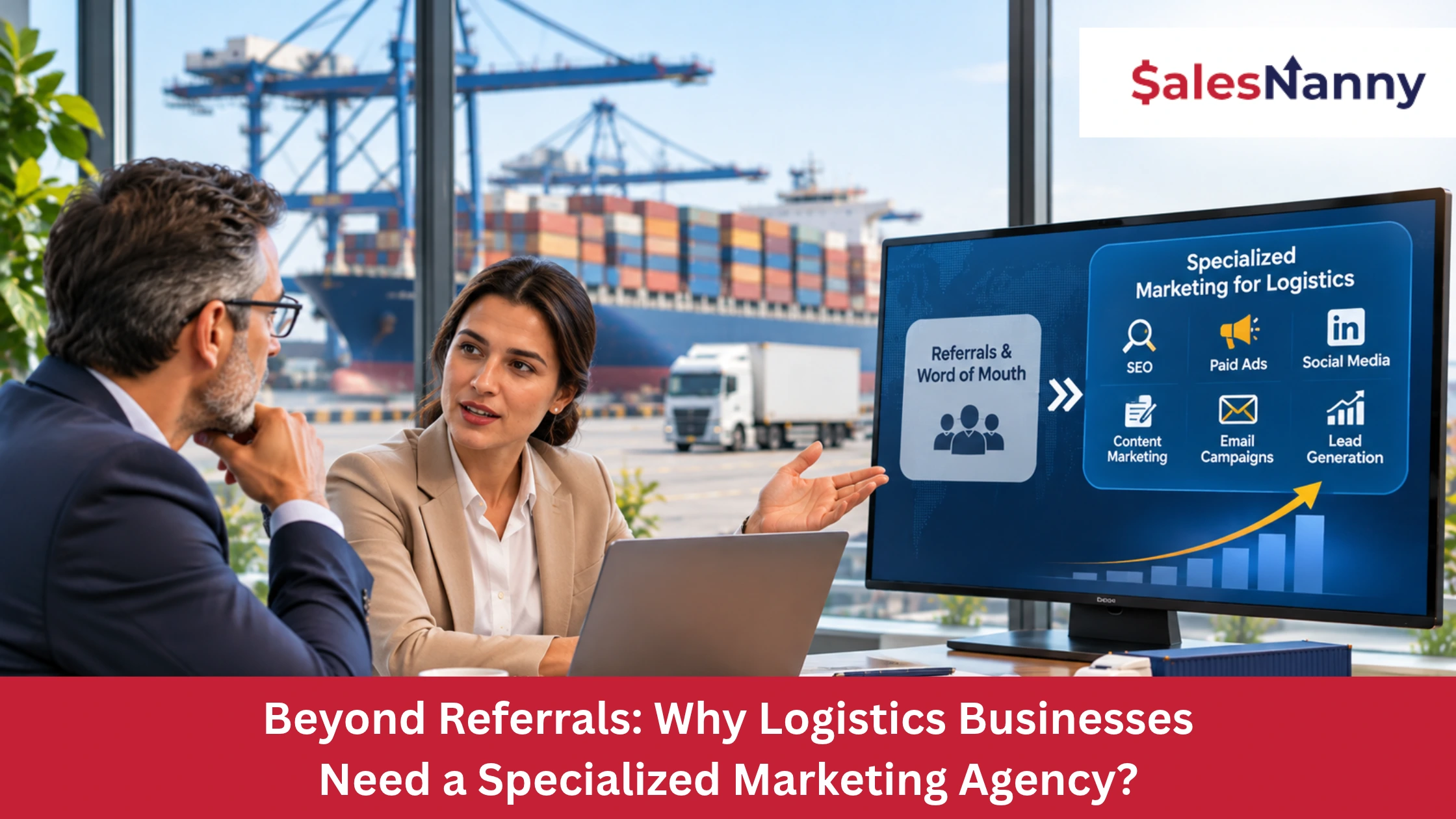
So, how can you reach customers beyond your existing network? Alongside referrals, there are other ways logistics businesses can win new customers. Working with a specialized logistics marketing agency is one way to bring those efforts together.
What are Referrals and Word-of-Mouth Marketing in the Logistics Business?
Referrals happen when an existing customer or business partner recommends your logistics services to another company. Word of mouth is the trust and reputation your business builds when customers share their experiences with others.
For example, a customs broker may connect you with an importer looking for ocean freight services, or a manufacturer may recommend your freight forwarding company to an exporter.
These recommendations can bring valuable business because they come from people who already know and trust your services.
However, referrals usually reach people within your existing network. If you want to expand into new trade lanes, attract customers from other countries, or receive more enquiries each month, waiting for recommendations may not be enough.
Your business needs other ways to reach potential customers who haven’t heard of your company yet.
What Makes a Specialized Logistics Marketing Agency Different From a General Marketing Agency?
A specialized logistics marketing agency understands how freight and supply chain businesses operate, who their customers are, and what influences their buying decisions.
A general marketing agency may understand SEO, advertising, and website traffic, but it may need time to learn the specific requirements of the logistics industry.
For example, a freight forwarder handling Full Container Load (FCL) shipments from China to the United States needs to reach importers with matching shipping requirements, not everyone searching for transportation services.
A logistics-focused agency understands the difference between FCL and LCL shipments, customs clearance, trade lanes, and regular shipping contracts. This helps it create relevant content, targeted advertisements, and campaigns that speak directly to potential customers.
The difference is not simply getting more website visitors. It’s understanding which visitors are likely to need your logistics services.
How can a Specialized Marketing Agency Help Logistics Businesses Attract Customers Online?
A specialized agency helps turn your logistics experience into a stronger online presence. By connecting SEO, content marketing, paid advertising, and website development, it can help your business reach buyers who are actively looking for services like yours.
1. Improve Your Logistics Business’s Online Visibility With SEO
SEO helps potential customers find your company when they search for freight forwarding, customs brokerage, transportation, or warehousing services.
For example, an importer searching for “ocean freight forwarder from China to USA” is likely looking for companies that can handle that trade lane.
A logistics-focused SEO strategy targets relevant services, locations, and customer searches. This helps attract visitors who are more likely to need your services rather than unrelated website traffic.
2. Showcase Your Logistics Expertise Through Content Marketing
Your operations team answers shipping questions every day. Those same questions can become useful content for potential customers.
For example, an exporter may want to understand the difference between FCL and LCL shipping, while an importer may be looking for information about customs clearance documents.
Blogs, service guides, FAQs, and case studies can answer these questions and demonstrate your company’s experience.
When customers find helpful information on your website, they have more reasons to consider your business when they need a logistics partner.
3. Generate Relevant Enquiries With Targeted Paid Ads
Paid advertising helps your business reach customers who are actively searching for logistics services.
For example, if your company provides refrigerated transportation in Texas, Google Ads can target searches related to temperature-controlled freight in the locations you serve.
A specialized agency can build campaigns around your services, target locations, and customer requirements.
This helps you use your advertising budget more effectively by focusing on searches that match your business capabilities.
4. Turn Website Visitors Into Potential Customers
Your website should help logistics buyers understand what you offer and how to contact your team.
Imagine a manufacturer searching for project cargo transportation. Before requesting a quote, they may want to know your equipment capabilities, service locations, and experience handling heavy cargo.
Dedicated service pages, relevant case studies, and simple RFQ forms make that information easier to find.
By connecting website development with SEO and lead generation, a logistics marketing agency can help turn interested visitors into quotation enquiries.
What are the Benefits of Choosing a Specialized Logistics Marketing Partner?
Working with a specialized logistics marketing partner brings different marketing activities under one plan. This can make it easier to manage campaigns, reach suitable customers, and connect marketing efforts with sales goals.
1. Reduce Hiring Costs and Access a Full Marketing Team
Hiring separate employees for SEO, Google Ads, content writing, design, and website development can be expensive.
A specialized agency gives your business access to these skills without building a complete in-house team.
Depending on your requirements and the agency’s fees, this can reduce hiring and management costs.
2. Improve Lead Quality and Reach the Right Customers
More enquiries don’t always mean more business.
For example, a freight forwarder specializing in international ocean freight may receive requests for local parcel deliveries that it doesn’t handle.
A specialized marketing partner can target campaigns around your trade lanes, cargo types, service locations, and ideal customers.
This helps your sales team spend more time responding to relevant RFQs.
3. Build Stronger Customer Relationships Through Social Media
Not every logistics buyer needs a new service provider immediately.
Some may follow your company on LinkedIn, review your services, and remember your business when a new shipping requirement comes up.
Sharing useful industry information, completed shipment stories, and service updates helps potential customers become familiar with your expertise.
Consistent social media marketing can keep your business visible before buyers are ready to request a quotation.
4. Connect Marketing and Sales to Support Revenue Growth
Generating an enquiry is only the beginning. Your sales team still needs to respond, understand the customer’s requirements, and prepare a quotation.
An integrated marketing approach can connect website enquiries, lead tracking, and sales follow-ups.
Instead of measuring only website visits and clicks, your business can also monitor qualified RFQs, quotations, new customer accounts, and revenue linked to marketing campaigns.
This gives you a clearer picture of which marketing activities are supporting your sales pipeline.
How can You Choose the Right Logistics Marketing Agency for Your Business?
Start by checking whether the agency understands your services, customers, and business goals.
An agency experienced in freight forwarding, NVOCC, customs brokerage, transportation, and 3PL marketing may be better prepared to understand your target audience.
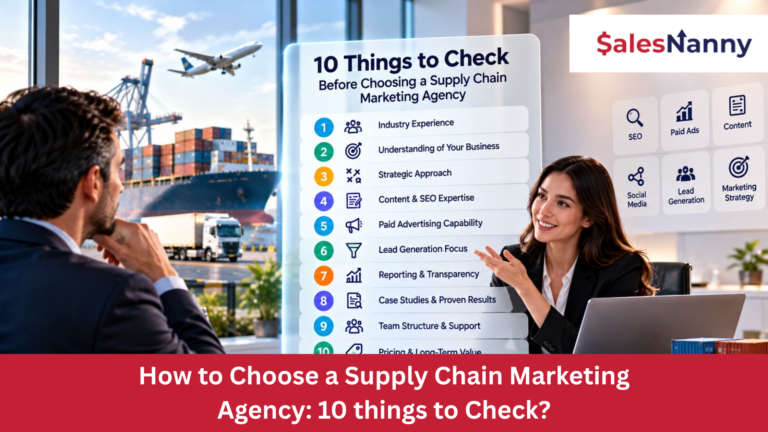
Before choosing a partner, ask:
- Does the agency understand your trade lanes, cargo types, and target customers?
- Can it provide the marketing services your business needs?
- Does it have relevant case studies or results you can verify?
- How does it measure qualified logistics leads?
- Can it connect marketing activities with your sales goals?
Choose an agency that understands your business and can explain how its work will support your customer acquisition efforts.
Why Choose SalesNanny for Your Logistics Business’s Sales Growth?
Your team knows how to move freight, manage documentation, and meet customer requirements. SalesNanny helps make that expertise visible to businesses searching for logistics services.
With 10+ years of logistics marketing experience, 80+ accounts managed, and 100K+ inbound leads generated, SalesNanny specializes in marketing for freight forwarders, 3PLs, NVOCCs, customs brokers, transportation companies, and warehousing providers.
Our services include SEO, paid advertising, content marketing, website development, branding, social media, lead generation, and inside sales.
Instead of managing several marketing providers, you can work with one team that understands logistics services, customer requirements, and the importance of qualified sales opportunities.
As a specialized digital marketing agency for logistics businesses, SalesNanny helps connect your online presence with the customers you want to reach.
Conclusion: Grow Your Logistics Business Beyond Referrals
Referrals and word of mouth will always be valuable in logistics. But reaching new customers beyond your existing network requires a stronger online presence.
A specialized logistics marketing agency can help you improve search visibility, communicate your services clearly, attract relevant enquiries, and connect marketing with sales.
Your company already knows how to deliver logistics services. The next step is making sure more potential customers know what you offer.
Ready to grow beyond referrals? Book a Free Consultation with SalesNanny to discuss your marketing and customer acquisition goals.