Why do some businesses generate plenty of leads but still struggle to create real sales opportunities?
The issue is often not a lack of marketing activity. SEO, ads, content, email, and outreach may all be running, but they are not always connected to the same sales lead generation process.
A stronger approach starts with attracting the right audience, understanding what they need, and giving qualified prospects a clear path toward a sales conversation.
For B2B businesses especially, the goal is not to collect more contacts. It is to generate better opportunities that can move through the pipeline and become customers.
In this blog, we will look at practical sales lead generation strategies that can help businesses attract, qualify, nurture, and convert more of the right prospects.
What is Sales Lead Generation?
Sales lead generation is the process of attracting potential customers, identifying their interest, collecting relevant information, and creating opportunities for the sales team to begin a meaningful conversation.
Leads may come from:
- Organic search
- Paid advertising
- Website forms
- Social media
- Email campaigns
- Webinars
- Referrals
- Outbound prospecting
- Industry events
However, a person submitting a form does not automatically make them a strong lead.
A useful lead should match your target customer profile, have a relevant need, and show enough interest or intent to justify further sales attention.
That is why lead quality matters as much as lead volume.
Why do Businesses Struggle to Generate Quality Leads?
Many businesses struggle because marketing and sales are working toward different definitions of success.
Marketing may focus on traffic, impressions, clicks, or form submissions. Sales wants to know whether the person has a real requirement and a reasonable chance of becoming a customer.
That disconnect can lead to:
- High traffic but few useful inquiries
- Large lead lists with poor-fit contacts
- Paid campaigns generating expensive but weak leads
- Content attracting visitors with little buying intent
- Slow follow-up after inquiries
- No clear definition of a qualified lead
Before investing more in lead generation, businesses should first define who they want to reach and what makes someone a worthwhile sales opportunity.
What Sales Lead Generation Strategies can Help Businesses Win More Customers?
The strongest results usually come from using several channels together rather than relying on one source.
1. Use SEO to Capture Existing Demand
Potential customers often begin by searching for a problem, service, or solution.
Blogs, service pages, comparison content, FAQs, and guides can help your business appear during those searches.
A structured SEO and organic marketing strategy should focus on searches connected to real customer needs rather than choosing topics only because they have high search volume.
For example, 200 visitors actively researching a service you provide may create more value than 5,000 visitors arriving through an unrelated informational topic.
2. Use Paid Advertising for High-Intent Prospects
Paid advertising can help businesses reach buyers faster, particularly when the audience already understands what they need.
Google Ads can capture high-intent searches, while LinkedIn can help B2B businesses reach specific industries, job roles, and companies.
A strong paid advertising strategy should connect targeting, messaging, landing pages, CTAs, and conversion tracking.
The important question is not only, “How many clicks did we get?” It is, “How many relevant sales opportunities came from those clicks?”
3. Create Content Around Real Buyer Questions
Prospects rarely contact a business after seeing one advertisement or reading one page.
They may need to understand the problem, compare solutions, check costs, review experience, or see proof before speaking with sales.
Useful content can support those decisions through:
- Educational blogs
- Comparison articles
- Case studies
- Service pages
- FAQs
- Customer success stories
Content should help potential customers answer the questions they naturally ask before making a decision.
4. Use LinkedIn and Targeted Outreach
For B2B lead generation, LinkedIn can help businesses reach decision-makers directly.
The key is avoiding generic outreach.
Identify the right industries, job roles, company sizes, and business situations first. Then build the conversation around a relevant problem or opportunity.
The objective is not to send more connection requests. It is to start more relevant conversations.
5. Use Email to Nurture Interested Prospects
Not every lead is ready to buy immediately.
Email can help businesses stay connected by sharing relevant case studies, useful content, service information, or answers to common questions.
Segmentation matters.
A prospect researching one service should not receive the same message as someone interested in a completely different solution.
6. Build a Consistent Follow-Up Process
A qualified lead may still need time, internal approval, more information, or reassurance before moving forward.
Instead of repeatedly asking whether they are ready to buy, follow up with something useful:
- A relevant case study
- An answer to a previous question
- Additional service information
- A comparison
- A clear meeting option
Consistent, useful follow-up helps keep genuine opportunities moving without making the process feel overly sales-driven.
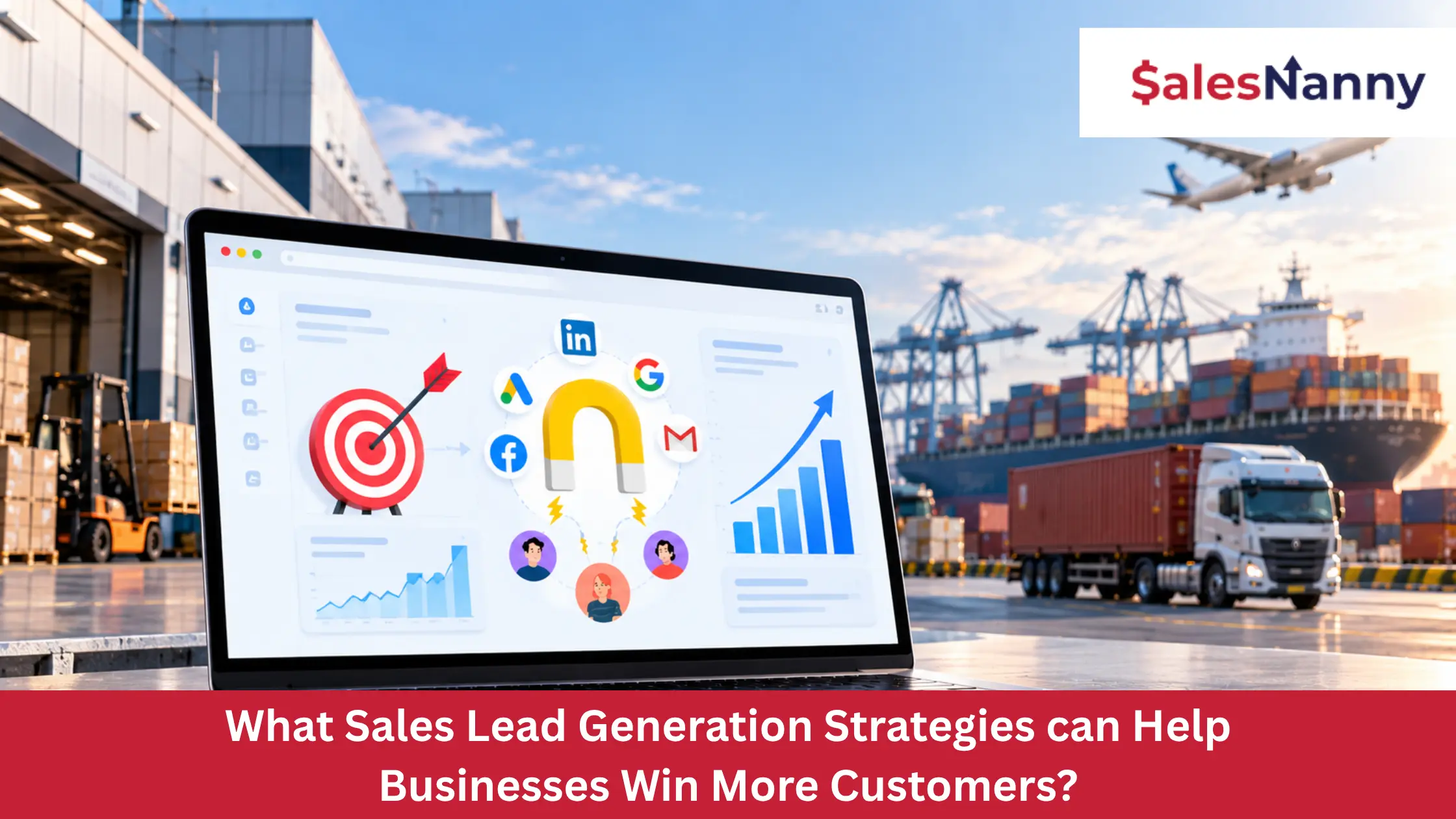
These channels should not operate separately. SEO and content can build early interest, paid advertising can capture active demand, LinkedIn can reach specific decision-makers, and email and follow-up can nurture prospects who are not ready to act immediately.
The right mix depends on your audience, sales cycle, and business goals.
How can Businesses Generate Better B2B Leads?
B2B lead generation becomes more effective when the ideal customer profile is clearly defined.
Before launching a campaign, identify:
- Target industry
- Company size
- Geography
- Decision-maker role
- Business problem
- Service requirement
- Typical buying process
For example, a company targeting enterprise buyers may need account-based outreach, detailed case studies, and several stakeholder touchpoints.
A smaller business targeting local customers may rely more heavily on SEO, paid search, and direct inquiry campaigns.
There is no single lead generation model that works for every business. The strategy should reflect how your customers actually research and buy.
Why does Your Website Matter for Sales Lead Generation?
Your website is often where marketing attention becomes a sales opportunity.
Once a visitor arrives, they should quickly understand:
- What you offer
- Who you help
- What problems you solve
- Why they should trust you
- What they should do next
If traffic is growing but inquiries are not, the problem may be the conversion journey rather than the traffic source.
Improving conversion rate optimization can help reduce friction in forms, CTAs, messaging, and navigation so more interested visitors take the next step.
How should Businesses Qualify Sales Leads?
Lead qualification helps sales teams spend more time on opportunities with genuine potential.
A lead can be evaluated based on:
- Company fit
- Role or authority
- Specific requirement
- Budget
- Timeline
- Service interest
- Website activity
- Previous engagement
For example, someone who visits several service pages and sends a detailed inquiry should usually receive different attention from someone who only downloads an introductory guide.
Marketing and sales should agree on these qualification criteria before campaigns begin.
How can Businesses Turn More Sales Leads Into Customers?
Generating a lead is only the first step. What happens after the prospect shows interest can determine whether the opportunity moves forward or disappears.
Businesses can improve lead-to-customer conversion by:
- Responding quickly
- Understanding the actual requirement
- Personalizing the conversation
- Sharing relevant proof or case studies
- Answering concerns clearly
- Making the next step simple
- Following up consistently
The strongest sales lead generation strategy does not stop at a form submission. Marketing and sales need to work together until qualified prospects either progress, need further nurturing, or are clearly not the right fit.
That is where lead generation begins to influence customer acquisition rather than simply marketing reports.
What Lead Generation Metrics Should Businesses Track?
Form submissions alone do not show whether a lead generation strategy is working.
Useful metrics include:
- Total leads
- Qualified leads
- Cost per lead
- Conversion rate
- Lead-to-opportunity rate
- Customer acquisition cost
- Lead source performance
- Pipeline value
- Lead-to-customer rate
Lead quality should remain one of the most important measures.
A campaign producing 25 relevant opportunities may create more business value than one generating 300 contacts that sales cannot use.
What should Businesses Look for in Lead Generation Services?
When comparing lead generation companies or choosing a lead generation agency, businesses should look beyond promises of “more leads.”
Ask:
- How will you define our target audience?
- Which channels will you use and why?
- How will you measure lead quality?
- How will leads be tracked?
- How will marketing connect with sales?
- What happens after a lead is generated?
- How will campaigns improve based on sales feedback?
The right partner should understand both how to attract prospects and how those prospects move toward a real sales opportunity.
How can SalesNanny Support Sales Lead Generation?
Sales lead generation works best when marketing activities are connected around the same customer journey.
At SalesNanny, we bring together SEO, paid advertising, content, website strategy, analytics, lead generation, and sales support rather than treating each activity as a separate campaign.
The focus starts with understanding who your business needs to reach, what those buyers are searching for, which channels can influence them, and what information helps them move closer to a decision.
For businesses looking for the best digital marketing agency to support lead generation, the value should go beyond generating more traffic or form submissions. The approach should connect marketing activity with qualified inquiries and meaningful sales opportunities.
That is why SalesNanny looks at the full journey, from initial visibility and website engagement to lead quality and sales follow-up.
This gives businesses a clearer lead generation process focused on turning marketing attention into stronger sales conversations.
Conclusion
Winning more customers does not start with collecting more names in a database.
A stronger sales lead generation strategy focuses on attracting the right audience, reaching them through the right channels, answering the questions that influence their decisions, qualifying genuine opportunities, and following up consistently.
SEO, paid advertising, content, websites, LinkedIn, email, and outbound outreach can all contribute. The real advantage comes from making those activities work together around lead quality and customer acquisition.
If your business is attracting attention but not generating enough qualified sales opportunities, SalesNanny can help you build a more connected digital marketing and lead generation approach.
Book a Free Consultation to discuss your sales lead generation goals.