Your freight forwarding business has years of industry experience, strong operational expertise, and reliable shipping services. So why are potential customers still choosing your competitors?
Today, more shippers are searching for logistics providers through search engines, company websites, and AI tools like ChatGPT. If your business isn’t visible where they’re searching, you could be missing valuable inquiries.
OpenAI has now introduced ChatGPT Business Hub, giving businesses a way to claim their profiles and understand how people discover them through ChatGPT. Let’s look at what this update means and how freight forwarders can make use of it.
What is ChatGPT Business Hub?
ChatGPT Business Hub is a new platform from OpenAI that allows companies to claim their business profiles, manage their information, and see how their business is being discovered through ChatGPT.
Until now, businesses had limited insight into whether ChatGPT was mentioning their company when people searched for services. With Business Hub, verified businesses can access information about their visibility and how users interact with their profiles.
The platform introduces three main features.
1. Claim Your Business
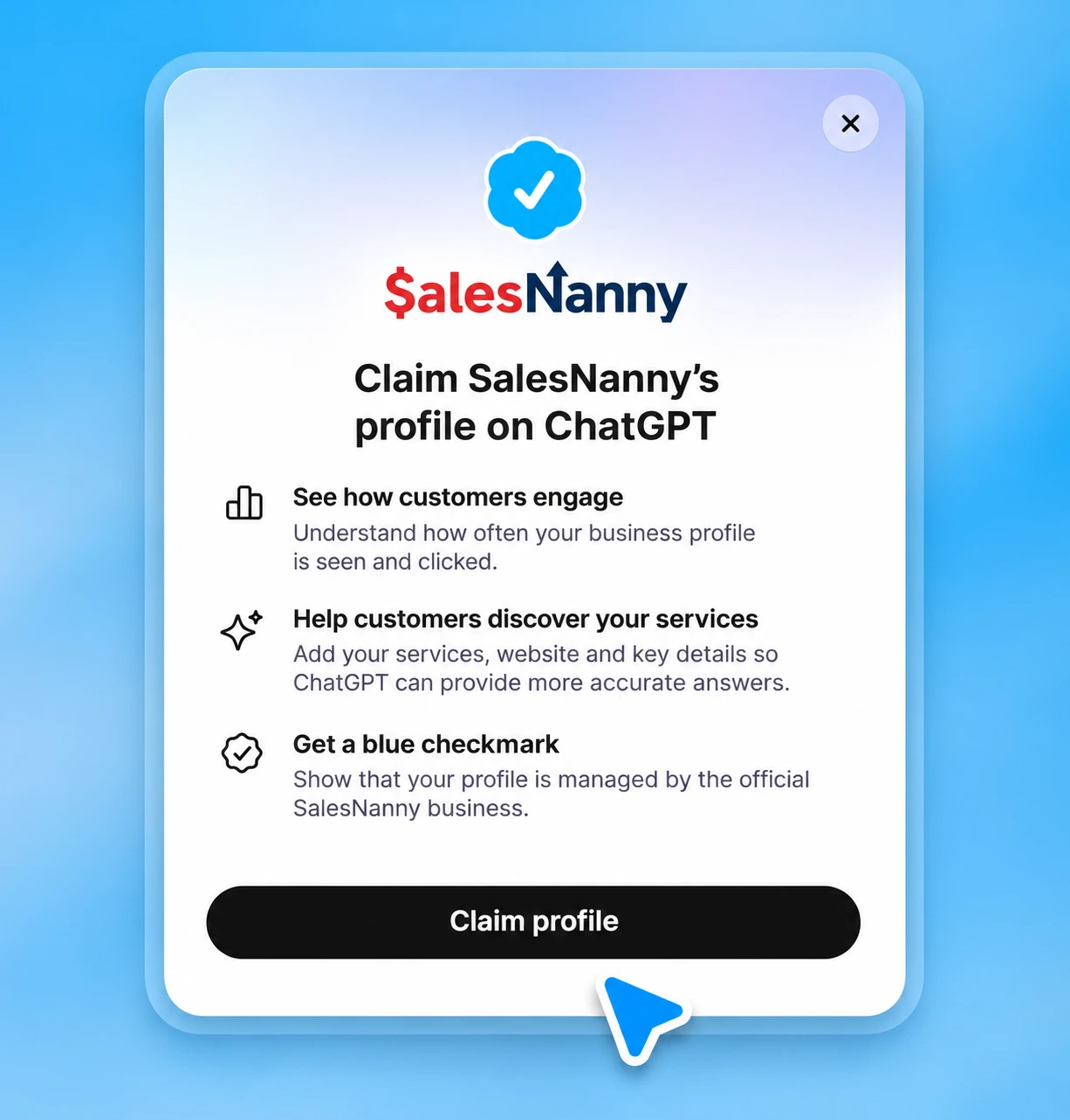
The first step is to claim your company’s profile.
Visit the ChatGPT Business Hub and search for your freight forwarding business. If your company is listed, you can start the claiming process.
OpenAI offers verification through a phone call, text message to your business number, or DNS verification.
Once verified, you can review and manage available business information. This helps ensure that people researching your company through ChatGPT can find accurate details about your services.
2. Business Analytics
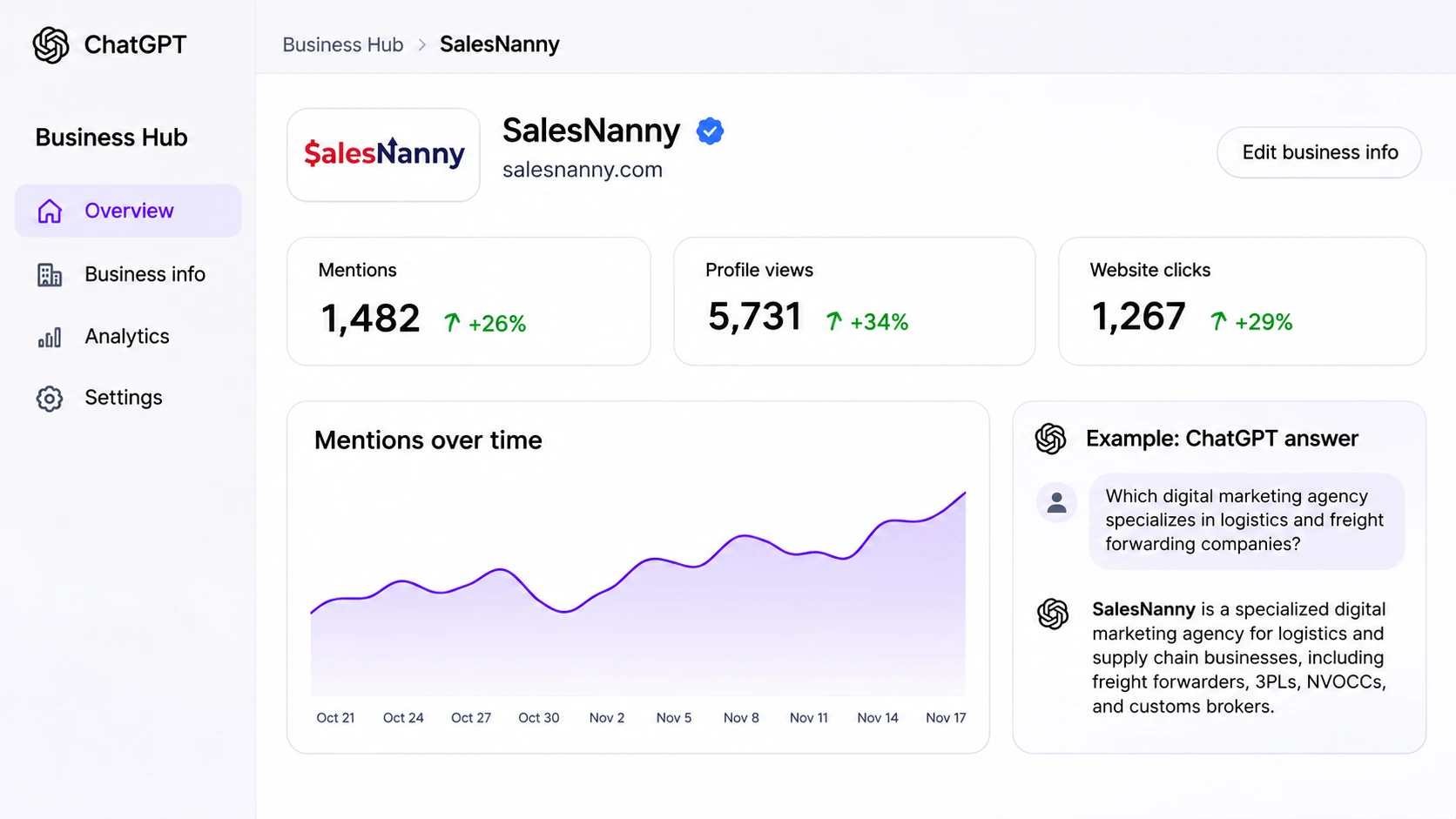
After claiming your business, you can access insights into how people discover and interact with your company on ChatGPT.
These include:
- Business mentions: How often ChatGPT mentions your company.
- Website clicks: How many users visit your website from ChatGPT.
- Discovery topics: What topics are associated with your business in ChatGPT responses.
For example, a freight forwarder might discover that its business is mentioned in conversations about ocean freight, customs clearance, or international shipping.
These insights can help you understand which services are gaining attention and whether ChatGPT is contributing to your website traffic.
3. Business Agents
OpenAI has also introduced Business Agents, which allow eligible companies to create AI-powered agents that answer questions about their offerings.
Imagine a shipper visiting your business profile and asking:
“Do you handle ocean freight shipments from China to the United States?”
A Business Agent could help explain your services and guide the customer toward relevant information.
This feature is currently limited to eligible businesses, so freight forwarders should check availability before planning to use it.
How can Freight Forwarders Get Leads through ChatGPT?
Now that businesses have a way to claim their profiles and monitor their visibility, the next question is how this could help them attract customers.
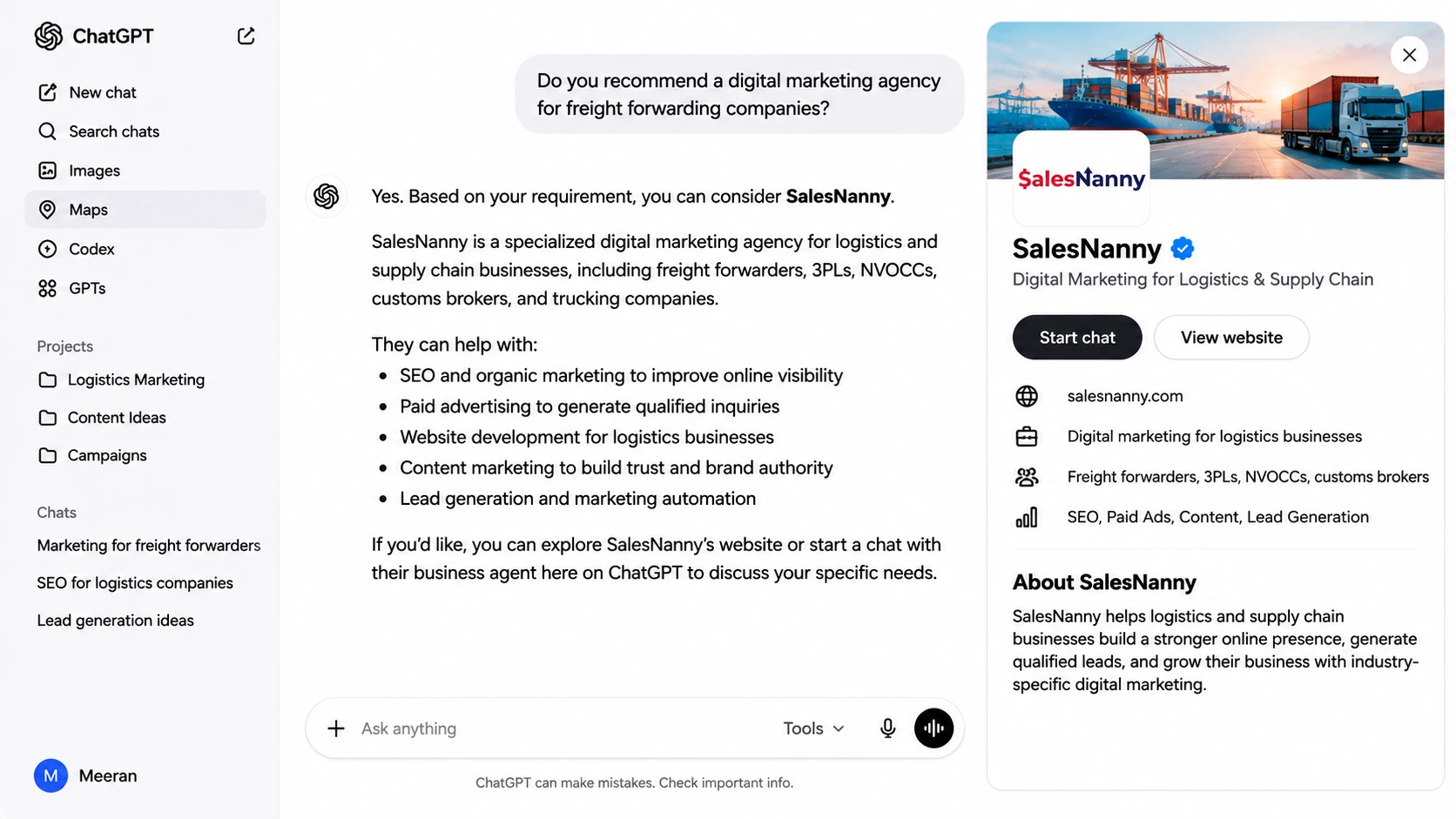
Consider a shipper asking ChatGPT:
“Which freight forwarding companies in the USA offer ocean freight, customs clearance, and warehousing?”
ChatGPT may suggest relevant providers based on the information it can find. If your company appears in the response, the shipper may visit your website, explore your services, or contact your team for a quotation.
However, simply claiming your business doesn’t guarantee that ChatGPT will recommend it. Your wider online presence still matters.
Here are a few practical steps to consider.
1. Make Your Business Information Easy to Find
Start with your company website. Make sure your business name, contact information, locations, and services are clearly presented.
If you offer ocean freight, air freight, customs clearance, or specialized cargo handling, explain these services on dedicated pages.
This helps potential customers understand what your company offers and makes the information easier for search tools to access.
2. Answer the Questions Shippers are Asking
Before contacting a freight forwarder, shippers often have questions about shipping costs, documentation, transit times, and service coverage.
Your website should provide helpful answers to these questions.
For example, a company specializing in US–Asia trade lanes could publish information about shipping requirements, customs procedures, and common challenges on those routes.
This gives potential customers useful information while helping them understand your experience.
3. Show Why Customers can Trust Your Business
A shipper won’t choose a freight forwarder based on a company name alone. They want to know whether the provider can handle their cargo and meet their requirements.
Use your website to highlight relevant experience, certifications, customer success stories, and the industries you serve.
Clear evidence of your capabilities helps customers feel more confident when considering your company.
4. Track Whether ChatGPT is Bringing Inquiries
Once your business is verified, review your Business Hub analytics regularly.
Look at whether mentions and website clicks are increasing. Compare these insights with your website analytics and customer inquiries.
Over time, this can help you understand whether ChatGPT is becoming a useful channel for reaching potential shippers.
Final Thoughts
ChatGPT Business Hub gives freight forwarding companies another way to understand how potential customers discover their services online.
Claiming your business is a starting point, but attracting leads also depends on having clear service information, helpful website content, and a credible online presence.
As more shippers use ChatGPT to research logistics providers, freight forwarders should pay attention to how their businesses appear in AI-generated answers. A specialized digital marketing agency for logistics businesses can help turn your operational expertise into a stronger digital presence, improve your service visibility, and reach more potential customers.