Many logistics companies invest heavily in transportation networks, warehousing facilities, technology, and customer service. They work hard to ensure shipments move efficiently and customers receive reliable logistics support. However, despite having strong operational capabilities, many businesses struggle to generate a consistent flow of qualified leads.
The way companies choose logistics partners today is very different from what it was a few years ago.
Today, manufacturers, importers, exporters, distributors, and procurement teams start their search online. Before contacting a logistics provider, they research companies, compare service offerings, read reviews, and evaluate industry expertise. If your business is not visible during this process, potential customers are likely to choose a competitor instead.
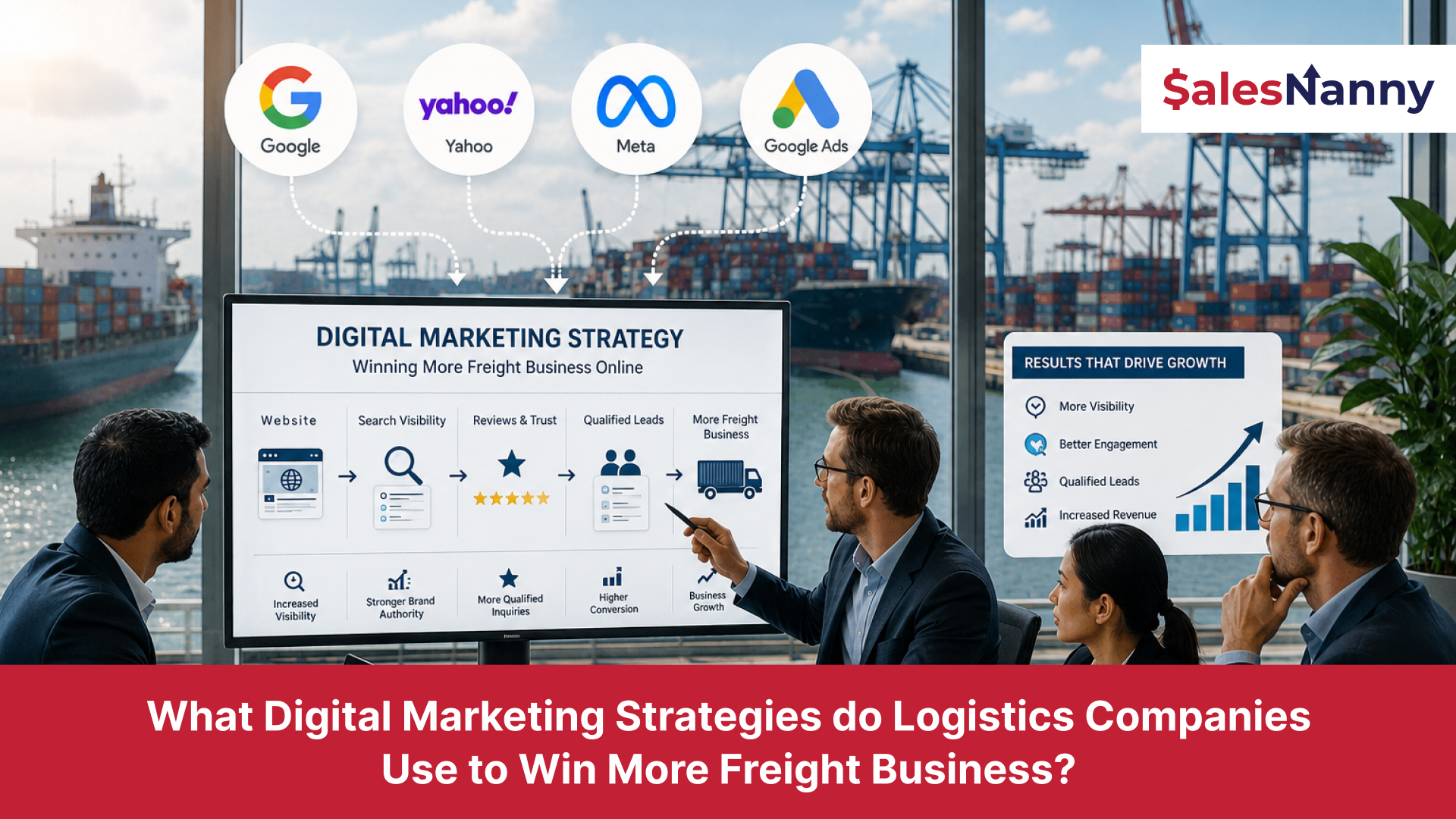
This is why digital marketing for logistics companies has become essential. The right digital marketing approach helps logistics companies get noticed by potential customers, earn trust, and create steady opportunities for growth. In this guide, we’ll explore the strategies logistics companies can use to win more freight business and strengthen their market position.
Digital Marketing Strategy for Logistics Companies?
A digital marketing strategy is simply a roadmap for reaching potential customers online and turning their interest into business opportunities.
Individual marketing activities can generate results, but a clear strategy ensures every effort works toward the same business goals. It identifies the target audience, marketing goals, preferred channels, and methods for measuring success.
For logistics companies, a digital marketing strategy ensures that marketing activities align with business objectives. Instead of relying on random campaigns or occasional content, companies can create a consistent approach that generates awareness, builds trust, and supports long-term lead generation.
4 Steps to Create an Effective Digital Marketing Strategy
1. Understand Your Logistics Buyers
Before launching any marketing campaign, it’s important to understand who your customers are and what challenges they face.
Logistics buyers may include procurement managers, supply chain directors, import-export managers, operations leaders, and business owners. Each group has different priorities, challenges, and expectations.
When you know what matters most to your customers, it’s easier to create content and campaigns that speak directly to their needs. Businesses should identify common pain points such as delivery delays, rising transportation costs, inventory challenges, or supply chain disruptions. Creating buyer personas can help marketing teams develop messaging that resonates with their ideal audience.
2. Audit Your Current Digital Presence
Before launching new marketing initiatives, evaluate your existing online presence.
Review your website’s performance, search engine rankings, content quality, and social media activity. Identify strengths, weaknesses, and areas for improvement.
A competitor analysis can also provide valuable insights. Understanding how competing logistics companies position themselves online can help identify opportunities to differentiate your business.
3. Focus on Business Outcomes
Marketing efforts should always contribute to real business results.
Instead of focusing only on website traffic or social media engagement, logistics companies should prioritize outcomes such as qualified inquiries, lead quality, brand visibility, customer acquisition, and revenue growth.
Having clear goals helps you focus on activities that support business growth.
4. Measure and Improve
Digital marketing is an ongoing process.
Regularly monitor website traffic, keyword rankings, lead generation performance, conversion rates, and return on investment. Analyzing these metrics helps identify what’s working and where improvements are needed.
Companies that achieve the best results regularly review performance and adjust their approach when needed.
What are the Most Effective Digital Marketing Strategies for Logistics Companies?
Once you understand your customers and business goals, you can choose the marketing channels that make the most sense for your company. The most successful logistics companies combine multiple digital marketing strategies to attract, engage, and convert potential customers.
SEO for Logistics Companies
Search Engine Optimization (SEO) can help logistics companies generate a steady flow of website visitors over time.
When potential customers search for services such as freight forwarding, warehousing, transportation management, or customs clearance, SEO helps your company appear in relevant search results.
Effective SEO often involves optimizing service pages, targeting logistics-specific keywords, improving website performance, and creating content that answers customer questions. Local SEO can also help businesses attract customers within specific geographic regions.
Over time, SEO builds visibility, authority, and a consistent source of qualified traffic.
Content Marketing
Content marketing helps logistics companies educate potential customers while demonstrating expertise.
Many buyers search for information before selecting a provider. Publishing valuable content such as freight guides, shipping resources, supply chain insights, industry reports, and case studies helps answer their questions and build trust.
High-quality content also supports SEO efforts by increasing keyword relevance and improving search visibility. It helps customers see your company as a trusted logistics partner instead of just another vendor.
LinkedIn Marketing
For B2B logistics companies, LinkedIn continues to be a useful platform for connecting with logistics decision-makers and industry professionals.
Procurement professionals, supply chain managers, logistics directors, and business owners actively use LinkedIn to consume industry content and connect with potential partners.
Sharing insights, company updates, industry trends, and thought leadership content helps build authority and expand your professional network. Regular activity can help keep your company visible and open the door to new business conversations.
Google Ads and PPC
While SEO delivers long-term results, Google Ads provides immediate visibility.
Pay-per-click advertising allows logistics companies to target users who are actively searching for logistics solutions. By targeting commercial keywords related to freight services, transportation, warehousing, and supply chain management, businesses can reach high-intent prospects at the right moment.
To get the best results from PPC campaigns, compelling ad copy, relevant keywords, and optimized landing pages designed to convert visitors into enquiries.
Email Marketing
Email marketing is still a reliable way to stay connected with prospects and existing customers.
Not every prospect is ready to make a decision immediately. Email campaigns allow logistics companies to stay connected with potential customers by sharing industry news, educational resources, company updates, and valuable insights.
Consistent communication helps build trust over time and keeps your business top of mind when prospects are ready to choose a logistics provider.
Understanding Your Logistics Marketing Strategy
The most effective logistics marketing strategies focus on customer challenges rather than simply promoting services.
Potential customers want solutions to their supply chain, transportation, and logistics problems. Companies that consistently provide useful information and demonstrate expertise are more likely to earn trust and generate enquiries.
It’s worth remembering that digital marketing rarely delivers its full value overnight. While some channels may deliver quick results, long-term growth comes from staying consistent, improving over time, and providing useful information that helps customers make decisions.
Conclusion
Digital marketing is essential for logistics companies looking to attract more qualified leads and stay competitive. By combining SEO, content marketing, LinkedIn marketing, Google Ads, and email marketing, businesses can increase visibility, build trust, and generate consistent freight opportunities.
Focus on answering customer questions, sharing useful insights, and staying visible wherever potential clients are researching logistics providers.
Looking to generate more freight enquiries and grow your customer base? Schedule a free call with the SalesNanny team and discover how a tailored digital marketing strategy can help grow your logistics company.