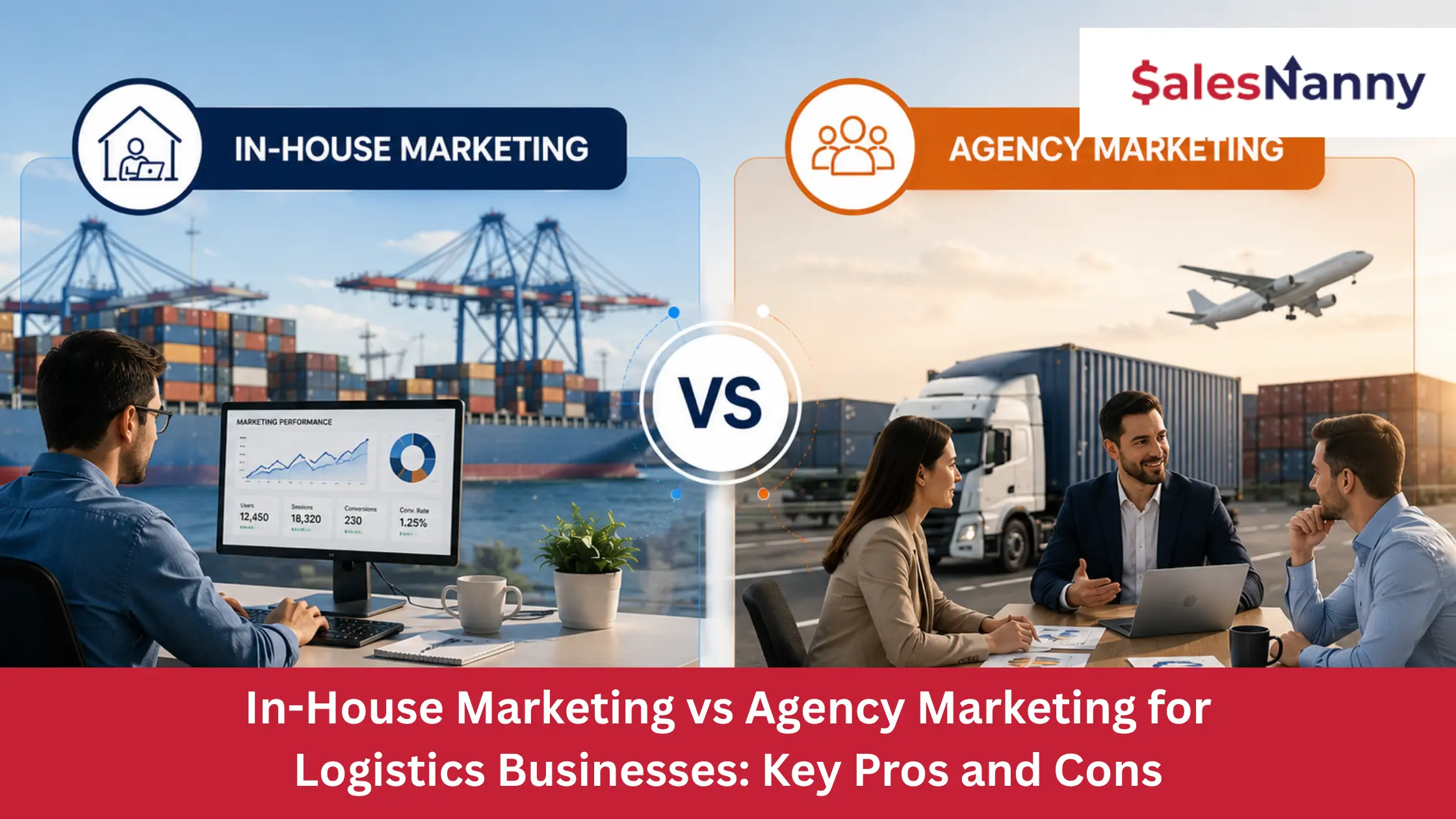
Choosing between an in-house team and a logistics marketing agency is not only about cost or control. The real question is which model gives your logistics business the right skills, clear responsibility, and consistent execution.
Without a clear structure, an internal team may become overloaded, while an agency may struggle without enough business input.
Let’s compare the key pros, cons, and best uses of both models.
What is In-House Marketing?
In-house marketing means your logistics company manages marketing through employees who work within the business. The team may include general marketers who handle several activities, as well as specialists in content, SEO, social media, advertising, design, or website management.
Because they work within the company, in-house marketers become familiar with your brand, services, customers, and daily operations. They can attend meetings, communicate directly with sales and operations teams, and stay informed about new routes, services, and business priorities.
Many logistics companies prefer this model because it gives them more control and direct communication. However, building the right team takes time, money, training, and ongoing management.
Pros of Working With an In-House Marketing Team
Strong business understanding: Internal marketers work closely with your services, customers, routes, and operations, helping them communicate your logistics business clearly.
Faster communication: New service launches, trade lane updates, and urgent changes can be handled without briefing an outside team.
Closer teamwork: Marketing can work directly with sales, operations, customer service, and leadership to keep activities connected to your business priorities.
Greater control: Your management team has direct control over timelines, approvals, messaging, and daily marketing activities.
Long-term ownership: An internal team can remain focused on your company’s brand, goals, and long-term growth plans.
Cons of Working With an In-House Marketing Team
Higher costs: Building a complete team requires salaries, tools, training, employee benefits, and management.
Limited specialist skills: One employee may be expected to manage content, design, campaigns, websites, and reporting. This can reduce quality and slow down the work.
Difficult hiring: Finding marketers who understand logistics services, buyer behavior, routes, and daily operations can take time.
Dependence on employees: When a key employee leaves, marketing activities may slow down until your logistics business hires and trains a replacement.
Best Use Cases for an In-House Marketing Team
An in-house team is best suited for marketing work that happens often, requires quick action, and is closely connected to daily business activities.
Common examples include:
- Regular social media posts, emails, blogs, and sales materials
- Quick updates about new routes, services, locations, or capabilities
- Close work with sales, operations, and management teams
- Clear communication from the brand and leadership
- Local communication across different branches or regions
- Internal company updates and sales support
- Ongoing marketing work that requires a full internal team
What is a Logistics Marketing Agency?
A logistics marketing agency is a team of outside professionals that provides specialized marketing support for logistics businesses. Its services may include content creation, SEO, paid advertising, branding, website development, social media, and campaign management.
The agency can work as a complete outsourced marketing department for your logistics business or support your existing team with specific skills, campaigns, or extra help.
Think of it as an extended marketing team without the cost of hiring every specialist full-time. A good logistics marketing agency does more than complete individual tasks. It brings logistics industry understanding, clear planning, structure, and new ideas to support the growth of your logistics business.
Pros of Working With a Marketing Agency
Access to multiple skills: Your logistics business can work with strategists, writers, designers, developers, campaign specialists, and analysts without hiring every role separately.
Faster execution: An agency already has the people, tools, and work processes needed to move marketing activities forward without a long hiring period.
Fresh outside view: An outside team can find unclear messaging, missing information, and gaps that may be difficult for your internal team to notice.
Logistics industry understanding: A specialist agency understands logistics terms, buyer priorities, services, markets, and operational needs.
Flexible support: The agency can manage complete marketing activities for your logistics business or support your team with selected services and campaigns.
Cons of Working With a Marketing Agency
Requires business input: The agency needs clear information about your services, markets, target buyers, strengths, and growth priorities.
Possible communication gaps: Slow approvals or limited access to sales and operations teams can delay marketing activities.
Less immediate control: Your logistics business may not have the same level of daily control that it would have with internal employees.
Agency quality differs: A general agency may understand marketing tools but lack logistics knowledge. Your logistics business should review the agency’s industry experience, team skills, work process, and reporting before choosing a partner.
Best Use Cases for a Logistics Marketing Agency
A logistics marketing agency is best suited for businesses that need different marketing skills but are not ready to build a complete internal department.
It can be useful for:
- Entering new markets, regions, or trade routes
- Launching new logistics services
- Rebuilding or improving your company website
- Improving your market position and digital visibility
- Creating a more consistent flow of enquiries
- Supporting your existing internal marketing team
- Managing campaigns when sales and operations teams have limited time
- Bringing structure to disconnected marketing activities
What are the Benefits of Hiring a Logistics Marketing Agency?
A specialist agency can bring different marketing activities together around one clear direction for your logistics business.
Instead of publishing unrelated posts or running separate campaigns, the agency can connect your positioning, website, content, branding, and inquiry process with the buyers your logistics business wants to reach.
This helps potential customers understand what your company offers, where it operates, which markets it serves, and how your services meet their needs.
The goal is not only to increase traffic. Effective marketing should attract buyers whose routes, cargo needs, industries, and service expectations match the capabilities of your logistics business.
Why do Logistics Businesses Invest in Agency Marketing?
Many logistics companies have strong sales and operations teams but limited time for consistent marketing.
Their employees understand customers, cargo, routes, and service delivery. However, managing Digital Marketing for Logistics, including content, campaigns, websites, and performance tracking, requires different skills and regular attention.
Agency support allows your internal teams to focus on operations and sales while marketing follows a clear plan for your logistics business. It can also help your company reduce its dependence on referrals, enter new markets, and reach buyers earlier in their research.
How does SalesNanny Help Your Logistics Business Succeed?
SalesNanny manages end-to-end digital marketing activities for your logistics business based on your services, target markets, routes, industries, and growth priorities.
Every strategy begins with understanding what your logistics business handles, which buyers you want to reach, and how those buyers compare logistics providers. We then connect your market position, digital presence, buyer communication, and inquiry journey around one clear direction.
This helps your logistics business become easier to find, easier to understand, and more relevant when buyers are ready to choose a service provider.
Conclusion
Both an in-house marketing team and a logistics marketing agency can support the growth of your logistics business, but each option has different strengths and challenges.
An in-house team gives your logistics business closer access to daily operations and more control over marketing activities. A specialist agency gives your logistics business a wider range of skills, flexible support, and additional marketing resources without the need to build a full department.
The right choice depends on your budget, internal resources, marketing needs, and growth goals. For some logistics businesses, combining internal knowledge with agency support may work best.
Book a free call with SalesNanny to find the right digital marketing approach for your logistics business.