Marketing in the logistics industry is still not understood.
In many logistics companies, marketing is still seen as a support function, whereas sales is seen as the growth function. But now buyers research providers before they speak to a sales rep.
If your business isn’t well represented online, it may never make the cut.
This article discusses what matters to logistics buyers and how marketing strategies can be employed to get more leads from them.
What do Logistics Buyers Really Care About?
Many logistics companies base their marketing on internal assumptions. They talk about company history, global networks, competitive rates, end-to-end solutions without talking about what shippers, manufacturers, retailers, and supply chain leaders really care about.
Reliability Price but you need to prove it
Price will always be part of the logistics equation.” But the cheapest rates can turn into an expensive proposition in a flash if shipments suffer delays, documents are wrong, communication breaks down or capacity disappears at a critical time.
Your marketing should not simply describe your company as reliable. Every logistics provider says that.
You need to prove reliability through:
- On-time delivery performance
- Trade-lane experience
- Cargo-handling expertise
- Compliance capabilities
- Shipment visibility
- Communication procedures
- Customer success stories
- Examples of complex shipments
Buyers cannot observe your daily operations before contacting you. Your marketing must make those operational strengths visible and understandable.
The Switching-Cost Advantage Most Logistics Marketers Ignore
Changing logistics providers is rarely simple.
A buyer may need to transfer shipment information, update standard operating procedures, coordinate system access, inform suppliers, retrain internal teams, and manage the risk of service disruption.
This creates an advantage for the existing provider, even when its performance is not particularly strong.
Your marketing must give buyers a meaningful reason to consider switching. Explain the operational cost of poor visibility, slow responses, missed deadlines, limited capacity, or inconsistent communication.
Then show how your onboarding process reduces disruption.
Saying “we provide better service” is too vague. Explain what will improve, how the transition will be managed, and what support the buyer will receive during onboarding.
The Buying Committee is Your Real Marketing Target
Large logistics decisions are rarely made by one individual.
Operations may care about shipment execution. Procurement may focus on cost. Finance may evaluate payment terms and financial control. IT may review integrations and data security. Senior management may consider cost, risk, and scalability.
LinkedIn notes that B2B buying committees commonly include between six and ten stakeholders.
Your marketing should provide operational data to logistics teams, performance evidence to management, reporting data to finance, and system data to technology teams.
Your marketing should provide operational information for logistics teams, performance evidence for management, reporting details for finance, and system information for technology teams.
What are the most effective marketing channels for logistics companies?
A strategy without the right channels is just a deck of slides.
Not all channels work equally well for each logistics company. The right mix depends on your services, buyers, target markets, average contract value, sales cycle, and available resources. To compete effectively in the logistics market, your marketing should clearly connect your services with the needs of the right buyers.
Digital Marketing: The Foundation You can’t Go Wrong With
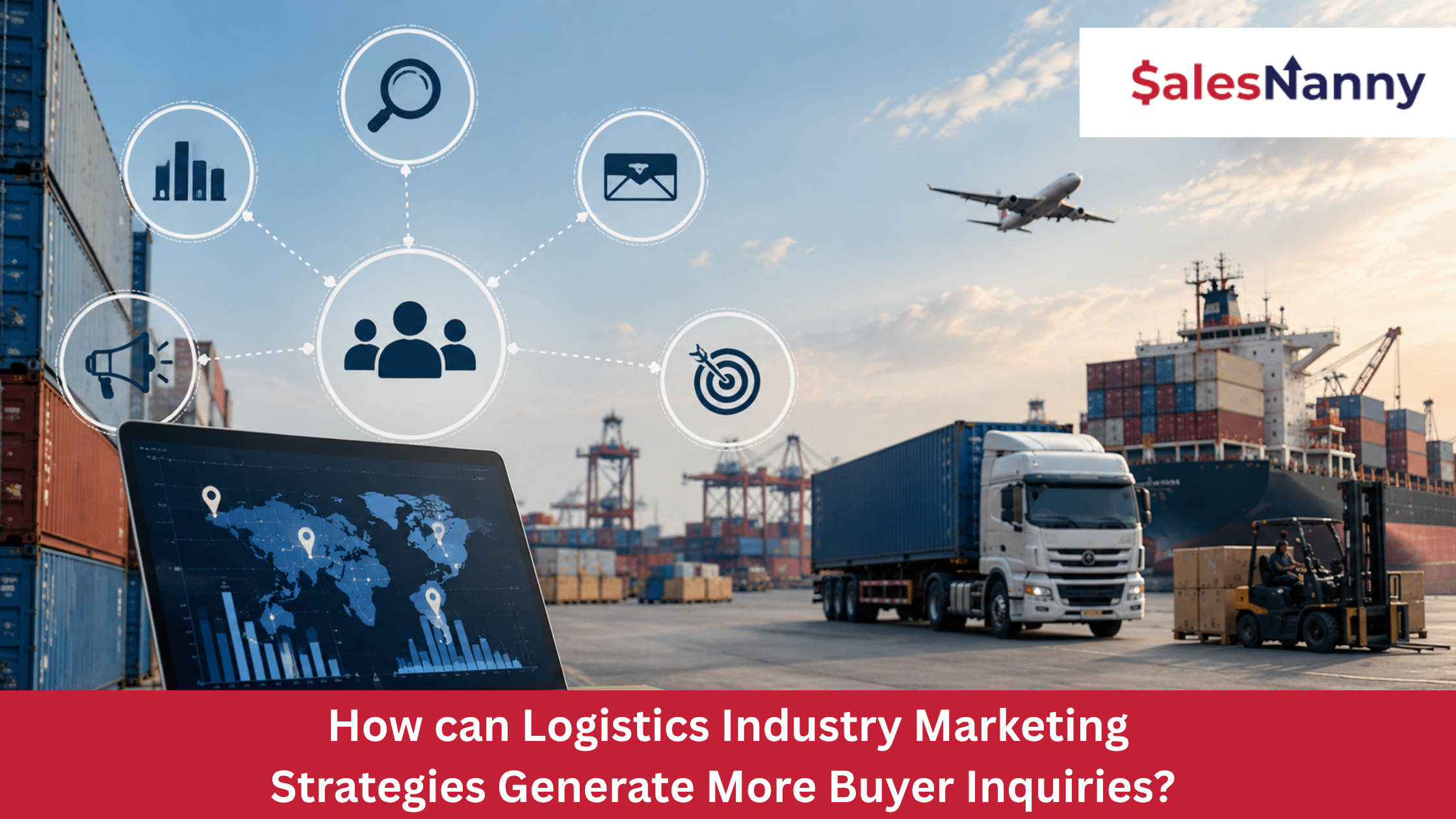
Digital marketing links your positioning, website, content, search visibility, campaigns and inquiry process.
It’s a journey from finding your company to knowing what it can do, trusting its expertise and finally engaging with sales.
Your online presence needs to be crystal clear about:
- Industries served by
- Cargo types handling
- Places included
- Trade lane experience
- Operational problems addressed
- Technology capabilities
- Reasons buyers can trust your team
Gartner reports that many B2B buyers prefer completing parts of their research without speaking to a sales representative. However, completely digital creates uncertainty. Your website should support independent research while making expert assistance easy to access.
Where to Start With Your Logistics Marketing in 2026?
Now you know the strategy and the channels you have at your disposal. The real question is where to begin.
Not with all.
Small logistics marketing teams often try to do all of the following at the same time: launch SEO, LinkedIn, email, paid campaigns, and trade show activities. This often results in a number of average efforts rather than one strong marketing system with one to three people.
Start with the foundation, measure what is working, and then slowly add channels.
1. Content Core & Website
Give buyers a fast way to grasp your services, target markets, capabilities and key differences.
Begin by enhancing poor-performing service pages, adding proof of operations, simplifying navigation and creating clear inquiry paths. Your website should be answering buyer questions before they ever contact your sales team.
2. Search Engine Optimization and Search Visibility
With a solid website base, enhance visibility for searches around your services, locations, industries, cargo types and trade lanes.
Target keywords with actual buyer intent. SEO should help the right logistics buyers discover relevant service pages and useful content when they are actively looking for providers.
3. LinkedIn Presence
Use both leadership profiles and your company page to build consistent visibility and credibility with decision-makers.
Share operational insights, industry knowledge, project experience, customer outcomes, and practical perspectives. Personal profiles can help build relationships, while the company page strengthens brand credibility.
4. Paid Marketing
Use a paid landing page relevant to those who are actively searching for high-priority logistics services.
With Google Ads and LinkedIn Ads, you can target particular industries, locations, services, job titles, and buyer needs. Usually, sending all paid traffic to a general homepage reduces results.
Each campaign needs to talk to:
- A buyer’s particular need
- A blatant advertisement
- A relevant landing page
- robust operational evidence
- A simple inquiry activity
Paid marketing works best after your website, service pages, and messaging are already strong.
5. Branding and Market Positioning
Branding is not just a logo, a color palette, or the design of a brochure. It’s how buyers discover and remember your logistics company.
Your messaging, website, content, sales materials, and campaigns should consistently communicate who you serve, what you do best, and why buyers should trust your team.
A strong brand makes every marketing channel stronger and helps your company stand out in a crowded logistics marketplace.
Ready to Accelerate Your Logistics Company’s Growth with SalesNanny?
SalesNanny helps logistics and supply chain companies translate their operational strengths into clear marketing that buyers can understand and trust.
We bring together your website, SEO, content, LinkedIn, email, paid marketing, branding and inquiry process with one strategic focus. All channels are working towards the same goal: reaching the right buyers and generating more relevant business inquiries.
Instead of multiple vendors, you get a marketing team focused exclusively on freight forwarding, transportation, warehousing, customs, 3PL, NVOCC and supply chain services.
Conclusion
You don’t have to use all your marketing channels at the same time to win more buyer inquiries.
Get to know your buyers’ pain points, demonstrate that you’re trustworthy and increase visibility with a great website, SEO, LinkedIn, email and paid marketing. A clear digital marketing for logistics strategy helps each channel work together to move buyers from discovery to trust and inquiry.
Contact us with SalesNanny to turn online visibility into meaningful logistics inquiries.