Every shipment crossing a border depends on accurate documents, tariff classifications, customs values, permits, and compliance checks. Customs brokers manage these details every day, helping importers clear goods, avoid delays, and reduce the risk of costly errors.
Yet many customs broker businesses still struggle to generate new inquiries online. The problem is often not their services but their visibility.
A brokerage may have strong customs knowledge and the ability to handle complex cargo. But if that experience is not clearly shown online, importers may never discover the business.
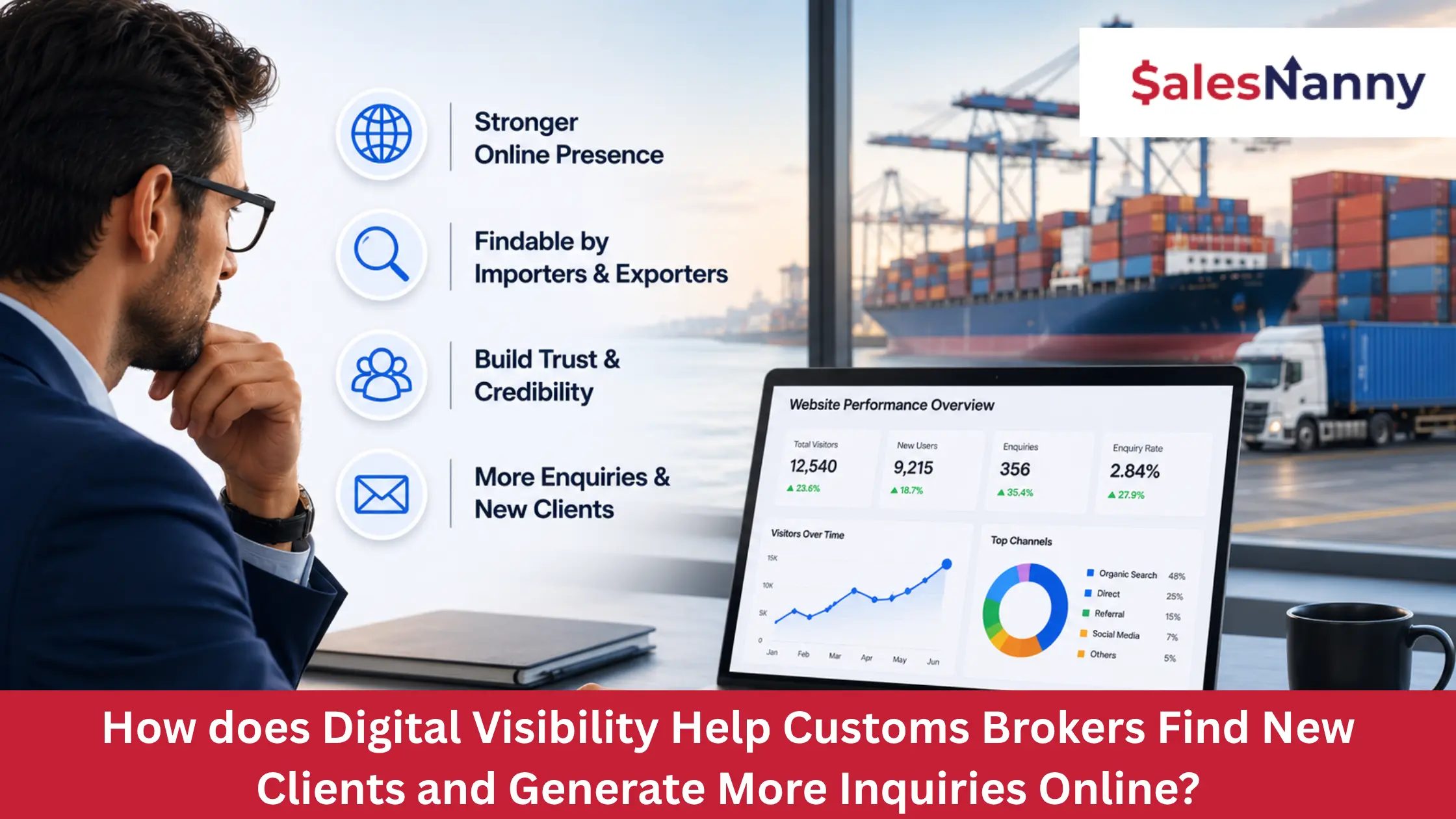
Digital visibility helps customs brokers appear during buyer research, explain their services clearly, and build trust before the first conversation.
Why do Customs Brokers Struggle to Find New Clients Online?
Customs brokerage has always been relationship-driven. Many firms grow through referrals, freight forwarder partnerships, existing customers, and industry contacts. These channels remain valuable, but they may not create a steady flow of new business.
Many brokerage websites also use broad messages such as “fast customs clearance” or “reliable customs support.” These claims do not explain what the company can actually handle.
Importers want to know whether a broker understands their products, industries, ports, documentation needs, and compliance risks. When this information is missing, buyers cannot easily see the difference between an experienced customs broker and a general logistics provider.
Be Visible When Importers Search for Customs Support
Importers do not always search for a customs broker by company name. They often search by service, location, product, or customs problem.
A buyer may look for tariff classification support, customs valuation advice, regulated-goods clearance, or a broker near a specific port. When your brokerage does not appear in these searches, the inquiry is more likely to go to a visible competitor.
Search visibility helps your business reach importers who already have an active requirement. The goal is not to attract every visitor but to appear in front of buyers whose needs match your services.
Make Your Customs Expertise Clear
Customs brokerage is a technical service, but many firms describe it using general phrases such as “complete customs solutions.” These statements do not give importers enough information to decide whether the brokerage can support their shipment.
Your website should clearly explain the industries and products you support, the ports and regions you cover, and your experience with tariff classification, customs valuation, country-of-origin rules, bonds, permits, compliance reviews, and post-entry support.
This helps importers quickly understand whether your brokerage can manage their requirements. It can also reduce unrelated inquiries because buyers can see your strengths before contacting your team.
Build Trust Before the First Conversation
Choosing a customs broker is not only about price. A wrong classification, missing permit, incorrect customs value, or incomplete document can lead to delays, inspections, penalties, and additional costs.
That makes trust an important part of the buying decision. Your website should give importers clear reasons to feel confident in your company.
Customer stories, licenses, certifications, team experience, testimonials, and useful content can all build trust. Specific proof is stronger than broad claims.
For example, explaining how your team supports food importers, machinery companies, chemical suppliers, or automotive businesses gives buyers a clearer picture of your experience.
Reach Importers Earlier in their Research
Many importers research customs support before they are ready to request a quote. They may be entering a new market, importing a new product, reviewing their current broker, or preparing for a difficult shipment.
During this stage, they search for answers about duties, permits, classifications, documentation, and customs delays.
Useful content helps your brokerage appear during this early research. An article about customs valuation, tariff classification, or common documentation mistakes can introduce your business before the buyer starts comparing providers.
When the requirement becomes urgent, your brokerage is more likely to be remembered.
Turn Your Website into an Inquiry Tool
Getting website traffic is only the first step. Visitors still need to understand your services and know what to do next.
Your website should quickly explain what services you provide, which industries you support, what goods you handle, and which ports or regions you cover. It should also show whether your team can manage regulated or difficult products.
Each service page should connect a buyer’s customs problem with a clear solution. The inquiry process should also be simple because long forms, unclear contact details, and weak calls to action can cause buyers to leave.
Direct actions such as “Request Customs Support,” “Speak with a Customs Specialist,” or “Get a Clearance Quote” make the next step easier.
Use Content to Educate Importers
Customs rules can be difficult to understand, and many importers need guidance before they know what support to request.
Educational content helps your customs broker business answer common importer questions and build trust. Topics can cover tariff classification, customs valuation, country-of-origin rules, import documentation, clearance delays, regulated goods, audits, and post-entry corrections.
This content gives importers practical information and prepares them for a better sales conversation. Instead of asking what your company does, the discussion can begin with a specific shipment, product, document, or compliance issue.
Strengthen Visibility Across Digital Channels
LinkedIn can help customs brokers reach importers, exporters, supply chain managers, and compliance teams. However, posting only service promotions is unlikely to build trust.
A better approach is to share regulatory updates, documentation advice, tariff guidance, trade changes, and operational lessons. When customs professionals regularly share useful insights, buyers begin to connect the brokerage with knowledge and reliability.
Your website, SEO, content, LinkedIn, branding, paid campaigns, and inquiry process should also communicate the same message. Importers should clearly understand who you serve, what you handle, where you operate, and why they should trust your team.
When every channel works together, buyers can move more easily from discovery to inquiry.
How does SalesNanny Help Customs Brokers?
SalesNanny helps customs broker businesses manage end-to-end digital marketing activities around their services, target industries, ports, cargo types, and growth goals. Through Digital Marketing for Logistics, we build a clear market presence that helps importers find your business, understand what you handle, and evaluate whether your services match their requirements.
Every marketing activity is connected around one consistent business position. This ensures your website, content, campaigns, and communication clearly reflect who you serve, where you operate, and the customs challenges your team can support.
Instead of relying mainly on referrals and existing relationships, your customs broker business can reach importers earlier, attract more relevant inquiries, and create a more consistent path from online discovery to sales conversation.
Conclusion
Digital visibility helps your customs broker business become easier to find, build buyer trust, and turn online interest into relevant inquiries.
By connecting your website, SEO, content, LinkedIn, and inquiry process, your brokerage can reach importers earlier and stay visible when they are ready to choose a customs partner.
Schedule a free call with SalesNanny to build a stronger digital presence and generate more customs brokerage inquiries.