If your customs brokerage still generates most of its new business through referrals and industry relationships, that pipeline is reliable until it isn’t. Referrals are slow to scale and harder to control. The importers and exporters actively filing ISF submissions, managing bonded warehouse cycles, or dealing with CBP holds right now are not waiting for a warm introduction. They are searching online, evaluating their options, and calling the brokers who appear first. If that isn’t you, you are handing qualified business to competitors before the conversation even starts. A challenge that effective digital marketing for logistics and customs businesses can help address.
Local SEO for customs brokerage services optimizing your online presence for location-based searches is no longer a digital marketing experiment for customs brokers. It is a measurable business development channel, and the brokers treating it seriously are pulling ahead.
Why does Local Search Matter at Ports and Border Crossings?
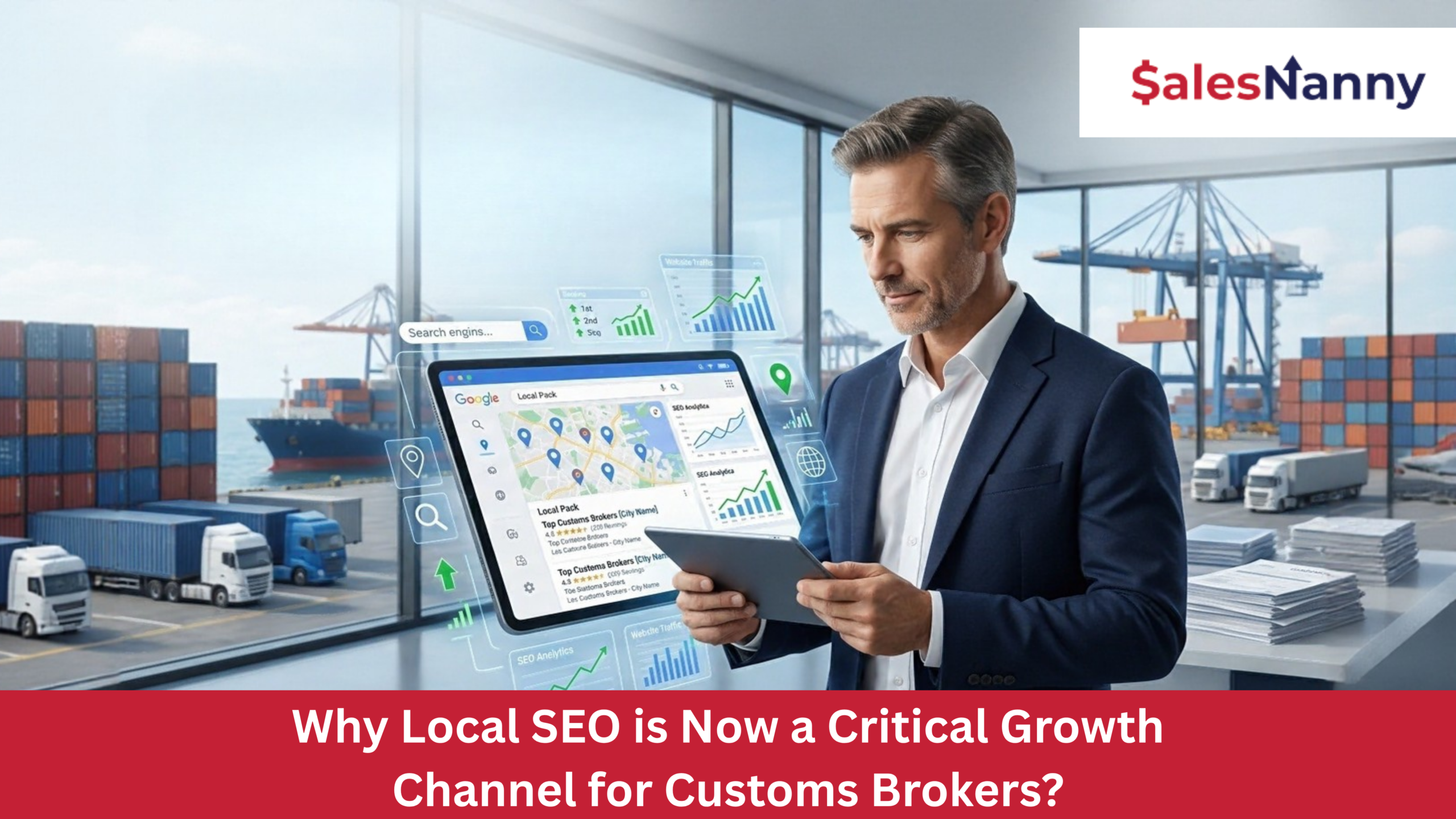
Customs decisions are inherently local. An importer managing freight through the Port of Houston needs a broker who understands the specific Gateway CBP Field Office requirements, local ISF filing timelines, and drayage logistics to inland distribution points. When that importer searches “customs broker Houston” or “ISF filing services near me,“ Search engine returns a local pack of three businesses before any organic website results. Those three spots drive the majority of clicks and inquiries.
The same pattern plays out at Los Angeles/Long Beach, Chicago O’Hare, JFK, and every major land border crossing. Businesses searching for customs support at a specific location want local expertise, not a national brand with a toll-free number. Local SEO positions your brokerage in front of those searches at the exact moment a potential client has an active compliance need.
Optimizing Your Google Business Profile: The Highest-ROI Starting Point
Your Google Business Profile (GBP) is the single most important local SEO asset you control. An incomplete or unoptimized profile is essentially invisible in local search. To build a strong profile:
- Include your correct business name, address, phone number, website, and operating hours
- Add a detailed description referencing specific trade lanes, port authorities, and service types ocean freight entry, air cargo clearance, FDA prior notice, ACE portal filings, or customs bonds
- Upload photos of your operations, team, and port-adjacent location
- Review and update your profile every quarter. Stale information signals inactivity to both Google and potential clients
Businesses with complete, photo-rich profiles consistently outperform those without in local pack rankings.
Building Location-Specific Service Pages that Convert
If you serve multiple ports, airports, or border crossings, generic website copy will not serve you well. Create dedicated pages for each service location, not thin placeholder pages, but substantive content that addresses the specific regulatory environment, common shipment challenges, and service capabilities at each gateway.
A page titled “Customs Brokerage Services Port of Houston” should reference local CBP District 2101 procedures, Houston’s role as a major petrochemical import hub, and documentation requirements for bulk cargo entries. That level of specificity tells both search engines and prospective clients that you have genuine local expertise, not just a presence on paper.
Target keyword phrases with clear commercial intent:
- “Customs broker Houston”
- “Customs clearance services Los Angeles”
- “Import broker Chicago O’Hare”
Use Google’s free Keyword Planner or tools like SEMrush to identify monthly search volumes and choose phrases your competitors are not already dominating.
Customer Reviews: The Trust Signal that Moves Decisions
An importer dealing with a CBP examination notice or a time-sensitive FDA release does not want to gamble on an unknown broker. Online reviews from verified clients provide the third-party credibility that converts a search into a phone call. Brokerages with fifteen or more recent Google reviews consistently outperform those with fewer, both in search ranking and click-through rate.
Build a simple review system:
- After a smooth entry clearance or a successful protest resolution, follow up and ask the client to leave a review
- Send a direct link to your GBP review page, make it effortless
- Never offer incentives or coach the language, just ask consistently
A steady stream of genuine reviews from importers, freight forwarders, and supply chain managers builds compounding credibility that no paid ad can replicate.
Content that Demonstrates Trade Expertise
One of the most underleveraged local SEO tactics for customs brokers is publishing practical content that answers the questions your clients are already asking, not generic compliance overviews, but operationally specific guides that reflect genuine trade knowledge.
Consider publishing content on topics such as the following:
- Navigating CBP’s Automated Commercial Environment (ACE) for first-time importers
- ISF filing deadlines and penalty exposure
- HTS classification disputes and the protest process
- Country-of-origin documentation requirements under current FTA rules
This type of content ranks for long-tail search terms, positions your firm as an authority, and provides sales-ready material to share with prospects during the evaluation process. Consistency matters more than volume. One well-researched article per month will outperform five generic posts over any meaningful time horizon.
NAP Consistency and Directory Presence
Your business name, address, and phone number (NAP) must be identical across every online directory, including your website, Google Business Profile, Bing Places, NCBFAA.org, and logistics platforms. Inconsistent listings create conflicting signals that suppress local search rankings. Conduct a quarterly audit using tools like BrightLocal or Moz Local to catch and correct discrepancies before they compound.
The Compounding Return on Local SEO Investment
Unlike paid advertising, which stops the moment you stop paying, local SEO builds durable visibility that grows over time. A well-optimized GBP, strong review volume, location-specific service pages, and a consistent content track record create a local search presence that is genuinely difficult for competitors to displace.
For customs brokerage firms in competitive port markets, the window to establish that advantage is open but narrowing. The brokers who invest now will hold top local search positions for years. Those who wait will find the cost of catching up significantly higher.
Conclusion
The customs brokerage market is competitive, and the brokers winning new business are often the most visible. Local SEO helps connect your expertise with importers and exporters actively searching for customs support, making it an important part of a broader digital marketing strategy for logistics companies. Optimizing your GBP, creating location pages, collecting reviews, and maintaining consistent business information can strengthen your local search presence over time. If your prospects are searching online, make sure they find you before your competitors. Schedule a free call to discuss your local SEO strategy.