What happens when shipments are moving, but the sales pipeline is still uncertain?
Many freight forwarders continue to rely on referrals, long-term relationships, agent networks, and direct sales for new business. These channels still matter, but they do not always bring a steady flow of the right shippers, trade lanes, or higher-value opportunities.
At the same time, importers, exporters, and supply chain teams often research freight providers online before sending an RFQ. They compare services, experience, trade-lane knowledge, and how clearly a company explains its capabilities.
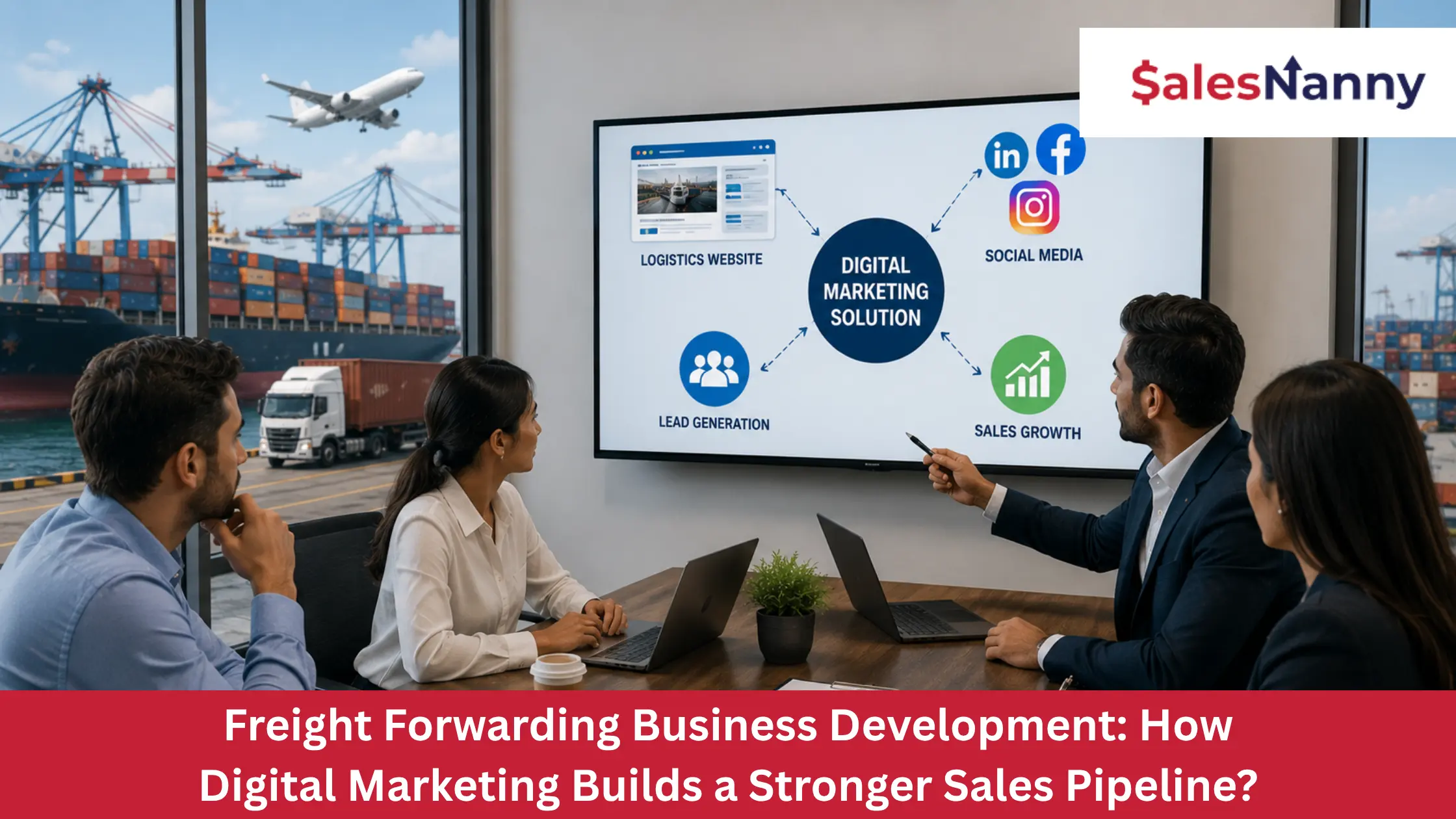
Focused digital marketing for logistics helps freight forwarders reach these buyers earlier, promote the services they want to grow, and build a stronger, more consistent sales pipeline.
Start With the Right Freight Forwarding Audience
Effective business development starts with knowing who you want to attract. Trying to market freight services to every company moving cargo can make your message too broad. Instead, define your target customers by industry, location, shipment type, trade lane, company size, and freight requirements.
For example, your target may be manufacturers importing from Asia, retailers needing regular ocean freight, or importers looking for customs clearance support.
Once this is clear, your SEO, content, landing pages, and LinkedIn outreach can focus on the buyers most likely to need your services.
Make Your Website a Lead Generation Asset
Your website is often one of the first places a potential customer checks before contacting your sales team. It should do more than list services and contact details.
A freight forwarding website should clearly explain your services, industries served, geographic coverage, cargo experience, and what makes your company different.
Dedicated pages for air freight, ocean freight, customs clearance, warehousing, transportation, and important trade lanes make it easier for buyers to find the information they need.
Customer stories, testimonials, certifications, FAQs, and clear inquiry options can also give buyers more confidence. This becomes even more important when your goal is to grow your freight forwarding sales by turning the right website visitors into real business conversations.
Use SEO to Capture High-Intent Searches
SEO can support business development by helping your company appear when shippers are already searching for freight support.
Instead of targeting only broad terms such as “freight forwarding,” focus on searches connected to real needs.
A buyer may search for ocean freight on a specific route, customs clearance for a certain product, air freight support in a location, or help with an import problem.
These searches often show stronger buying intent.
A strong B2B SEO strategy for freight forwarders should cover the services, trade lanes, industries, cargo types, customs needs, and shipping problems your team can actually handle.
The goal is not simply more website traffic. It is to be visible when the right importer, exporter, or supply chain manager is looking for your service.
Create Content that Builds Trust Before the Sales Call
Experienced shippers do not need another basic explanation of what freight forwarding means.
They need useful answers to real shipping questions.
When should LCL move to FCL? What can cause unexpected destination charges? What should an importer check before changing customs brokers? Why can transit times differ between carriers on the same route?
These are the questions freight teams already discuss with customers.
Turning that knowledge into articles, guides, FAQs, and case studies helps buyers understand your experience before requesting a quote.
It also gives your sales team something useful to share with prospects beyond a brochure or rate sheet.
Good freight content should make the next sales conversation easier.
Use LinkedIn to Reach Logistics Decision-Makers
LinkedIn can help freight forwarders stay visible with the people involved in shipping and supplier decisions.
This may include import managers, export managers, procurement teams, supply chain managers, logistics heads, and business owners.
Share useful points from real freight work. This could include trade-lane updates, customs issues, shipment planning, carrier changes, capacity problems, or questions customers regularly ask.
This type of content shows the experience behind the company without turning every post into a sales pitch.
LinkedIn outreach can then help your sales team start relevant conversations with companies that fit your target market.
Add Paid Marketing When You Need Faster Visibility
SEO takes time to build. Paid search and social campaigns can help when you want faster visibility for a certain service or market.
A freight forwarder may use paid campaigns to promote a priority trade lane, customs service, urgent air freight, a new location, or a specialized cargo service.
But the landing page matters.
If someone searches for a specific freight service, they should reach a page that clearly explains that service and gives them a simple way to make an inquiry.
Sending every campaign to the homepage can make the message less relevant.
Paid marketing works best when the target buyer, freight service, landing page, and sales follow-up are planned together.
Build a System for Lead Nurturing
Not every inquiry will become a shipment immediately.
A shipper may stay with its current forwarder, postpone the shipment, accept a lower spot rate elsewhere, or simply be comparing options for future shipments.
That does not always mean the opportunity is lost.
Keep track of the trade lane, cargo type, shipment frequency, service needed, and why the inquiry did not move forward.
Then follow up with something useful, such as a market update, service information, relevant freight content, or a new rate discussion.
Good prospects should stay visible in the pipeline instead of disappearing after one quotation.
Measure Business Development by Qualified Opportunities
Website traffic, impressions, and followers can show that marketing is active. But they do not tell you whether it is helping sales.
Track the numbers that are closer to real freight business.
Look at qualified inquiries, quote requests, lead sources, conversion rates, trade lanes generating RFQs, services attracting better-fit buyers, and campaigns bringing repeat-volume prospects.
Then use that information to improve your marketing.
If customs content brings strong importer inquiries, build more around customs. If a paid campaign attracts the wrong type of leads, change the targeting. If one trade lane brings better volume and margin, increase visibility around that lane.
Marketing should help you understand where useful sales opportunities are coming from.
Ready to Build a Stronger Freight Forwarding Sales Pipeline?
Want a more consistent flow of sales opportunities for your freight forwarding business?
SalesNanny helps freight forwarders reach the right importers, exporters, and supply chain decision-makers through a complete digital marketing approach.
From SEO, freight-focused content, website development, LinkedIn, and paid campaigns to lead generation, we connect marketing with the services, trade lanes, and customer groups your business wants to grow.
The goal is not simply more clicks or inquiries. It is to help your sales team reach better-fit shippers and create more useful freight opportunities.
Conclusion
A strong freight sales pipeline is not about getting as many RFQs as possible. It is about bringing in the right business.
Know which shippers you want to reach, make your strongest freight services easy to find, stay visible in the right markets, and keep good prospects active after the first inquiry.
When sales and digital marketing support the same goals, freight forwarders have a better chance of building steady, long-term business.
If you want to build a stronger pipeline around the freight business you want to grow, contact us to discuss a logistics-focused digital marketing strategy.