More clicks do not always mean more freight inquiries.
The real question is which channel attracts the right customers to your business.
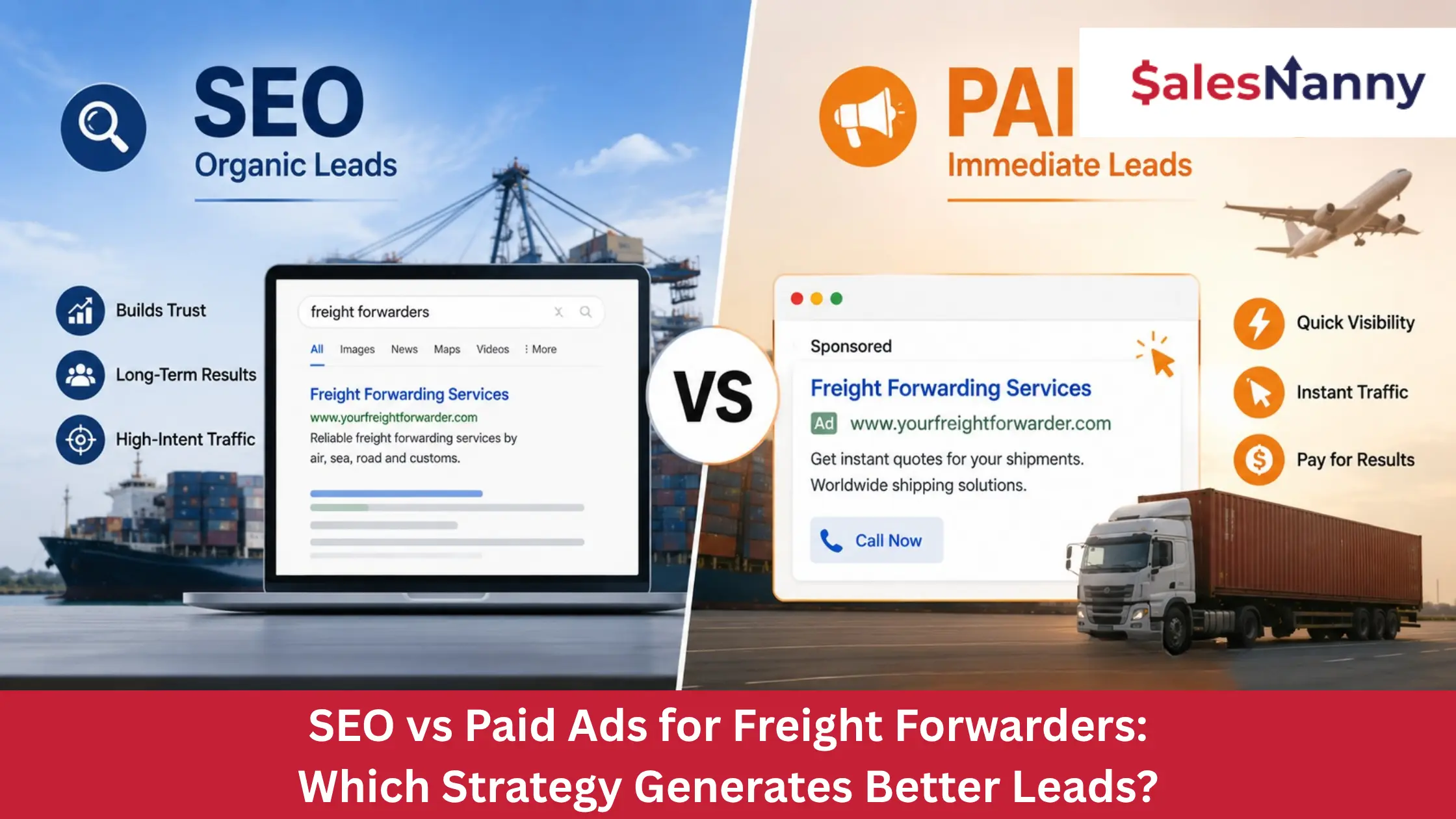
SEO can help freight forwarders generate long-term leads at a lower cost over time, whereas paid ads can provide faster exposure to buyers actively looking for freight services.
Paid ads may be more effective for generating faster inquiries for a specific service or trade lane. If you want a consistent search presence and a more sustainable pipeline, SEO is usually the better long-term option.
SEO vs. Paid Ads: Where should Freight Forwarders Invest First?
Every freight forwarder eventually faces the same decision: expand their services, promote trade lanes, and allocate a budget.
SEO and organic marketing build search presence around your services and target markets. Paid ads marketing can place those services in front of buyers already searching for them.
Poor targeting can waste ad budget without producing useful RFQs, whereas relying solely on SEO may be too slow when the sales team requires opportunities immediately.
The first investment should be based on the commercial goal: do you need qualified inquiries right now, or are you looking to build opportunities for the coming months?
Understanding SEO and Paid Ads for Freight Forwarding
SEO improves your freight forwarding website’s visibility in organic search results by implementing service pages, a clear website structure, relevant search terms, technical improvements, and useful content.
Paid Ads use platforms like Google Ads to promote specific freight services. You decide on the keywords, locations, budget, and landing page for each campaign.
Simply put, SEO earns search presence, whereas paid ads buy placement. Both promote freight lead generation, but they approach potential customers in different ways.
SEO vs. Paid Ads for Freight Forwarders: A Head-to-Head Comparison
The table below compares SEO and paid ads based on the factors that are most important when selecting a lead-generation strategy for a freight forwarding company.
| Factor | SEO | Paid Ads |
| Time to results | Gradual | Immediate |
| Cost over time | Lower long-term | Ongoing ad spend |
| Traffic after spend stops | Can continue | Stops |
| Keyword control | Limited | High |
| Trade-lane targeting | Strong long-term | Fast and targeted |
| Lead testing | Slower | Faster |
| Best for | Sustainable lead growth | Quick demand and testing |
The key difference is simple: SEO builds lasting search presence, while paid ads give more control over where and when your business appears.
Which Channel should Freight Forwarders Prioritize First?
The best place to start depends on how quickly you need leads, what services you want to expand, and how strong your current search presence is.
Choose Paid Ads first if you need to:
- Generate freight inquiries quickly
- Promote a new trade lane or service
- Test demand in a new market
- Support a quick-hit campaign
Choose SEO first if you want to:
- Build steady search presence for core services
- Rank for key services, locations, and trade routes.
- Reduce dependence on paid traffic.
- Generate consistent organic inquiries.
The table below shows which channel may be a better starting point in common freight forwarding scenarios.
| Your Situation | Start With | Why |
| New website | Paid Ads | Get noticed faster |
| Grow core freight services | SEO | Build steady search presence |
| Launch a new trade lane | Paid Ads | Test demand quickly |
| Need more leads | SEO + Ads | Cover current and future demand |
| Enter a new market | Paid Ads → SEO | Test first, then build rankings |
| Reduce lead costs over time | SEO | Grow organic inquiries |
A company entering a new market may need paid ads first, while an established forwarder growing core services may gain more from SEO.
Why do SEO and Paid Ads Often Work Better Together?
Once you know which channel should take priority, the next step is to make them work from the same commercial plan.
Paid campaigns can reveal which searches bring qualified inquiries, which services attract interest, and which landing pages lead buyers toward an RFQ. That data can sharpen SEO decisions.
A practical approach is:
- Run paid campaigns for priority services, locations, or trade lanes.
- Identify the searches producing qualified inquiries and RFQs.
- Create SEO pages and content around services and terms with high demand.
- Keep paid ads focused on competitive searches, new markets, and priority campaigns.
If paid campaigns generate a high volume of customs clearance inquiries in a single market, focus on improving that service page and supporting content rather than selecting topics based solely on search volume. Our guide to SEO for freight forwarders explains how service, route, cargo, and buyer intent influence organic search activity.
How should Freight Forwarders Split their Marketing Budget?
There is no fixed SEO and paid ads split that works for every freight forwarder. The budget should reflect your current rankings, sales pipeline, and how quickly you need opportunities.
| Business Situation | SEO | Paid Ads |
| Need leads quickly / low organic presence | 30% | 70% |
| Building current and future demand | 50% | 50% |
| Strong rankings / established website | 70% | 30% |
These percentages are only a starting point. A new trade lane may justify more paid spend, while proven service pages may justify greater SEO investment.
Judge the budget by qualified inquiries, RFQs, sales opportunities, and cost per qualified lead not clicks alone. Spend should move toward the channels producing opportunities your sales team wants to pursue.
Build a Qualified Lead Pipeline for Your Freight Forwarding Business
A stronger pipeline begins with connecting with buyers who match the services, trade lanes, and markets you want to expand.
SalesNanny helps freight forwarders align SEO, paid ads, content, and landing pages with their commercial priorities. As part of a focused digital marketing for logistics strategy, these channels can work together to create relevant sales opportunities rather than simply increasing website traffic.
Because SalesNanny specializes in logistics and freight, the strategy can be tailored to meet specific commercial objectives such as increasing FCL volume, promoting a priority trade lane, increasing customs clearance inquiries, or reaching out to larger B2B accounts.
The goal is to have digital marketing support your sales pipeline by presenting better-fit opportunities that match the freight business you want to win.
Conclusion
SEO and paid ads can both generate freight forwarding leads, but they achieve different objectives. Paid ads are useful for accelerating market reach and demand testing, whereas SEO promotes long-term search presence and organic lead generation.
Give each channel a specific role and evaluate it based on the quality of the RFQs and sales opportunities generated.
Do you want to build a stronger freight lead pipeline? Schedule a consultation with SalesNanny and let’s develop the best SEO and paid strategy for your company.