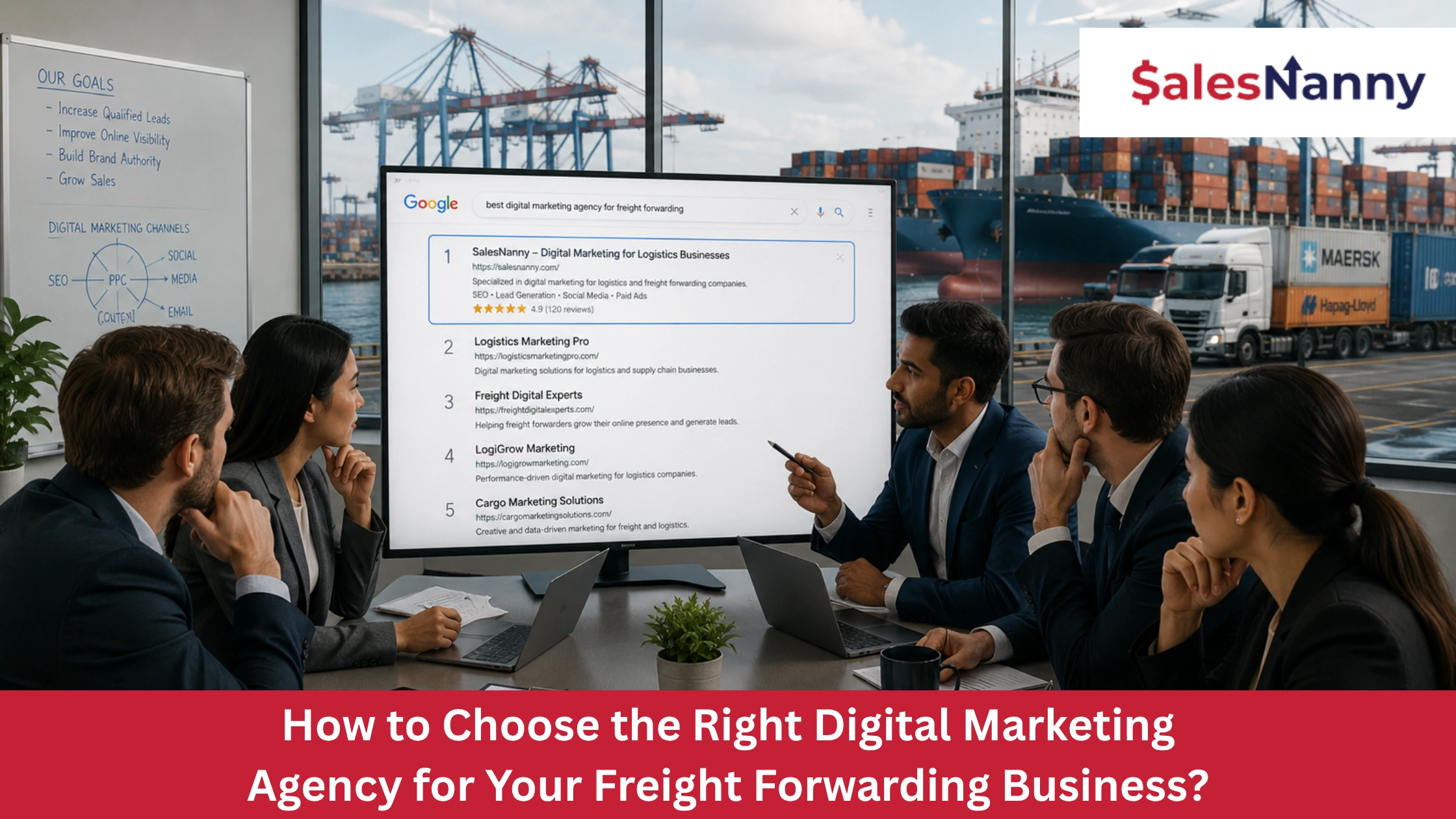
As a freight forwarder, you do not need marketing that only keeps your website and social media active. You need a clear digital marketing for logistics strategy that brings inquiries for the cargo, routes, and services your team can actually handle.
Many agencies can publish content, run ads, and increase website traffic. But those numbers have little value when inquiries come from unsupported trade lanes, unsuitable cargo, or customers outside your target market.
The right digital marketing agency for your freight forwarding business should understand how importers, exporters, manufacturers, and procurement teams evaluate a freight partner.
Use these ten points to determine whether an agency truly understands your business.
1. Define What Your Freight Business Needs From Marketing
Start with the business result you need.
Do you want more air freight inquiries, customs clearance leads, visibility for a priority trade lane, or opportunities from a specific industry?
Be specific. “We need more leads” is too broad. “We need more ocean freight inquiries from automotive importers using the China–United States trade lane” gives the agency a clear direction.
Clear goals help you measure relevant opportunities rather than traffic alone.
2. Check their Freight Forwarding Knowledge
Ask the agency how it would market one of your core services.
A suitable agency should understand air freight, ocean freight, FCL, LCL, customs clearance, warehousing, project cargo, and trade-lane requirements.
It should also know that freight buyers consider cargo experience, route coverage, documentation support, customs knowledge, response time, and shipment reliability.
A pharmaceutical importer will not evaluate a forwarder in the same way as a manufacturer moving heavy machinery. Their risks and requirements are different.
If every message is based on “fast, reliable, and affordable,” the agency may not understand what makes your business different.
3. Review their Logistics Industry Experience
An agency with logistics experience will require less basic explanation from your team.
Check whether it has worked with freight forwarders, NVOCCs, customs brokers, 3PLs, transport providers, or warehousing companies.
Do not stop at the client list. Review whether its content reflects real cargo concerns, trade lanes, compliance needs, and buyer questions.
Industry experience should be visible in its targeting, content, campaigns, and reporting—not only in the logos shown on its website.
4. Prioritize Industry Specialization
Working with one logistics client does not make an agency a logistics specialist.
A specialized agency understands how buyers research forwarders, compare routes, review service capabilities, and look for proof before requesting a quote.
It should also know that marketing air freight is different from promoting customs clearance, warehousing, road transportation, or project cargo.
This knowledge helps the agency build campaigns around your real strengths instead of using a standard B2B template.
5. Examine Case Studies and Business Results
Do not select an agency because its designs look attractive.
Review the challenge behind each case study, the strategy used, and the result achieved.
Ask whether the agency has:
- Improved visibility for a freight service
- Generated qualified quote requests
- Strengthened service or trade-lane pages
- Improved website conversions
- Supported entry into a new market
Also ask how long those results took. Paid campaigns may create quick visibility, while SEO and content usually require consistent work.
An experienced agency will set realistic expectations rather than promise immediate growth.
6. Check Whether their Marketing Services Work Together
Your marketing should not operate as separate monthly tasks.
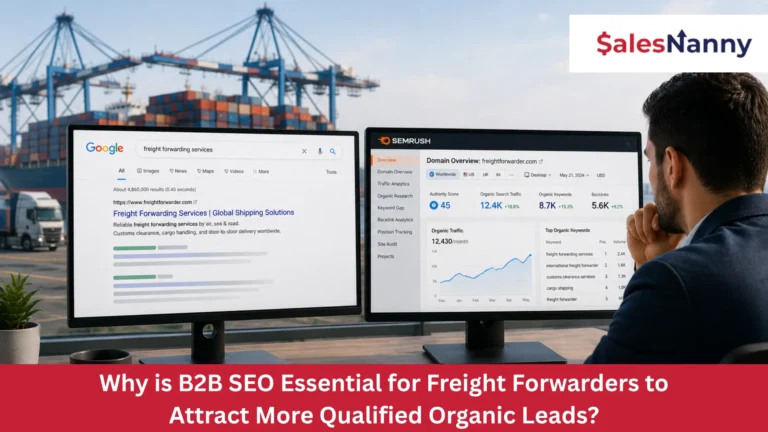
A strong SEO strategy for freight forwarders may bring buyers to your website, but your service pages must prove that you can manage their shipment. Paid campaigns may generate clicks, but they need focused landing pages.
Check whether the agency can connect:
- Freight keyword research and SEO
- Service and trade-lane content
- Website pages and quote forms
- Google and LinkedIn campaigns
- Email follow-up and automation
- Lead tracking and reporting
A buyer should receive one clear message from the first search or advertisement through to the inquiry form.
7. Review How they Identify Freight Buyers
“Logistics businesses” is not a useful target audience.
The agency should identify buyers by industry, role, company size, location, cargo requirement, trade lane, and buying stage.
For example, an ocean freight campaign for machinery imports should not target the same audience as a customs campaign for pharmaceutical products.
Ask how the agency will market logistics services to the right buyers and separate general visitors from commercially relevant freight inquiries.
A good answer should explain who will be targeted, what problem will be addressed, and how the lead will be qualified.
8. Read Testimonials for the Right Details
Do not rely only on reviews saying the agency was professional or easy to work with.
Look for comments about logistics knowledge, communication, reporting, responsiveness, lead quality, and accountability.
Where possible, speak with a current or previous client. Ask whether the agency understood the company’s services, adapted when priorities changed, and improved inquiry quality.
You need a partner that supports business progress, not one that simply completes monthly tasks.
9. Ask How they Measure Freight Marketing Performance
Traffic, rankings, clicks, and impressions are useful indicators, but they are not the final result.
The agency should track:
- Qualified freight inquiries
- Quote requests
- Lead sources
- Conversion rates
- Cost per qualified lead
- Sales opportunities
- Marketing-influenced revenue
Your sales team’s feedback should also shape the strategy.
When campaigns generate inquiries for routes, cargo, or locations you do not support, the targeting should be adjusted. Reporting should show which activities create real sales conversations.
10. Compare Value, Communication, and Long-Term Fit
The cheapest agency can become expensive when your team must continually correct its content and targeting.
Ask who will manage your account, how often results will be reviewed, how approvals work, and what is included in the agreement.
The agency should also be able to adjust when you introduce new services, enter another region, or prioritize a different trade lane.
Choose the partner that understands your commercial direction—not simply the one offering the lowest fee.
Why SalesNanny is the Right Marketing Partner for Freight Forwarding Companies?
SalesNanny works specifically with logistics and freight forwarding businesses, so you do not need to explain basic industry terms, trade lanes, cargo types, or how freight buyers make decisions.
We turn your route knowledge, cargo-handling experience, customs support, response time, and service reliability into clear marketing that importers, exporters, manufacturers, and procurement teams can understand and trust.
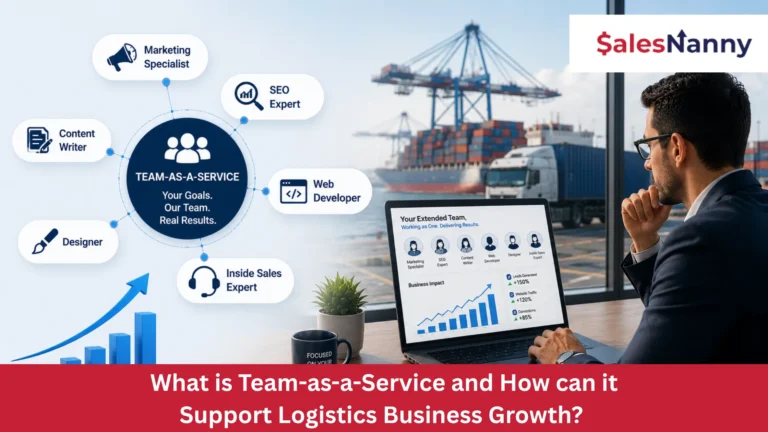
By connecting SEO, freight-focused content, websites, paid campaigns, lead generation, automation, and reporting under one strategy, we help your company reach the right buyers and generate more qualified sales opportunities.
Conclusion
Choosing the right digital marketing agency for your freight forwarding business requires more than comparing services, prices, or proposals.
The right agency should understand how your freight business operates, how buyers compare forwarders, and what turns online interest into a qualified inquiry. It should also connect SEO, content, paid campaigns, website support, and lead tracking with your actual sales goals.
Ready to work with a team that understands freight marketing? Book a Free Strategy Call Today Let’s move your freight business forward with SalesNanny.