The freight market is highly competitive right now. You already know that.
Margins are tighter, buyers are smarter, and your competitors are quoting the same rates. If your pipeline still depends on referrals, cold calls, and broker relationships, you are one slow quarter away from a serious problem.
Here is what is actually working for logistics companies today: a structured organic marketing system that generates qualified shipping leads consistently, without chasing every inquiry manually.
Why is Traditional Lead Generation Breaking Down for Logistics Companies?
For decades, logistics businesses grew through personal networks, broker introductions, and outbound sales. That model worked when buyers had limited ways to compare providers. Today, digital marketing for logistics has completely changed how buyers discover and evaluate logistics companies.
That has completely changed.
Today, a procurement manager sourcing a new 3PL partner or freight forwarder will research online first before they ever speak to a sales representative. Studies show that B2B buyers complete 60–70% of their decision-making process before contacting a vendor. In logistics, where contracts are high-value and long-term, this research phase is even longer.
If your company has weak digital visibility, you are being eliminated from consideration before the conversation even starts.
The three biggest breakdowns in traditional logistics lead generation:
- Referrals are unpredictable. Strong months and dry months, with no way to forecast which is coming.
- Cold outreach rarely reaches real decision-makers. Supply chain heads, logistics directors, and procurement teams filter aggressively.
- Long sales cycles kill momentum. Without consistent visibility, warm prospects go cold and choose competitors who stay in front of them.
What Organic Marketing Actually does for a Logistics Business?
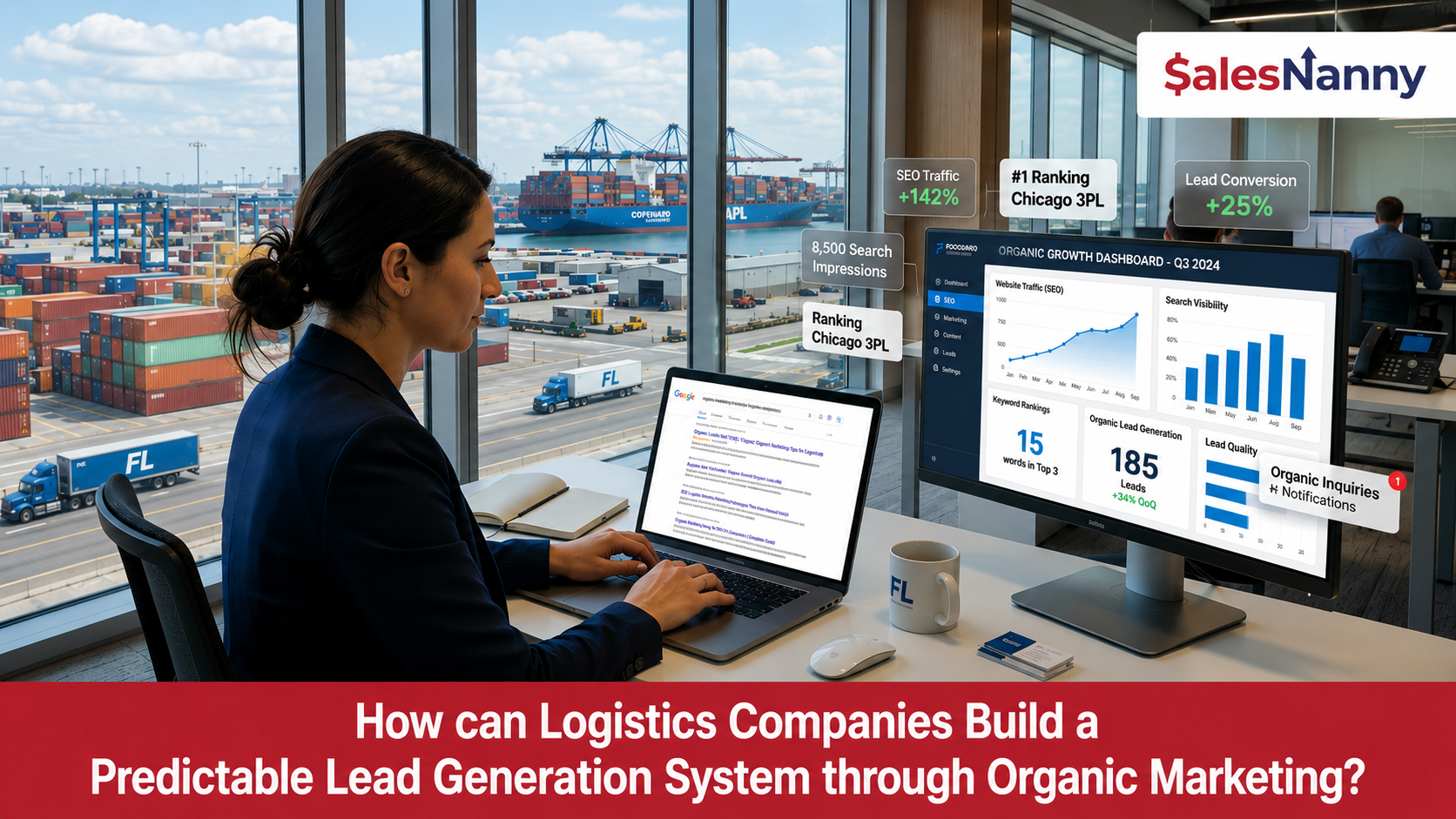
Organic marketing is not just blogging or posting on LinkedIn. For a logistics company, it is a system that keeps your brand visible and credible throughout the entire buyer journey from the moment a potential client starts searching for solutions to the moment they are ready to sign a contract.
Here is how it works in practice:
1. Search Visibility Through Industry-Specific Content
When a mid-size manufacturer searches for “reliable LTL freight partner for cross-border shipments” or “3PL provider for cold chain distribution,” your content needs to appear. This means writing about topics your actual buyers search for, not generic logistics news, but specific operational challenges, lane comparisons, compliance updates, and service capability breakdowns.
For example, one regional freight forwarder in Southeast Asia implemented a targeted content strategy focused on import/export documentation challenges. Within eight months, organic search inquiries increased by 40%, and inbound lead quality improved significantly because the prospects arriving already understood the company’s specialisation.
2. Professional Online Presence That Builds Trust Before Sales Calls
Decision-makers Google your company before agreeing to a meeting. What they find determines whether they take the call seriously. A professional website with clear service capabilities, client results, and operational credibility does not just look good, it pre-qualifies your company in the buyer’s mind.
This is especially important for mid-market logistics companies competing against larger players. Strong digital branding can level the playing field by communicating reliability, expertise, and operational depth before any human interaction occurs.
3. LinkedIn Positioning for Decision-Maker Visibility
Most logistics buyers are reachable on LinkedIn. But broadcasting generic service promotions does not work. What builds a pipeline is consistent, specific content about freight market insights, operational tips, and supply chain trend analysis that positions your leadership team as knowledgeable industry voices.
When decision-makers follow your content over weeks and months, your company name is already familiar when your sales team reaches out. Response rates improve significantly because the cold outreach becomes a warm introduction.
4. Case Studies and Proof-Based Content
Nothing converts a logistics prospect faster than a relevant case study. A story showing how you helped a similar company reduce freight costs by 18%, improve delivery reliability on a difficult lane, or resolve a warehousing bottleneck speaks directly to the problems your buyer is facing right now.
Logistics buyers are risk-averse. They are selecting partners for operations that directly affect their business performance. Proof removes that risk perception and accelerates the decision process.
The Organic Marketing System: How does it Come Together?
An effective organic marketing system for logistics companies has three layers working together:
| Layer | What it Does | Example |
|---|---|---|
| Content Foundation | Builds search visibility and expertise positioning | SEO blogs, LinkedIn articles, freight guides |
| Digital Credibility | Converts visitors into serious inquiries | Professional website, case studies, service pages |
| Nurture Visibility | Keeps your brand visible during long sales cycles | Email newsletters, LinkedIn posts, and remarketing content |
When these three layers work together consistently, logistics companies stop experiencing the feast-and-famine pipeline problem. Leads come in more predictably because the system is always working, even when your sales team is focused on closing existing opportunities.
What Results should You Realistically Expect?
Organic marketing is not a quick fix. But it is a compounding asset.
Most logistics companies start seeing measurable improvement in online visibility within three to four months. Qualified inbound inquiries typically begin increasing between months five and eight, depending on market competition and content consistency.
The long-term advantage is significant. Unlike paid advertising that stops the moment your budget ends, organic marketing continues generating visibility and leads over time. A well-written case study, logistics blog, or content strategy focused on SEO for 3PL companies can continue generating shipping inquiries for years. This is why organic marketing has become a valuable long-term growth strategy for logistics businesses.
Conclusion
If you are still depending entirely on referrals and cold outreach to fill your pipeline, you are leaving serious revenue on the table and handing it to competitors who are investing in digital visibility.
The logistics companies winning more contracts in today’s market are not always the cheapest or the largest. They are the ones that buyers find first, trust fastest, and remember longest.
Organic marketing builds exactly that kind of competitive advantage predictably, professionally, and permanently.
Ready to see where your logistics company stands online? Schedule a free call and find out exactly where qualified shipping leads are slipping through the gaps.