A freight forwarder may have a strong local team, experienced customs staff, good carrier relationships, and years of knowledge in a regional market. But none of that helps win new business if buyers searching in that area cannot find the company.
That is where local SEO becomes commercially useful.
A focused local SEO strategy helps freight forwarders appear when importers, exporters, manufacturers, and other businesses search for freight support in a specific city, port, airport, or industrial market. More importantly, it connects regional search demand with the branches and freight services your company actually wants to grow.
Why is Local SEO Important for Freight Forwarders in Regional Markets?
Freight may move across countries, but many buying decisions begin with a regional requirement.
An importer may need customs clearance near the arrival port. A manufacturer may look for a freight forwarder close to its plant. A distributor may need warehousing and transport support within the same region.
Local SEO helps your business become easier to find during these searches.
- Reach buyers with regional freight needs: Searches such as “freight forwarder in Houston” or “air freight services in Chicago” often come from buyers with a defined requirement.
- Improve visibility around key markets: Local SEO can strengthen your presence around ports, airports, industrial areas, and cities your branch already serves.
- Compete for more regional business: A smaller competitor can appear before an established forwarder simply because its local search presence is stronger.
- Build buyer confidence: Accurate branch information, reviews, service details, and location pages help buyers understand whether your company can handle their requirement.
- Generate more relevant inquiries: Instead of attracting broad traffic, local search can bring buyers looking for a particular service in a market you actually cover.
- Support steady regional growth: Strong organic visibility can continue supporting regional inquiries without relying entirely on paid campaigns.
For freight forwarders, the value is not simply appearing on Google Maps. It is becoming visible at the moment a regional buyer is deciding which companies deserve further consideration.
Key Local SEO Strategies to Grow Your Freight Forwarding Business
Once you know which regional markets you want to develop, local SEO should be built around the services, branches, and customer opportunities that matter commercially.
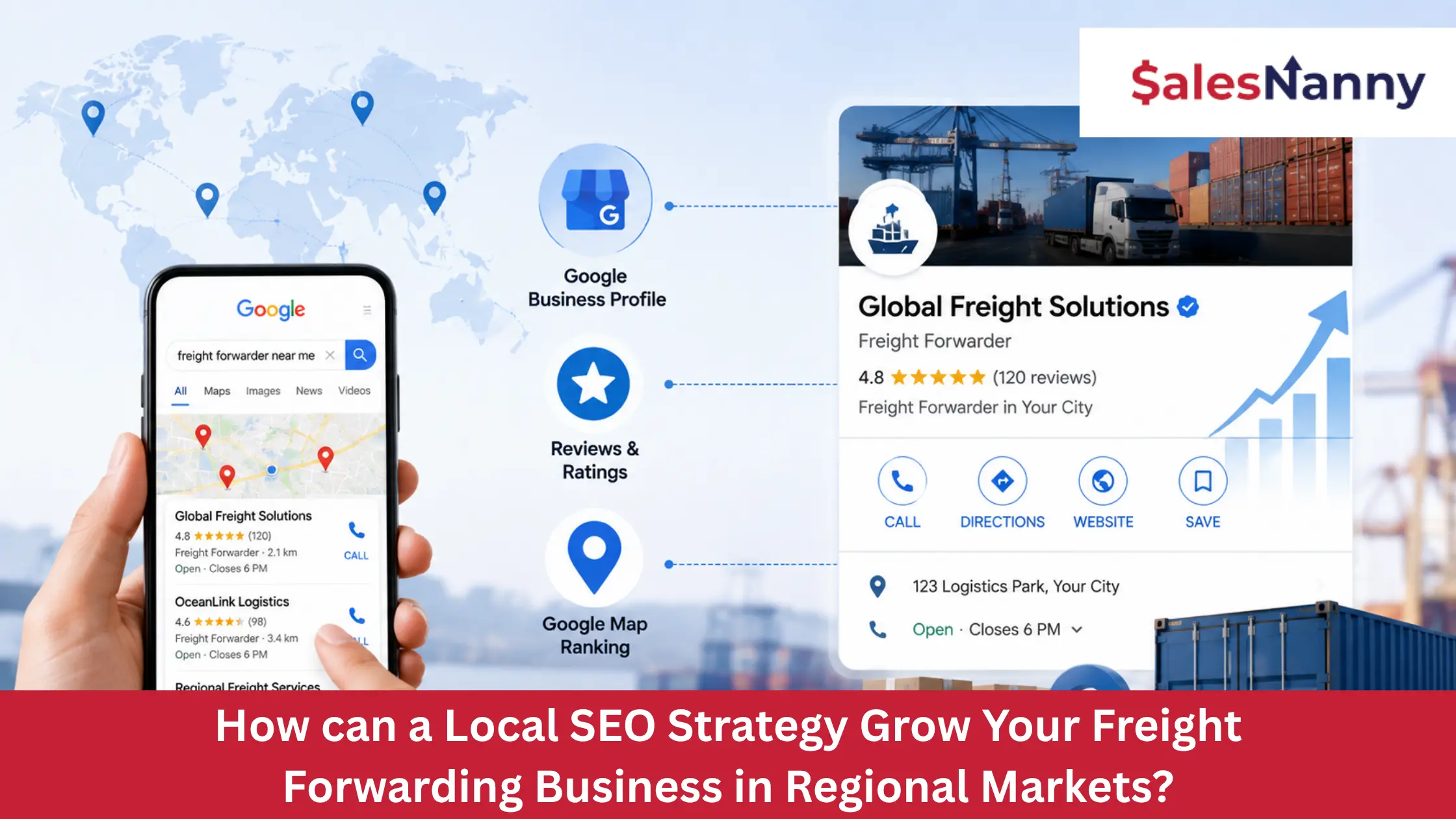
1. Optimize Your Google Business Profile
Your Google Business Profile may be one of the first things a buyer sees when searching for a freight company in the area.
Make sure each eligible location has accurate:
- Business name and address
- Phone number and website
- Opening hours
- Business categories
- Service information
- Current branch or facility photos
Do not make every branch look identical.
If one office primarily handles ocean imports and customs clearance while another is stronger in air freight, the profiles should reflect those differences.
2. Target Local Freight Keywords
Local keyword targeting should connect what the buyer needs with where they need it.
Examples could include:
- Freight forwarder in Houston
- Customs clearance in Savannah
- Air freight services in Chicago
- Ocean freight forwarder in Los Angeles
- Freight forwarding near JFK Airport
Use these terms naturally within relevant service pages, location pages, titles, headings, and content.
A focused SEO and organic marketing strategy should prioritize searches that match your actual services rather than simply targeting cities with high search volume.
3. Build Location-Specific Freight Pages
A location page should help buyers decide whether your regional team is relevant to their shipment.
Instead of creating a generic page that only says “Freight Forwarding in Dallas,” explain:
- Which freight modes the branch supports
- Nearby ports, airports, or terminals
- Industries commonly served
- Regional service coverage
- Customs, warehousing, or inland transport capabilities
- How to request a quote
Each page should demonstrate real capability in that market.
4. Keep Your Business Information Consistent Across Listings
Buyers may discover your branch through Google, logistics directories, industry associations, or other business listings.
Make sure your company name, address, phone number, website, and branch information remain consistent.
Old phone numbers, incorrect addresses, or duplicate listings can create confusion and weaken confidence before a buyer even reaches your website.
5. Collect and Respond to Customer Reviews
Reviews provide useful regional proof.
A buyer comparing three freight forwarders may want to know whether other companies have successfully worked with your local team.
Encourage satisfied customers to leave genuine reviews based on their experience. Feedback related to customs support, communication, shipment handling, or regional service provides more value than generic praise.
Respond professionally to reviews as well. It shows that the business is active and takes customer experience seriously.
6. Create Content Around Regional Freight Needs
Local content should answer the questions your regional sales and operations teams already hear.
A port-based branch could create content around:
- Container pickup and delivery
- Customs clearance
- Demurrage and detention
- Port-to-door movements
An airport-focused team might cover urgent air cargo, documentation, cut-off times, or time-sensitive transfers.
This approach supports SEO for logistics and freight companies while also showing buyers that your team understands the practical freight issues in their market.
7. Make it Easy for Regional Buyers to Contact You
Local visibility only creates value when it leads to a conversation.
Every branch and regional service page should make it easy to:
- Request a freight quote
- Contact the local office
- Discuss a shipment
- Submit an RFQ
Keep inquiry forms practical. Asking for origin, destination, cargo type, freight mode, and service requirement gives the sales team enough information to qualify the opportunity.
The path should be simple:
Search → relevant regional page → confidence → inquiry → sales conversation.
Strong local visibility can also influence the freight forwarder shortlist when buyers compare providers in the same regional market.
Grow Your Regional Freight Business with a Focused Local SEO Strategy
Regional growth should not depend only on referrals or existing sales relationships.
SalesNanny helps freight forwarders connect local search demand with branch strengths, priority services, and target customers. Through local SEO, location pages, freight content, and a focused digital marketing for logistics approach, your online presence can support the regional business your sales team wants to pursue.
The goal is not to rank in every city.
It is to become easier to find and easier to choose in markets where your team has the operational capability and commercial strength to win business.
Conclusion
Local SEO can turn regional freight capability into a stronger source of qualified inquiries.
Start with the markets you genuinely serve. Build search visibility around the services each branch wants to grow. Show buyers what your regional team can handle, provide proof of experience, and make the path to an RFQ simple.
If you want to strengthen your freight forwarding business in priority regional markets, book a consultation with SalesNanny and build a local SEO strategy around the opportunities your business wants to grow.