If you run a logistics company, freight forwarding business, or 3PL operation, you already know one common challenge, new business is not always predictable.
Some months you receive enquiries. Some months are quiet. Many logistics companies depend heavily on referrals, existing clients, and industry contacts. These are good sources of business, but they are not always consistent or scalable.
This is why many logistics companies today are focusing on lead generation for logistics companies, not as marketing, but as a structured way to build a steady pipeline of business opportunities.
The goal is simple:
Not random enquiries, but consistent business conversations.
How Logistics Clients Actually Choose Service Providers?
In the logistics industry, clients do not choose service providers quickly.
A company looking for a freight forwarder or logistics partner usually:
- Researches companies online
- Visits websites
- Checks LinkedIn profiles
- Reviews services and industries served
- Compares multiple providers
- Observes communication and responsiveness
- Builds trust before starting discussions
This process can take weeks or even months.
Logistics is a high-trust industry. Clients are not just buying a service; they are trusting someone with their shipments, timelines, documentation, and customer commitments.
Because of this, lead generation for logistics companies is not about quick sales.
It is about visibility, credibility, and staying in front of the right companies until the timing is right.
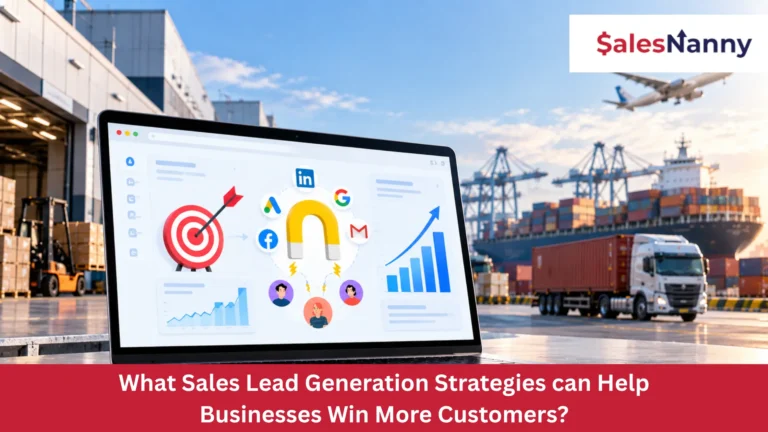
Main Lead Generation Strategies for Logistics Companies
Below are some of the most effective and practical strategies logistics companies use to build a consistent pipeline.
LinkedIn Outreach
LinkedIn has become one of the most important platforms for B2B logistics business development.
Many decision-makers such as:
- Procurement managers
- Supply chain managers
- Logistics managers
- Operations directors
Are active on LinkedIn.
But the approach matters.
Sending direct sales messages usually does not work. Instead, companies that succeed on LinkedIn focus on:
- Connecting with the right people
- Sharing industry-related content
- Starting professional conversations
- Following up consistently
- Building relationships over time
LinkedIn is less about selling and more about starting conversations that can turn into opportunities later.
Website Positioning
When a potential client hears about your company, one of the first things they do is visit your website.
Your website is often your first impression.
A strong logistics website should clearly explain:
- What services you provide
- Which industries you serve
- Your operational capabilities
- Your locations and coverage
- How to contact you
If your website is clear and professional, it builds trust.
If your website is outdated or unclear, many potential clients will leave without contacting you.
Website positioning plays a big role in lead generation for logistics companies because many enquiries start with a website visit.
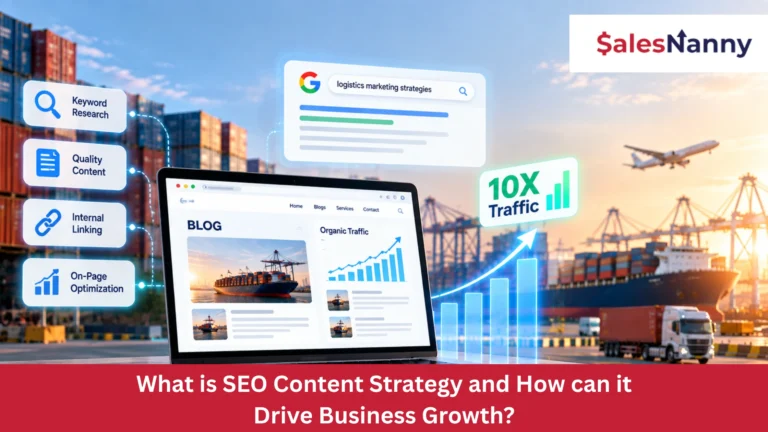
Industry Content
Content is not only for marketing companies. It is very useful for logistics companies as well.
When you share content about:
- Shipping processes
- Industry challenges
- Trade lane insights
- Documentation tips
- Case examples
- Logistics planning
You position your company as a knowledgeable logistics partner, not just a service provider.
When potential clients read your content, they start understanding your expertise before they even speak with you.
This builds trust and improves the quality of conversations.
Email Follow-Ups
In logistics, not every potential client is ready immediately.
Some companies may need a new logistics partner after:
- Contract renewal
- Service issues
- Expansion to new regions
- Volume increase
- New product launch
This is why email follow-ups are important.
Simple emails like:
- Industry updates
- Company updates
- New service routes
- Case studies
- Logistics insights
Help your company stay visible. When the client is ready, they remember you.
Referrals
Referrals are still one of the strongest sources of logistics business.
But many companies do not actively manage referrals.
Instead of waiting, logistics companies can:
- Ask satisfied clients for introductions
- Build relationships with industry partners
- Connect with customs brokers, transporters, consultants
- Stay in touch with past clients
A structured referral approach can bring consistent business over time.
Partnerships
Partnerships are another strong way to generate business.
Logistics companies can partner with:
- Freight agents in other countries
- Warehousing companies
- Transport companies
- Customs clearance agents
- Supply chain consultants
These partnerships often lead to shipment referrals and long-term business relationships.
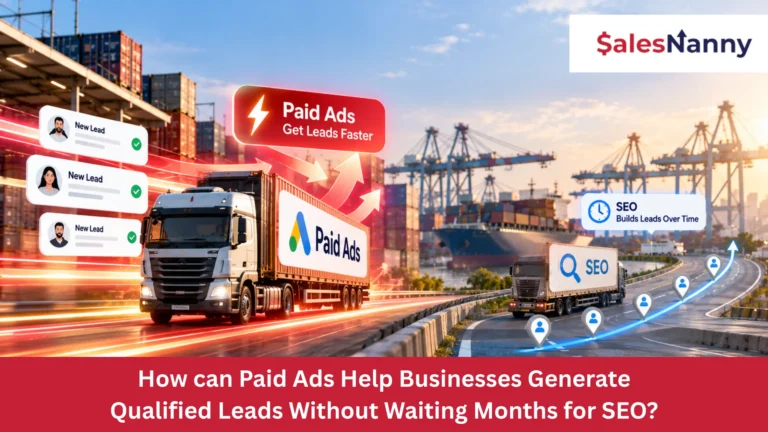
SEO Visibility (Google Search)
Many companies search on Google when they need:
- Freight forwarder
- Logistics company
- Warehousing partner
- Customs clearance support
- Shipping services
If your company appears in search results, you have a higher chance of receiving inbound enquiries.
This is why SEO and website content are important parts of lead generation for logistics companies.
Companies that invest in online visibility today often see consistent enquiries over time.
What Results Logistics Companies can Expect?
When logistics companies implement structured lead generation activities consistently, they usually start seeing:
- More website visitors
- More LinkedIn connections
- More business conversations
- More enquiry emails
- More RFQ invitations
- Better brand visibility
- Less dependence on a few clients
- A more predictable business pipeline
These results do not happen in one week, but over time, they create a stable growth path.
Conclusion
The logistics industry is changing, and the way companies find logistics partners is also changing.
Earlier, most business came through referrals, networking, and sales visits.
Today, many business opportunities start with a Google search, a website visit, or a LinkedIn profile.
Logistics companies that focus on visibility, credibility, and consistent communication are slowly building steady pipelines of new business opportunities.
Lead generation for logistics companies is no longer optional.
It is becoming an important part of business growth and long-term stability. Approach the Best Digital Marketing for logistics business for further queries
Companies that start building their presence and pipeline today will be in a much stronger position in the coming years.Learn more, or schedule a meeting with us and we will understand your requirements and help you find the right logistics solution for your business.