Let’s be honest for a second.
Most logistics companies already have a website, a LinkedIn page, and maybe even run ads once in a while. On paper, the digital boxes are checked. But when the phone doesn’t ring, the inbox stays quiet, and sales teams keep hearing “we found you, but we’re not ready yet,” something is clearly off.
The issue isn’t digital marketing itself.
It’s marketing that doesn’t understand logistics.
Freight forwarding, warehousing, customs brokerage, 3PL, and supply chain services don’t sell like e-commerce or real estate. Buyers don’t convert in one click. They research, compare providers, validate credibility, and only then reach out. That’s exactly where smart, logistics-focused digital marketing proves its value.
This blog explains how digital marketing should actually work for logistics companies, not just to drive traffic or visibility, but to turn attention into real, sales-ready leads and long-term growth.
Why “More Traffic” doesn’t Mean More Logistics Leads?
A common mistake logistics brands make is chasing volume. More visitors. More impressions. More clicks. On dashboards, it looks impressive. In reality, it often leads nowhere.
Logistics buyers aren’t impulse shoppers. A procurement manager looking for a freight forwarder or a supply chain head evaluating 3PL partners isn’t impressed by flashy ads. They’re looking for proof of capability, specialization, and reliability.
Effective logistics digital marketing prioritizes:
- Relevance over reach
- Authority over noise
- Intent over vanity metrics
If your traffic isn’t made up of supply chain managers, import/export heads, operations leaders, or business owners with real shipping needs, it won’t convert, no matter how big the numbers look.
Why do Logistics and Supply Chain Brands Struggle with Online Visibility?
Many logistics companies are excellent at operations but feel invisible online. That’s not because their services lack value. It’s because visibility today isn’t earned by experience alone, it’s earned by how clearly that experience is communicated digitally.
Most logistics websites look similar. Broad service lists. Generic messaging. Little differentiation. When prospects land on these sites, they struggle to answer three basic questions:
- What makes this company different?
- Who exactly do they serve?
- Why should I trust them with complex cargo or critical supply chains?
Online visibility isn’t just about being seen. It’s about being understood quickly.
How Logistics Buyers Actually Search for Solutions Online?
Logistics buyers don’t search for marketing slogans or agency names. They search for answers to real operational problems.
They ask questions like:
- “How to reduce freight delays”
- “Customs clearance process”
- “Reliable & Trusted freight forwarder”
- “Best 3PL & Warehousing partner ”
When your digital presence answers these questions clearly, professionally, and with logistics-specific credibility, your brand naturally positions itself as a solution, not just another option in a long list.
Content Marketing that Builds Trust Before the First Call
In logistics, trust isn’t optional. It’s the dealbreaker.
Content marketing plays a critical role in building that trust before a prospect ever speaks to sales. High-performing logistics content focuses on education and clarity, not hype.
This includes:
- Blogs that explain logistics processes in plain language
- Success stories content showing how real challenges were solved
- Industry insights on customs, DG cargo, compliance, trade lanes, and markets
- Thought leadership on logistics risks, trends, and operational efficiency
When prospects feel like you understand their world, reaching out feels safer, and conversations start at a much higher level.
SEO for Logistics is About Intent, Not Keywords
Search engine optimization in logistics isn’t about stuffing keywords into pages. It’s about showing up at the exact moment someone needs help.
That means ranking for problem-based search terms, optimizing service pages around real buyer questions, structuring content to match decision-making stages, and using logistics terminology naturally and correctly.
When SEO is done right, it becomes your quietest and most consistent lead generator, working in the background while your team focuses on operations and sales.
Branding that Speaks to Logistics Professionals
Strong logistics branding isn’t flashy. It’s confident, clear, and credible.
Your digital messaging should immediately signal:
- Industry specialization
- Market and trade-lane experience
- Compliance awareness
- Operational reliability
When branding feels generic, trust drops fast. When it feels industry-specific, engagement rises, and prospects stay longer, read more, and reach out with serious intent.
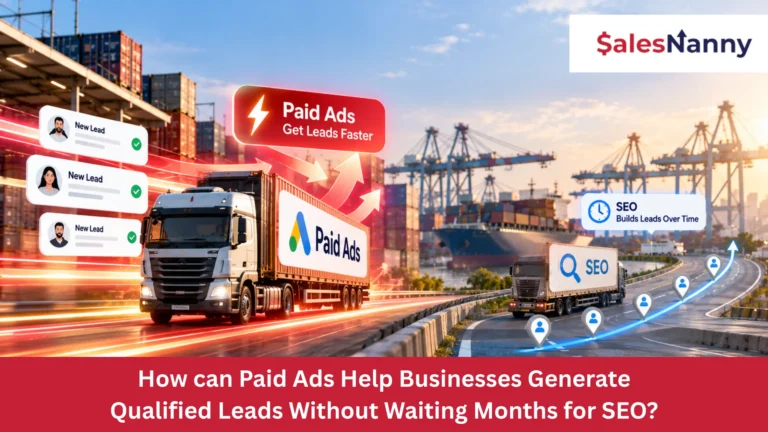
Paid Ads that Don’t Waste Budget
Logistics ads fail when they’re treated like consumer ads. The smartest logistics campaigns understand long sales cycles and high-value decision-making.
Effective paid strategies usually focus on:
- LinkedIn for B2B decision-makers
- Google Search for high-intent logistics keywords
- Retargeting to stay visible during long evaluation cycles
- Clear value propositions instead of discounts or gimmicks
Paid media should support your credibility and content, not try to replace them.
Turning Visibility Into Sales-Ready Conversations
Lead generation doesn’t stop at a form submission. In logistics, nurturing is everything.
Strong logistics digital marketing includes follow-up content that addresses objections, email workflows that educate instead of spam, sales enablement material that supports conversations, and messaging that positions your brand as a long-term partner, not a one-time vendor.
When marketing and sales move in sync, conversion rates improve, and deal cycles shorten.
Why Strategy Beats Random Marketing Activity?
Posting blogs without SEO. Running ads without landing pages. Sharing content without a clear plan. These are common mistakes that drain time and budget.
A clear logistics digital marketing strategy aligns brand positioning, content themes, lead generation goals, and sales support. Without a strategy, visibility stays scattered. With strategy, it compounds over time.
How Sales Nanny Bridges the Gap
Sales Nanny exists because logistics marketing requires precision, not volume.
The approach is built around real logistics pain points, educational content that builds trust, SEO aligned with genuine buyer intent, lead generation focused on quality conversations, and brand positioning that reflects true operational expertise.
Every move mirrors how logistics actually works, structured, reliable, and goal-driven.
Conclusion
Logistics brands don’t lack expertise. They lack structured digital storytelling.
When your experience, services, and value are communicated clearly across the right digital channels, visibility follows naturally, and visibility turns into qualified leads, stronger conversations, and sustainable growth.
Digital marketing isn’t magic. It’s a system. And when that system is built specifically for logistics and supply chain businesses, it delivers exactly what matters: the right prospects, at the right time, for the right reasons.
Looking to attract serious logistics buyers, not just clicks or traffic? Partner with Sales Nanny, the best logistics digital marketing agency, for all your operational success.