Running a logistics business today doesn’t feel as predictable as it once did. There was a time when referrals, broker relationships, and long-term clients were enough to keep operations moving steadily. Many companies built strong reputations over the years and relied on those networks to generate business. It worked because the market was slower, and relationships carried more weight.
But today, things have changed. Even businesses with strong operations and reliable service are facing inconsistent growth. Some months bring steady inquiries, while others feel completely quiet. Sales teams spend more time chasing leads than closing deals. Margins are getting tighter due to broker dependency and pricing pressure. The challenge is no longer about delivering good service. It’s about being visible when potential customers are actively looking for logistics solutions.
At the same time, buyer behavior has shifted. Shippers and supply chain teams are now researching online before making decisions. They compare providers, evaluate credibility, and shortlist options before reaching out. If your business is not visible during that stage, you are simply not part of the conversation. This is where digital marketing for logistics starts to play a critical role in driving consistent growth.
Why are Traditional Growth Methods No Longer Enough?
Most logistics companies still depend on referrals, outbound sales, and broker networks. While these methods still work, they are no longer reliable as the primary growth engine. They are difficult to scale and depend heavily on timing and relationships, which creates unpredictable revenue cycles.
Industry insights show that traditional channels often lead to inconsistent lead flow, while digital strategies create more structured and measurable pipelines. Buyers are no longer waiting for a recommendation; they are actively searching for solutions online. This means your business needs to be present at the moment demand is created.
Without that visibility, even the most capable logistics providers remain unnoticed. And over time, that gap between capability and visibility becomes the biggest barrier to growth.
What does Investing in Digital Marketing Actually Mean?
For many logistics business owners, digital marketing still feels unclear. Some think it is just running ads or posting on social media. In reality, it is a structured system that connects your business to real demand in the market.
It includes showing up in search results, clearly communicating your services, building trust through content, and converting visitors into inquiries. To understand this foundation better, it’s important to look at why digital marketing is needed for logistics businesses and how it directly impacts lead generation and growth.
When done right, digital marketing is not an expense. It becomes a system that continuously brings qualified opportunities into your pipeline and supports long-term business growth.
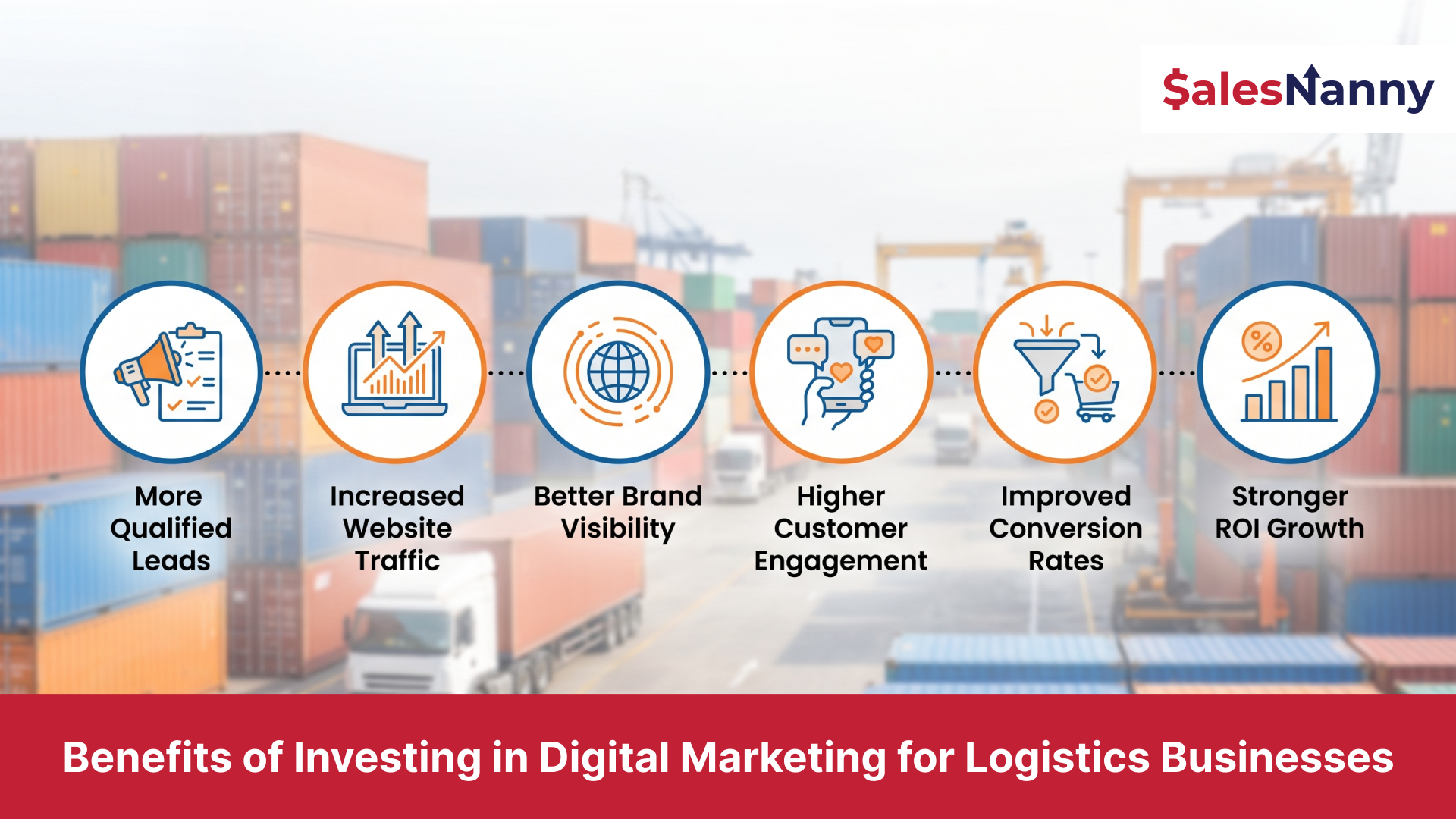
The Real Benefits of Investing in Digital Marketing for Logistics Businesses
One of the biggest benefits is predictable lead generation. Instead of waiting for referrals or depending entirely on brokers, your business starts attracting inbound inquiries from companies actively searching for logistics services. This creates a steady pipeline and reduces uncertainty.
Another major advantage is reduced dependency on brokers. When you generate your own leads, you gain more control over pricing, margins, and client relationships. This shift allows you to focus on long-term partnerships instead of short-term transactional deals.
Digital marketing also improves the quality of clients. Prospects who find your business online already have intent, which makes them easier to convert. These are not cold leads, they are businesses actively looking for solutions. This leads to better conversations and higher conversion rates.
At the same time, digital marketing builds credibility. When your business consistently appears online with clear messaging and useful content, it creates trust. Buyers are more likely to choose a company that demonstrates expertise before even speaking to them.
Another important benefit is measurable ROI. Logistics companies are seeing strong returns from digital investments, with reports showing around $26–$29 in pipeline value generated for every $1 spent on marketing. This level of visibility allows you to track performance and make better decisions.
How does Digital Marketing Change the Way Logistics Businesses Grow?
Before investing in digital marketing, growth often feels reactive. Businesses depend on brokers, referrals, or outbound efforts, which leads to inconsistent pipelines and limited control. Sales teams spend more time chasing leads, and future growth becomes difficult to plan.
After implementing digital marketing, the shift becomes clear. Your business starts appearing in relevant searches, your messaging becomes clearer, and inbound inquiries begin to flow consistently. Instead of chasing opportunities, you start managing them.
Studies show that companies investing in digital transformation can achieve 5–10% revenue growth and significant operational improvements over time. This shows that digital marketing is not just about visibility; it directly impacts overall business performance.
What Happens if You Don’t Invest Now?
The logistics industry is becoming more competitive every year. More companies are investing in digital visibility, building their online presence, and capturing demand early in the buyer journey. If your business delays this shift, you risk losing opportunities before you even know they exist.
At the same time, relying only on traditional channels increases pressure on pricing. Without inbound demand, businesses are forced to compete on cost rather than value. Over time, this reduces profitability and limits growth potential.
Building a Predictable Growth System for Your Logistics Business
A consistent pipeline is not created by a single tactic. It is built through alignment. Your business needs to be visible in search, your messaging must clearly communicate your value, and your content should reflect real logistics expertise.
When these elements work together, your business becomes easier to find and easier to trust. This is where supply chain marketing plays a key role in positioning your expertise and connecting with the right audience. Over time, this creates a structured system that supports predictable and scalable growth.
Conclusion
The logistics industry is evolving, and the way businesses grow is changing with it. Strong operations alone are no longer enough. Growth now depends on visibility, positioning, and how effectively your business connects with demand.
Investing in digital marketing is not just about promotion. It is about building a system that generates consistent opportunities, improves lead quality, and gives you control over your pipeline. Businesses that adopt this approach are not just growing, they are building long-term stability.If you want to move from unpredictable leads to a consistent pipeline, now is the time to act. You can schedule a free audit for your logistics business to understand where you stand and how to build a scalable growth system.